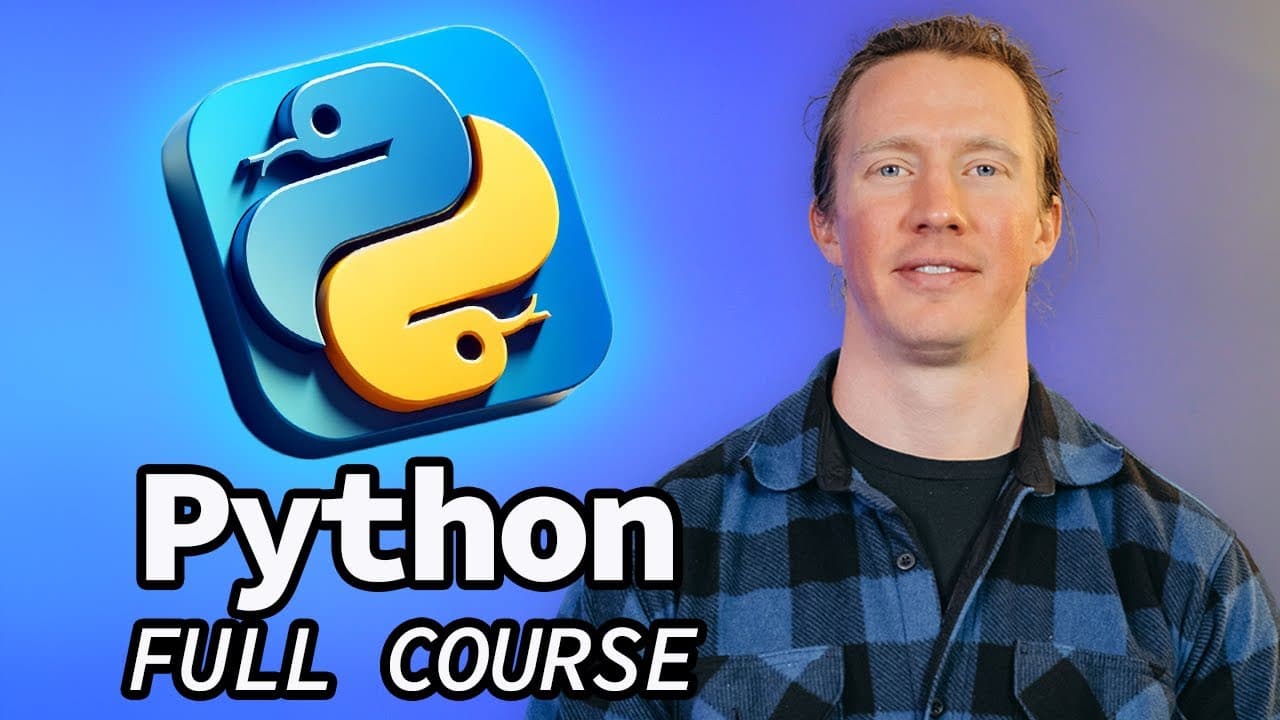
How to Learn Python for Data Analytics: Full Course for Beginners
TL;DR
Beginners can learn Python for data analytics by mastering programming basics, analyzing a real-world dataset with pandas and Matplotlib, and completing a portfolio project. The three-chapter course requires no prior programming or analytics experience and includes free notes and code. It also covers Google Colab and running Python locally, so read on for the course structure, tools, resources, and project details.
Transcript
better nerds welcome to this full course tutorial on python for data analytics this is the course I wish I would have had when I first started as a data analyst for this you're going to be coding right alongside me as we master the basics of programming from there we'll learn how to analyze data using popular libraries like pandas and Matt plot lib... Read More
Key Insights
- Python is a popular programming language for data analytics, appearing in many job postings for data-related roles.
- This course is designed for absolute beginners, requiring no prior experience in programming or data analytics.
- The course covers Python basics, data analysis with libraries like Pandas and Matplotlib, and a final portfolio project.
- Google Colab is used for coding alongside the course, with instructions for setting up Python locally in later chapters.
- The course emphasizes open-source knowledge, providing free access to all course materials and notes.
- Optional support provides additional perks like practice problems, community access, and a certificate of completion.
- Python's open-source nature allows for contributions from top tech companies, enhancing its capabilities.
- The course encourages using AI chatbots for troubleshooting and understanding complex concepts.
Install to Summarize YouTube Videos and Get Transcripts
Explore YouTube Video Summarizer or Get YouTube Transcript Extractor
Questions & Answers
Q: How can beginners learn Python for data analytics?
Start with Python fundamentals such as data types, loops, and functions while coding alongside the instructor in Google Colab. Then learn pandas and Matplotlib using a real-world dataset before applying those skills in a portfolio project.
Q: Do I need programming experience for this Python data analytics course?
No prior experience in programming, Python, or data analytics is required. The course is designed for absolute beginners and breaks down the concepts and topics they need to know.
Q: What does the Python for Data Analytics course cover?
The course has three chapters: Python basics, more advanced data analysis with pandas and Matplotlib, and a final portfolio project. It also explains how to use Google Colab and how to set up and run Python locally.
Q: Why is Python useful for data analytics?
Python can support data collection, cleaning, analysis, and presentation. The transcript also describes integrations with databases, SQL, Excel, Power BI, and Tableau, making it useful across multiple parts of an analytics workflow.
Q: How popular is Python in data-related job postings?
The course says Python appears in two out of every three data scientist job postings. It is also requested for data engineers right after SQL and appears in one out of every three data analyst postings, right after Excel.
Q: Which Python libraries are taught for data analysis?
The course teaches pandas and Matplotlib as two popular data analytics libraries. Learners use them while extracting insights from a real-world dataset.
Q: What portfolio project will learners build?
Learners investigate a real-world dataset about data science job postings and uncover insights from it. The completed project can showcase their new Python skills, and the findings may also be applied to a real-life job search.
Q: What free and optional resources come with the course?
The free materials include step-by-step video instruction, course notes, and code for following along and building the portfolio project. Optional supporters receive lesson practice problems ranging from easy to hard with hints and solutions, community access, and a completion certificate they can post to LinkedIn.
Summary & Key Takeaways
-
Python is a powerful tool for data analysis due to its versatility and ease of use. This course is tailored for beginners, covering Python fundamentals, data analysis with Pandas and Matplotlib, and includes a hands-on portfolio project. The course is free, with optional support for additional learning resources.
-
Python's popularity in data-related job markets makes it a valuable skill for aspiring data analysts. The course provides step-by-step instructions, free access to course materials, and emphasizes open-source learning. Google Colab is used for practical exercises, with guidance for local Python setup.
-
Participants can enhance their learning experience by supporting the course, gaining access to practice problems, community support, and a completion certificate. The course also highlights the use of AI chatbots for additional learning support and troubleshooting.
Read in Other Languages (beta)
Share This Summary 📚
Summarize YouTube Videos and Get Video Transcripts with 1-Click
Try YouTube Summary with ChatGPT & Claude or YouTube Transcript Generator
Explore More Summaries from Luke Barousse 📚
Summarize YouTube Videos and Get Video Transcripts with 1-Click
Try YouTube Summary with ChatGPT & Claude or YouTube Transcript Generator