Galaxy Watch Ultra 2025 Review: Accurate Heart Rate?
TL;DR
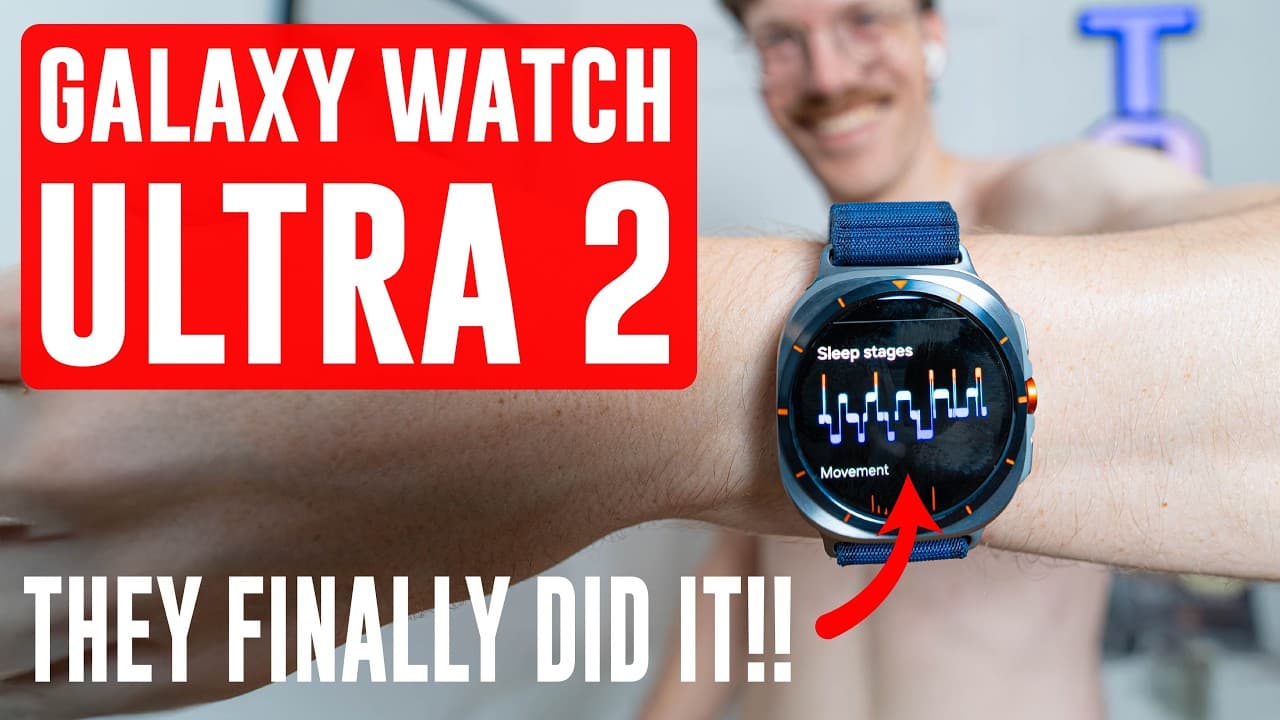
The Galaxy Watch Ultra 2025 showed weak heart rate accuracy in early testing, with an indoor cycling correlation of just 0.77 and one moment where it read about 180 BPM while actual heart rate was around 65. Its added weight and the less-adjustable trail loop band caused it to shift on the wrist, placing it among the poorer performers versus rival watches.
Transcript
I just received two packages and these should be the Galaxy Watch Ultra 2025 and the Galaxy Watch 8 Classic and I'm super excited to test them out. So, unbox them both. But this video today will be about the Galaxy Watch Ultra 2025. So, the new Galaxy Watch Ultra with hopefully improved new firmware as we already saw for the Galaxy Watch 8 potentia... Read More
Key Insights
- The Galaxy Watch Ultra 2025 recorded an indoor cycling heart rate correlation of 0.77 against a Polar H10 reference, which is low and places it among the poorer performers compared to the reviewer's earlier Galaxy Watch 8 and Galaxy Watch 7 testing.
- The watch's biggest heart rate error came when the reviewer's actual heart rate dropped to around 65 BPM during a rest interval, but the Galaxy Watch Ultra 2 instead reported roughly 180 BPM, nearly three times the true value.
- The reviewer, Rob, is a post-doctoral scientist specializing in biological data analysis, and he evaluates devices on objectively measurable data like sleep stages, heart rate, and GPS rather than subjective impressions.
- The Galaxy Watch Ultra 2 moved noticeably more on the wrist during outdoor cycling than the Galaxy Watch 8 Classic, likely because of its added weight combined with a trail loop band that only offers a limited number of fixed fit settings.
- A better-fitting strap matters for accuracy: the infinitely adjustable fabric band used on the Galaxy Watch 8 allowed a perfect wrist fit, while the trail loop's fixed settings gave a looser fit that can worsen heart rate tracking during motion.
- Single-session data requires caution: the reviewer stresses the 0.77 correlation is based on just one spinning session, so more testing could smooth out isolated errors and improve overall agreement.
- Samsung has added a body battery metric, similar to Garmin, along with a sleep score, expanding the watch's recovery and readiness tracking features.
- The review is structured as a progressive, data-as-you-go test: the reviewer gathers about three days of cycling, weightlifting, running, GPS, and EEG-referenced sleep data before a fuller comprehensive review two to three weeks later.
Install to Summarize YouTube Videos and Get Transcripts
Explore YouTube Video Summarizer or Get YouTube Transcript Extractor
Questions & Answers
Q: How accurate is the Galaxy Watch Ultra 2025 for heart rate tracking?
In early indoor cycling testing against a Polar H10 reference, the Galaxy Watch Ultra 2025 achieved a correlation of only 0.77, which the reviewer calls low. Most of the session showed good agreement, but one major error where it read a far too high heart rate dragged the score down, placing it among the poorer performers versus other watches. The reviewer cautions this is based on a single session.
Q: What was the biggest heart rate error the Galaxy Watch Ultra 2 made?
During an indoor spinning session, the reviewer stopped cycling for a minute or two, causing his heart rate to drop to around 65 BPM. Instead of detecting this dip, the Galaxy Watch Ultra 2 reported a heart rate of roughly 180 BPM, nearly three times the actual value. The reviewer suspects the sudden, unexpected drop confused the sensor, though he notes other watches can handle such dips.
Q: Why does the Galaxy Watch Ultra 2 move around on the wrist during exercise?
The reviewer noticed the Ultra 2 shifted more on his wrist during outdoor cycling than the Galaxy Watch 8 Classic. He attributes this to two factors: the Ultra's added weight, which naturally makes it move more, and the trail loop band, which only offers a limited number of fixed fit settings rather than being infinitely adjustable, resulting in a looser, less precise fit.
Q: Who is the reviewer and why does his background matter?
The reviewer's name is Rob, and he is a post-doctoral scientist specializing in biological data analysis. He mentions this because his approach focuses on objectively measurable data quality and performance, such as sleep tracking, heart rate, and GPS, rather than subjective impressions. This lets him directly compare the Galaxy Watch Ultra against devices like the Google Pixel Watch, Apple Watch, and Garmin watches.
Q: How does the Galaxy Watch Ultra 2 compare to other smartwatches so far?
Based on the initial heart rate data, the Galaxy Watch Ultra 2 ranks among the poorer performers when plotted against competitors, largely because of one major aberrant reading. The reviewer notes it did not look as good as his previous testing of the Galaxy Watch 8 and his retesting of the Galaxy Watch 7. However, he repeatedly stresses these results come from just a single spinning session.
Q: What testing does the reviewer plan for the Galaxy Watch Ultra 2025?
The reviewer plans to gather about three days of data before his first review, including indoor cycling, outdoor cycling, weightlifting, a longer road bike ride, and a run for GPS testing. He also sleeps with the watch alongside a reference EEG device for two to three nights to check sleep stage accuracy. A more comprehensive review is planned two to three weeks later.
Q: What new features does the Galaxy Watch have according to the video?
The reviewer points out that Samsung now includes a body battery metric, similar to the one offered by Garmin, which tracks energy and recovery. The watch also provides a sleep score. These additions expand the device's health and readiness tracking capabilities beyond basic heart rate and activity metrics, aligning Samsung more closely with features found on competing wearable brands.
Q: Should you trust the early heart rate results in this review?
The reviewer repeatedly urges caution, emphasizing that the 0.77 correlation and poor ranking are based on just a single indoor spinning session. He explains that one abnormal reading, caused by an unexpected heart rate dip, heavily skewed the results, and that with more sessions the error may not recur, leading to better overall agreement. A fuller picture will come from his more comprehensive review.
Summary & Key Takeaways
-
A data-focused scientist unboxes and sets up the Galaxy Watch Ultra 2025 (blue, with trail band) alongside the Galaxy Watch 8 Classic, planning an initial review from about three days of exercise, sleep, and GPS data before a fuller review in two to three weeks.
-
Early heart rate testing during indoor cycling gave a low correlation of 0.77 versus a Polar H10, driven mainly by one large error where the watch read roughly 180 BPM while true heart rate was around 65 BPM during a rest dip.
-
The reviewer notes the Ultra 2 shifts more on the wrist during outdoor cycling due to its extra weight and the less-adjustable trail loop band, and its early results place it among the poorer performers compared to earlier Galaxy Watch 8 and 7 testing.
Read in Other Languages (beta)
Share This Summary 📚
Summarize YouTube Videos and Get Video Transcripts with 1-Click
Try YouTube Summary with ChatGPT & Claude or YouTube Transcript Generator
Explore More Summaries from The Quantified Scientist 📚



Summarize YouTube Videos and Get Video Transcripts with 1-Click
Try YouTube Summary with ChatGPT & Claude or YouTube Transcript Generator