How Accurate Is the Garmin Index Sleep Monitor? Scientific Sleep-Tracking Test
TL;DR
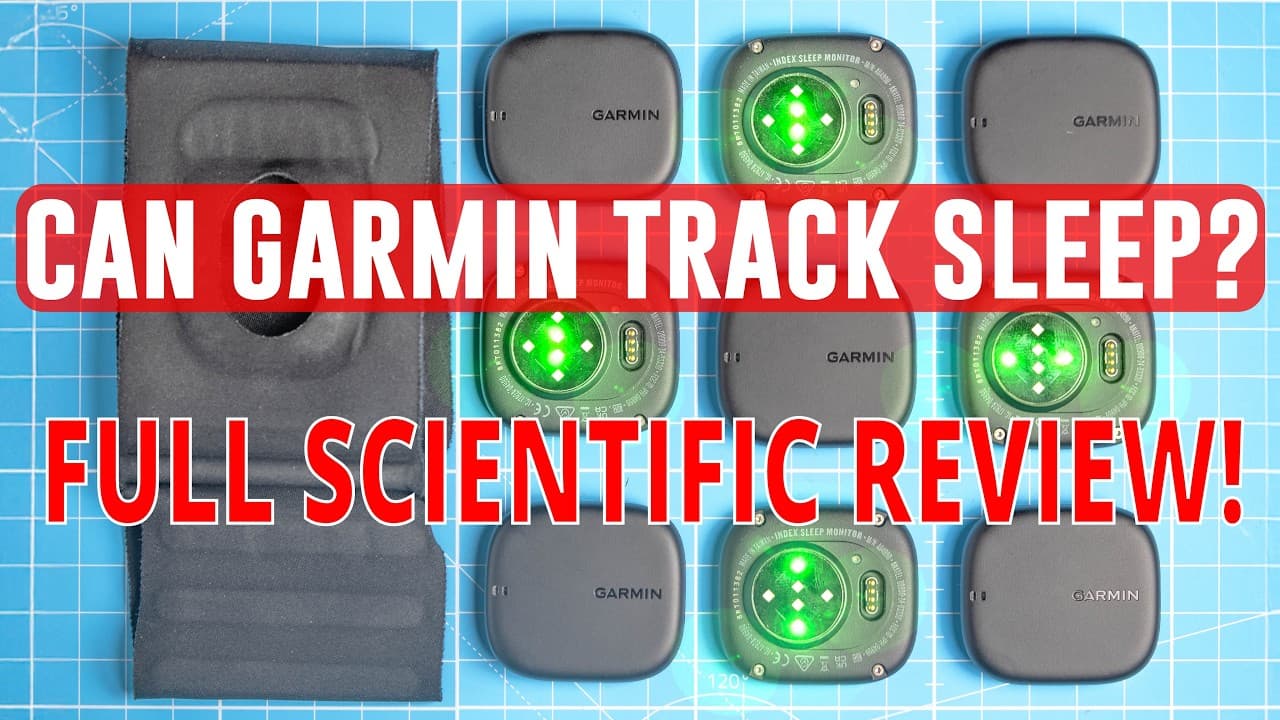
The Garmin Index Sleep Monitor showed mixed accuracy across 15 nights against a ZMAX EEG headband: about 90% agreement for deep sleep, 64% for light sleep, and less than 50% for REM sleep. Its comfortable biceps design primarily suits existing Garmin users who dislike wearing a watch overnight, though it requires charging every 5–7 days. Read on for the stage-by-stage results, drawbacks, and ideal buyer.
Transcript
I tested the Garmin Index sleep monitor for 15 nights against a scientific EEG device and have quite a few things to say about this new Garmin sleep monitor. And as you will see, it's nuanced. I do think it's a relatively niche product in the end, but there's definitely a target audience that should get it. By the way, for those of you that are new... Read More
Key Insights
- The Garmin Index Sleep Monitor is a biceps-worn nighttime sensor designed as a comfortable alternative for Garmin users who do not want to wear their watch in bed. Its usefulness is narrower for people who do not already track activities within Garmin's ecosystem.
- Battery life was about 5–7 days in the reviewer's experience, which was worse than expected and shorter than some Garmin watches using the same sensor. Charging during the day or plugging it in daily can prevent the battery requirement from disrupting overnight tracking.
- Deep-sleep detection achieved about 90% agreement with the ZMAX EEG reference across 15 nights. Individual-night comparisons also showed that Garmin captured most reference-detected deep-sleep periods, although it sometimes classified slightly too much time as deep sleep.
- Light-sleep detection achieved 64% agreement with the EEG reference, giving it acceptable but clearly imperfect performance. This result sat between the monitor's strong deep-sleep agreement and its substantially weaker ability to identify REM sleep correctly.
- REM-sleep detection achieved less than 50% agreement with the reference device. The nightly charts showed missed REM periods, extra REM classifications, and incorrect timing, including nights when Garmin did not accurately reproduce the apparent sequence of sleep cycles.
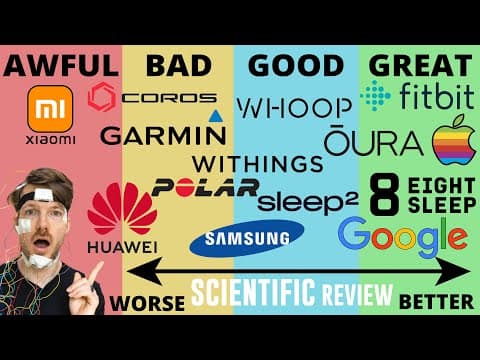
- Overall sleep-stage performance was similar to several recently tested Garmin devices, including watches from the Venu, Fenix, and Forerunner ranges. These Garmin products occupied the middle of the comparison because weak REM detection reduced their average and worst-stage agreement.
- The 15-night results apply directly only to the reviewer's body, so performance may differ for other users. However, the reviewer states that his separate examination of scientific literature produced findings that broadly matched the limitations observed in this personal test.
- The strongest use case is an existing Garmin owner who values overnight comfort more than leading sleep-stage accuracy. The device offers a pleasant biceps-worn alternative, but buyers must accept another charging routine and Garmin's continuing weakness in REM classification.
Install to Summarize YouTube Videos and Get Transcripts
Explore YouTube Video Summarizer or Get YouTube Transcript Extractor
Questions & Answers
Q: How accurate is the Garmin Index Sleep Monitor?
Across 15 nights against a ZMAX EEG headband, the Garmin Index Sleep Monitor achieved about 90% agreement for deep sleep and 64% for light sleep. Its REM-sleep agreement was less than 50%, making its overall sleep-stage accuracy mixed.
Q: How accurately does the Garmin Index Sleep Monitor detect deep sleep?
Deep-sleep detection was its strongest result, with about 90% agreement against the EEG reference. Individual nights showed that Garmin captured most reference-detected deep-sleep periods, although it sometimes recorded slightly too much deep sleep.
Q: How accurate is the Garmin Index Sleep Monitor for light sleep?
Light-sleep agreement with the EEG reference was 64% across the test. The reviewer characterized this performance as okay, placing it below the monitor's deep-sleep result but above its REM-sleep result.
Q: How accurately does the Garmin Index Sleep Monitor detect REM sleep?
Garmin correctly classified less than 50% of the REM sleep detected by the reference device. Nightly comparisons showed missed REM periods, extra REM classifications, and segments placed at the wrong times.
Q: Who should buy the Garmin Index Sleep Monitor?
It is mainly suited to existing Garmin users who track daytime activities with a Garmin watch but find that watch uncomfortable in bed. The reviewer found the biceps-worn monitor more comfortable, but buyers must accept charging and managing a second Garmin device.
Q: How long does the Garmin Index Sleep Monitor battery last?
The reviewer had to charge the monitor about every 5–7 days. Because it is worn at night, it can be charged during the day, and plugging it in daily can prevent battery issues.
Q: What device was used to test Garmin Index Sleep tracking accuracy?
The monitor was tested for 15 nights against a ZMAX EEG headband. The reviewer noted that the reference device is not perfect, especially at detecting awake moments, so the comparison focused on deep, light, and REM sleep.
Q: What are the main drawbacks of the Garmin Index Sleep Monitor?
Its main drawbacks are weak REM-sleep detection, charging every 5–7 days, and the inconvenience of managing another device. Its appeal is also limited outside the Garmin ecosystem, and the results came from testing one person, so performance may differ for others.
Summary & Key Takeaways
-
The Garmin Index Sleep Monitor is a biceps-worn sensor intended primarily for existing Garmin users who already track activities with a Garmin watch but find that watch uncomfortable overnight. The band was more comfortable for the reviewer, although it required charging about every 5–7 days and added another device to manage.
-
Across 15 nights, the monitor was compared with a ZMAX EEG headband. It achieved about 90% agreement for deep sleep and 64% agreement for light sleep, but less than 50% agreement for REM sleep. Individual nights showed solid deep-sleep matching alongside missed, misplaced, and falsely detected REM segments.
-
Overall sleep-stage performance resembled several recently tested Garmin watches, placing the Index Sleep Monitor in the middle of the reviewed devices rather than among the strongest performers. The findings come from one person, but the reviewer says they broadly align with his review of scientific literature on Garmin sleep-stage tracking.
Read in Other Languages (beta)
Share This Summary 📚
Summarize YouTube Videos and Get Video Transcripts with 1-Click
Try YouTube Summary with ChatGPT & Claude or YouTube Transcript Generator
Explore More Summaries from The Quantified Scientist 📚


Summarize YouTube Videos and Get Video Transcripts with 1-Click
Try YouTube Summary with ChatGPT & Claude or YouTube Transcript Generator