Amazfit Balance Review: Good Enough for Most?
TL;DR
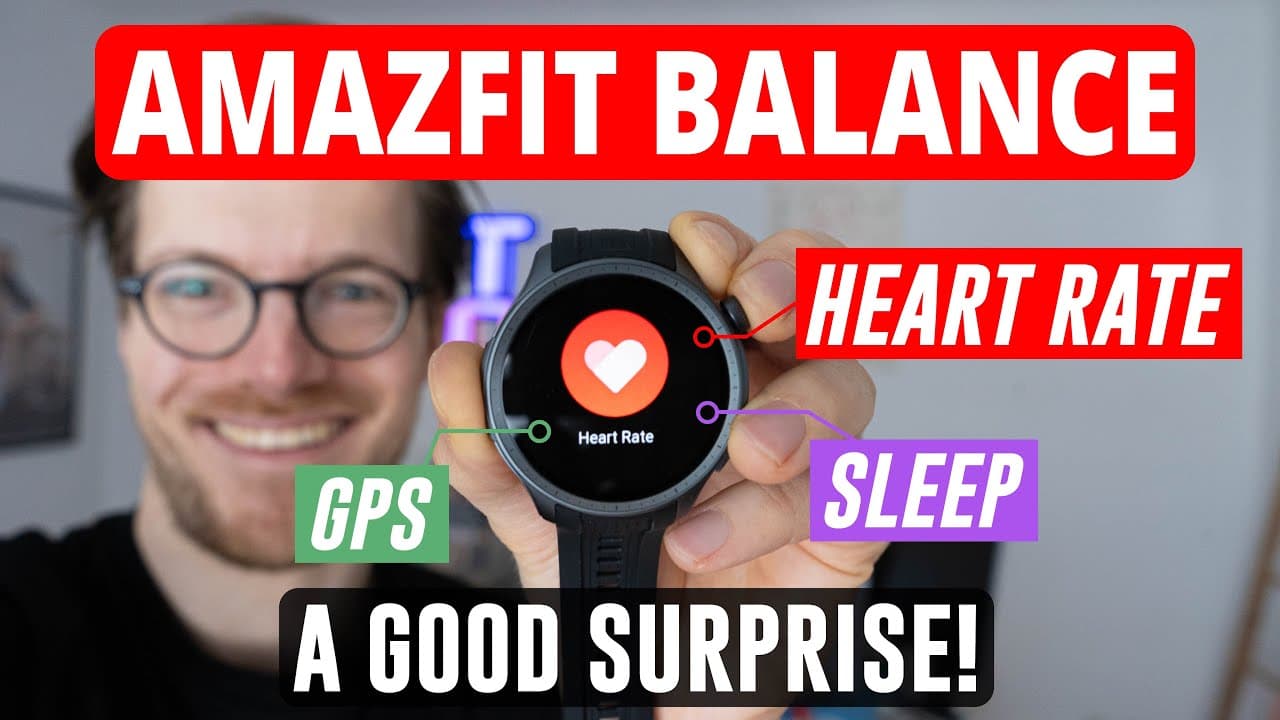
The Amazfit Balance delivers substantially better heart-rate tracking than earlier Amazfit devices tested by the reviewer, with correlations of 0.95 during indoor cycling and outdoor running. Its performance falls sharply during outdoor cycling, where delayed responses to heart-rate increases contribute to a correlation of 0.65, making it good enough for many users but unreliable in more challenging conditions.
Transcript
amazfit finally made a watch that doesn't totally suck this is the amazfit balance which has the new biot tracker 5.0 PPG sensor which makes this the first amazfit device I tested that actually measures my heart rate at least somewhat reliably it definitely isn't perfect but it might just be good enough in this video we're going to test the hard ra... Read More
Key Insights
- The BioTracker 5.0 PPG sensor is the first Amazfit sensor tested by the reviewer to measure his heart rate somewhat reliably. Although the results are not perfect, they represent a significant improvement over the poor performance of many earlier Amazfit devices in the same testing process.
- Indoor cycling heart-rate tracking achieved a correlation of 0.95 against the Polar H10 ECG chest strap. Most measurements were on or close to the agreement line, indicating strong overall performance during an exercise with limited arm movement and limited tension on the reviewer’s arm.
- Heart-rate artifacts are occasional rather than constant during indoor cycling. In one example, the watch reported roughly 140 BPM while the Polar H10 measured about 70 BPM, and another session showed a sudden false increase, but most recorded intervals followed the reference closely.
- The Amazfit Balance ranks in the upper middle class for indoor cycling among devices tested by the reviewer. Its results were close to the Fitbit Luxe, Huawei Watch 3, and Polar Verity Sense, while Apple Watches, some Huawei watches, Pixel watches, and Galaxy watches performed better.
- Outdoor running heart-rate tracking also achieved a correlation of 0.95. Most values stayed close to the Polar H10 reference, and the results did not show apparent cadence lock, although the watch sometimes struggled at the beginning or near the end of individual runs.
- Outdoor cycling is considerably harder for the watch because holding handlebars creates arm tension while movement and bumpiness interfere with the optical signal. Across 21 rides, the Amazfit Balance produced a much lower heart-rate correlation of 0.65 against the chest strap.
- Outdoor cycling errors mainly involve underestimating heart rate and reacting slowly to increases. The watch often eventually catches up, but repeated delays occur after sudden rises, creating many measurements below the agreement line and making performance markedly weaker than during running or indoor cycling.
- The watch’s physical design is a subjective weakness for the reviewer, who considers it chunky and less attractive than many other Amazfit products. Amazfit devices generally have attractive screens and designs, but the scientific evaluation focuses primarily on objective heart-rate, sleep-stage, and GPS testing.
Install to Summarize YouTube Videos and Get Transcripts
Explore YouTube Video Summarizer or Get YouTube Transcript Extractor
Questions & Answers
Q: How accurate is the Amazfit Balance for heart-rate tracking?
The Amazfit Balance tracks heart rate reasonably well in some activities but struggles in more demanding conditions. Against a Polar H10 ECG chest strap, it achieved correlations of 0.95 during indoor cycling and outdoor running. During outdoor cycling, however, the correlation dropped to 0.65, with frequent underestimation and delayed detection of sudden heart-rate increases.
Q: How does the Amazfit Balance perform during indoor cycling?
The Amazfit Balance performs well during indoor cycling, achieving a correlation of 0.95 with the Polar H10 ECG chest strap. Most measurements closely matched the reference across several spinning sessions. There were isolated problems, including delayed detection and one reading near 140 BPM when the actual heart rate was about 70 BPM, but these errors were exceptions.
Q: Is the Amazfit Balance accurate while running outdoors?
The Amazfit Balance is generally accurate for outdoor running, with a correlation of approximately 0.95 against the Polar H10 reference. Most measurements were close to the reference values, and the watch did not appear to confuse running cadence with heart rate. Some runs showed initial acquisition problems or minor deviations, but later portions typically tracked well.
Q: Why does the Amazfit Balance struggle during outdoor cycling?
Outdoor cycling creates arm tension from holding the handlebars and introduces more movement and bumpiness, making a clean optical heart-rate signal harder to obtain. In the reviewer’s 21 outdoor rides, the watch repeatedly took extra time to recognize sudden heart-rate increases. It also produced many readings below the reference, reducing the overall correlation to 0.65.
Q: Does the Amazfit Balance suffer from cadence lock while running?
The outdoor running results did not show apparent cadence lock, which would occur if the watch measured running cadence instead of heart rate. Most Amazfit Balance measurements remained close to the Polar H10 ECG chest strap values. Although the watch sometimes struggled when first acquiring the signal and showed minor deviations, its overall running correlation remained high at 0.95.
Q: How does the Amazfit Balance compare with other fitness watches?
For indoor cycling, the Amazfit Balance ranked in the upper middle class of devices tested by the reviewer and performed similarly to the Fitbit Luxe, Huawei Watch 3, and Polar Verity Sense. It did not reach the stronger results of Apple Watches, some Huawei watches, Pixel watches, or Galaxy watches, but it substantially outperformed many previously tested Amazfit devices.
Q: What heart-rate sensor does the Amazfit Balance use?
The Amazfit Balance uses the new BioTracker 5.0 PPG sensor. According to the reviewer’s comparative testing, it is the first Amazfit device he tested that measured his heart rate at least somewhat reliably. The sensor delivered strong correlations during indoor cycling and running, though its accuracy declined considerably during outdoor cycling and occasional artifacts remained visible.
Q: Is the Amazfit Balance worth considering for exercise tracking?
The Amazfit Balance appears good enough for many users whose main activities resemble indoor cycling or outdoor running, since both produced heart-rate correlations of 0.95 against a Polar H10 chest strap. It is less dependable for outdoor cycling, where the correlation fell to 0.65 and rapid increases were often detected late. Suitability therefore depends heavily on the exercise.
Summary & Key Takeaways
-
The Amazfit Balance uses the new BioTracker 5.0 PPG sensor and represents a significant heart-rate tracking improvement over previously tested Amazfit devices. Measurements were compared with a Polar H10 ECG chest strap during multiple exercises, with indoor cycling and running producing strong overall agreement despite occasional errors and delayed responses.
-
Indoor cycling produced a heart-rate correlation of 0.95 against the Polar H10 reference. Most measurements closely followed the chest strap, although isolated artifacts included a false reading near 140 BPM when the actual rate was about 70 BPM. Comparative results placed the watch in the upper middle class of tested devices.
-
Outdoor running also produced a correlation of approximately 0.95, with generally accurate tracking and no apparent cadence lock. Outdoor cycling was substantially more difficult, producing a correlation of 0.65 across 21 rides. The watch frequently underestimated heart rate and responded slowly when the reviewer’s heart rate increased suddenly.
Read in Other Languages (beta)
Share This Summary 📚
Summarize YouTube Videos and Get Video Transcripts with 1-Click
Try YouTube Summary with ChatGPT & Claude or YouTube Transcript Generator
Explore More Summaries from The Quantified Scientist 📚

Summarize YouTube Videos and Get Video Transcripts with 1-Click
Try YouTube Summary with ChatGPT & Claude or YouTube Transcript Generator