How to pick sleep wearables by science rankings
TL;DR
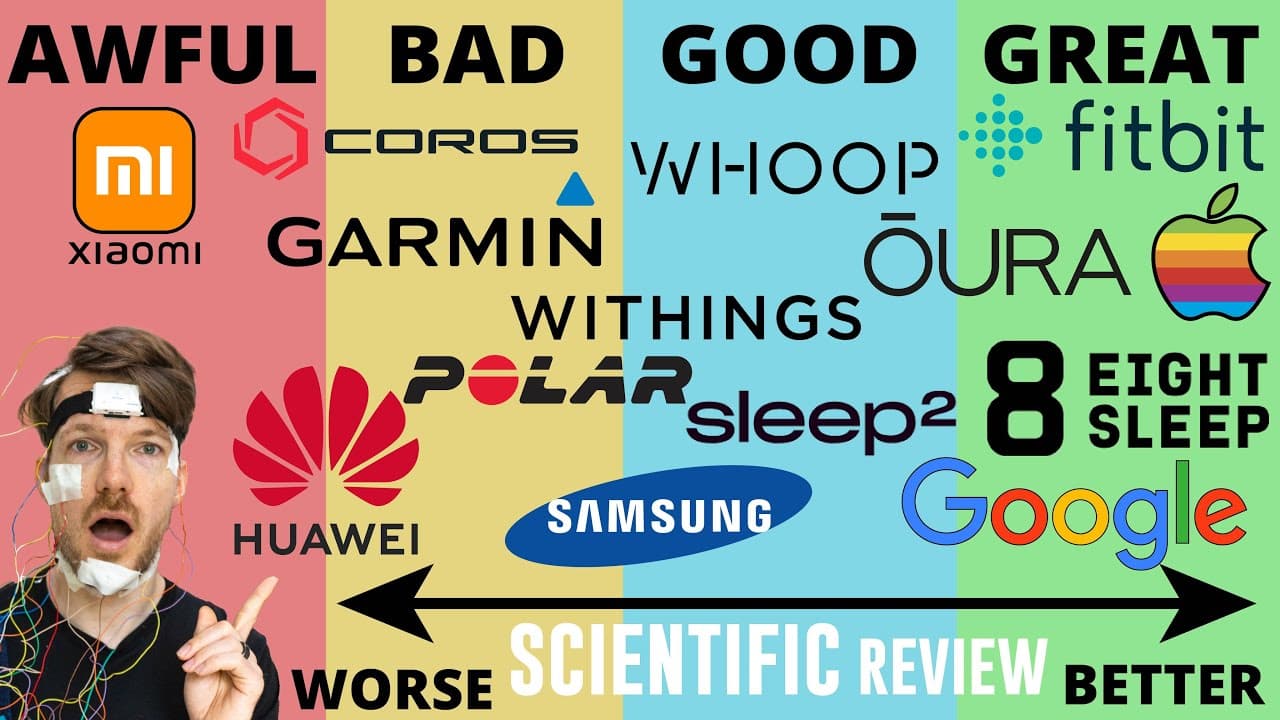
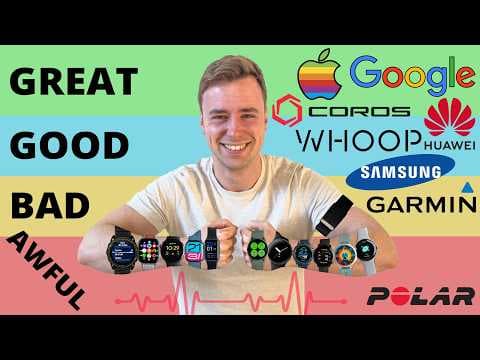
Aura Ring and Eight Sleep show the strongest sleep stage tracking in scientific literature, while Xiaomi, Huawei, and Garmin perform weaker results. The presenter compares old and new algorithms across multiple brands, noting that Fitbit and Apple offer solid overall tracking, with newer Aura Ring models delivering notable accuracy improvements. The analysis also highlights that results vary by sleep stage and device, so buyers should check stage-specific performance.
Transcript
I went through all the scientific literature I could find to create a complete overview of the best smart watches and wearables for sleep stage tracking and the results are super interesting and some results are very surprising. We will see which devices are good at tracking your deep sleep, RAM sleep and light sleep and which devices are just terr... Read More
Key Insights
- Sleep stage tracking accuracy varies widely by device.
- Aura Ring 3 and 4 show the best reported agreement in literature.
- Eight Sleep and Aura Ring are highlighted as strong options in testing.
- Fitbit devices perform solidly overall due to updated algorithms.
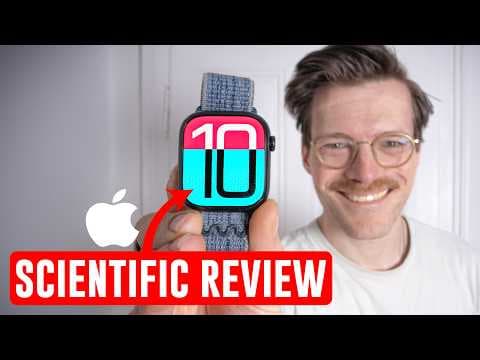
- Apple devices are reasonably accurate, with some studies supporting good results.
- Xiaomi and Huawei exhibit weak sleep stage agreement, especially in RAM and awake metrics.
- Garmin and Samsung appear mediocre in the presented comparisons.
- Whoop older algorithm remains decent, with newer algorithms showing potential improvements.
- More videos from this channel:
- More from this channel: The Quantified Scientist
Install to Summarize YouTube Videos and Get Transcripts
Explore YouTube Video Summarizer or Get YouTube Transcript Extractor
Questions & Answers
Q: What is the most accurate wearables option for sleep stage tracking according to the video?
According to the video, the Aura Ring 3 and 4 show the strongest sleep stage tracking performance, achieving close to 80 percent agreement with reference measures in literature for sleep stages. While the data is subject to study variations and may depend on the version used, these models consistently appear among the top performers in the presented comparisons.
Q: Which brands perform poorly in sleep stage tracking based on the sources cited?
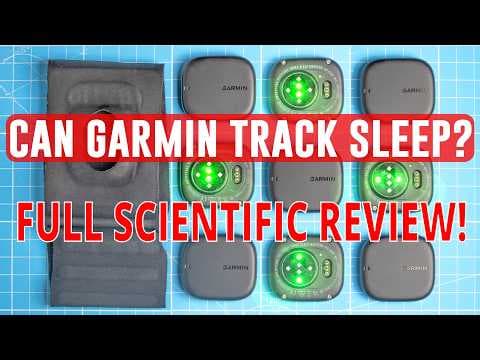
The video notes that Xiaomi and Huawei perform poorly in sleep stage tracking, with Xiaomi showing very low agreement in RAM sleep and awake metrics, and Huawei not performing well in general. Garmin is positioned as mediocre, with worse awake time agreement among older and some newer devices.
Q: How does Fitbit compare to Apple in sleep tracking as described?
Fitbit devices perform solidly with good overall sleep tracking, aided by Google integration and updated tracking algorithms. Apple devices are also reasonably accurate, with studies supporting decent sleep stage performance, but Fitbit may show improvements in newer algorithms that enhance accuracy compared to older tracking methods.
Q: What does the video say about Whoop's sleep tracking algorithm?
Whoop's older sleep stage tracking algorithm is described as reasonably good, with average stage agreement around 61-62%, while the new algorithm introduced about half a year ago appears to perform better in testing. However, scientific literature has not yet fully evaluated the new algorithm.
Q: Which devices are highlighted as having strong performance in the later testing mentioned?
Aura Ring 3 and 4 are highlighted for strong performance in sleep stage tracking, and Eight Sleep Pod is also noted as performing well in testing, though some results come from internal testing that should be interpreted with caution.
Q: What is the role of the Google sheet linked in the description?
The description mentions a Google sheet containing all references used in the study, allowing users to extract the data themselves and verify device performance across sleep stages. It provides transparency and reproducibility for the comparisons shown.
Q: Are all devices equally reliable across all sleep stages according to the video?
No, the video emphasizes that sleep stage tracking accuracy varies by stage, with some devices performing better for deep sleep or REM sleep and others struggling with awake time. Overall performance also varies by brand and model.
Q: What general guidance does the video offer for consumers?
Consumers are advised to consider both literature-based accuracy and the creator’s own testing when choosing a device, paying attention to specific sleep stages that matter most to them, and noting that newer algorithms may improve performance beyond older models.
Summary & Key Takeaways
-
Aura Ring 3 and 4 provide strong sleep stage tracking, nearing 80 percent agreement in studies, while Eight Sleep performs well in testing though data may be internally sourced. Fitbit shows solid overall performance across devices, aided by Google ownership and updated tracking algorithms. Xiaomi and Huawei perform poorly in sleep stage agreement, with RAM sleep and awake metrics especially weak.
-
Whoop's older algorithm is reasonably good, but newer sleep stage tracking appears to improve, though literature evidence is limited. Apple offers reasonable performance with several studies, while newer generations of Aura Ring outperform earlier versions in sleep stage accuracy. Garmin and Samsung are mid to lower performers in the presented data.
-
The video includes a link to a Google sheet with all references used for the study results, enabling users to extract data themselves and verify device performance across sleep stages. The channel emphasizes that results may vary by device and study, and that all data cited come from public literature or the creator’s testing.
Read in Other Languages (beta)
Share This Summary 📚
Summarize YouTube Videos and Get Video Transcripts with 1-Click
Try YouTube Summary with ChatGPT & Claude or YouTube Transcript Generator
Explore More Summaries from The Quantified Scientist 📚
Summarize YouTube Videos and Get Video Transcripts with 1-Click
Try YouTube Summary with ChatGPT & Claude or YouTube Transcript Generator