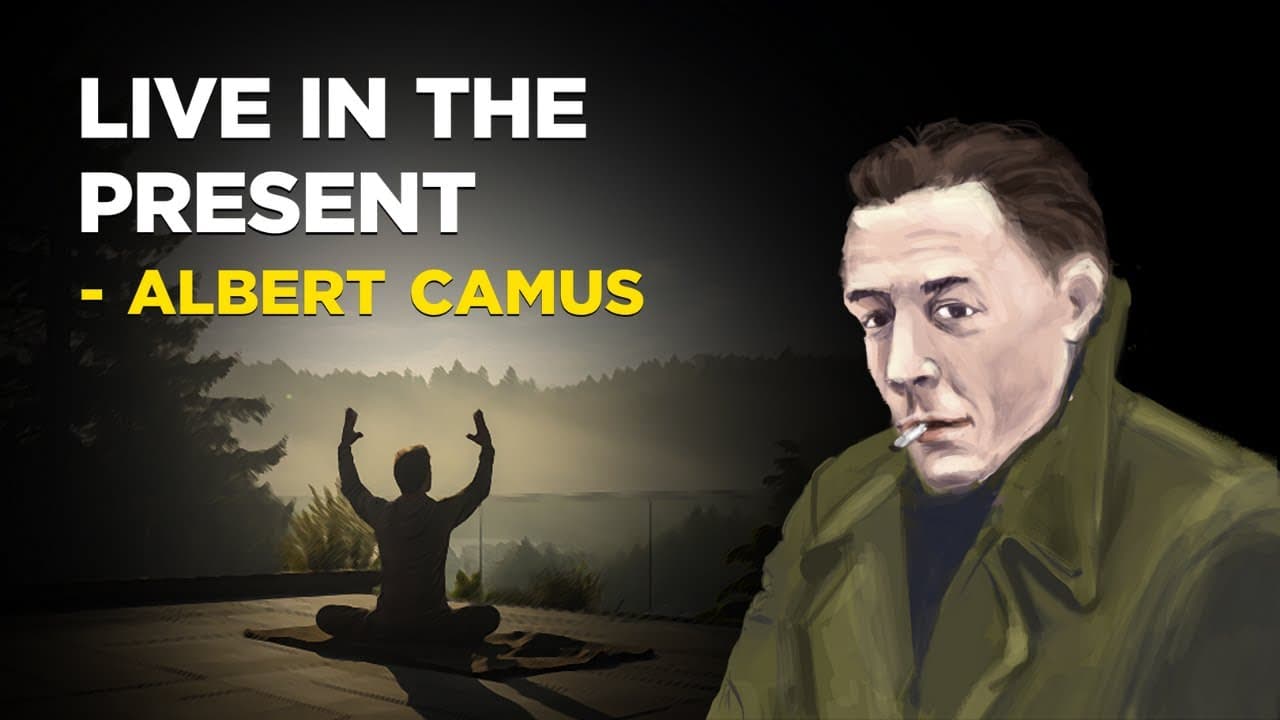
How to Live in the Present According to Albert Camus
TL;DR
To live in the present according to Albert Camus, embrace acceptance, rebellion, and individual freedom. He emphasizes that life may lack inherent meaning, but by accepting the absurdity of existence, we can create our own purpose and find happiness in every phase of life. Focus on living intensely and practically, while savoring each moment as it comes.
Transcript
Albert Camus was a French-Algerian novelist, playwright, journalist, essayist, philosopher and revolutionary, who lived in the 20th century. He wrote mainly novels, the most notable being The Stranger, The Plague, The Myth of Sisyphus, The Fall, and The Rebel. Due to the high quality of his work, he received the Nobel Prize in Literature ... Read More
Key Insights
- ❓ Absurdism challenges the notion of inherent meaning in a chaotic universe.
- 🤩 Camus advocates for acceptance as the key to individual freedom and creating personal meanings.
- 🫒 Living intensely, rebelling against injustice, and finding happiness in every life phase are central themes in Camus' philosophy.
- 🛟 Practicality and focusing on present moments are crucial in navigating life's unpredictability.
- ❓ Embracing absurdity and finding individual meaning are essential for personal fulfillment.
- 🎙️ More videos with Albert Camus:
Install to Summarize YouTube Videos and Get Transcripts
Explore YouTube Video Summarizer or Get YouTube Transcript Extractor
Questions & Answers
Q: How does Camus define absurdism, and what distinguishes it from nihilism?
Camus describes absurdism as the belief in a purposeless and chaotic universe where human attempts to find meaning are futile. Unlike nihilism, absurdism encourages finding personal meaning and purpose within life's inherent meaninglessness.
Q: Why does Camus propose acceptance as the key to facing absurdism?
Camus considers acceptance as the ultimate solution to the conflict between the human desire for meaning and the lack of inherent meaning in the universe. Acceptance leads to individual freedom and the ability to create new meanings despite life's inherent meaninglessness.
Q: How does Camus advocate for living intensively and rebelling against injustice?
Camus encourages living intensely by pursuing great goals and fighting for causes that matter. He believes that true freedom lies in rebelling against unfreedom and maintaining a perpetual state of revolution against injustice.
Q: What role does practicality play in Camus' philosophy?
Camus emphasizes the importance of focusing on practical solutions in life rather than relying on faith or supernatural beliefs. By approaching life's challenges practically and realistically, individuals can find meaning and navigate absurdity effectively.
Summary & Key Takeaways
-
Albert Camus delves into absurdism, where life lacks inherent meaning, advocating for acceptance and individual freedom.
-
Camus proposes three approaches to face absurdism: suicide, faith, and acceptance, ultimately emphasizing the importance of living in the present moment.
-
Embracing absurdity, rebellion, living intensely, and finding happiness in every phase of life are key themes in Camus' philosophy.
Read in Other Languages (beta)
Share This Summary 📚
Summarize YouTube Videos and Get Video Transcripts with 1-Click
Try YouTube Summary with ChatGPT & Claude or YouTube Transcript Generator
Explore More Summaries from Philosophies for Life 📚
Summarize YouTube Videos and Get Video Transcripts with 1-Click
Try YouTube Summary with ChatGPT & Claude or YouTube Transcript Generator