How to Manage Your Time Like Seneca Taught
TL;DR
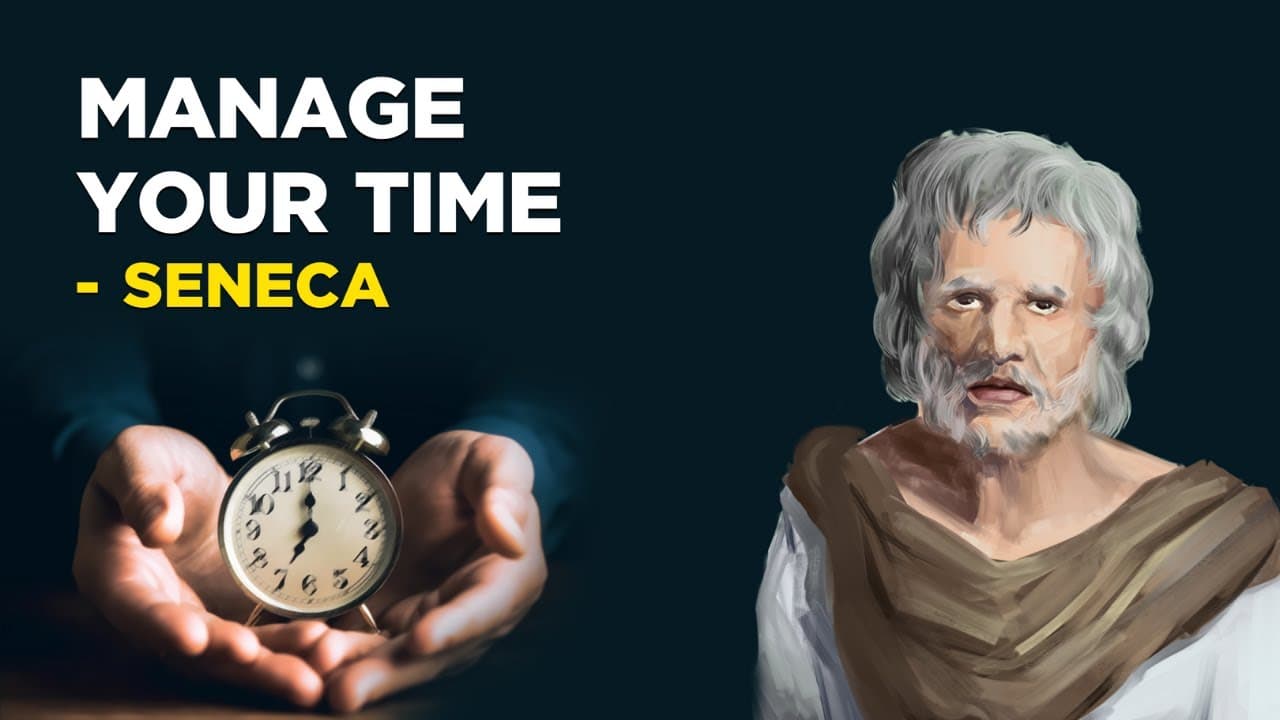
To effectively manage your time, treat it as a valuable, non-renewable resource. Live in the present and avoid deferring happiness for an uncertain future. Focus on creating a life you love by investing your time in meaningful experiences and reflecting on your personal growth.
Transcript
Lucius Emmaus Seneca was a Roman statesman and a stoic philosopher who recognized that if we are to live well we must be constant students of the greatest subject of all life itself in his moral essay on the shortness of life Seneca offers us an urgent reminder on the non-renewable 'ti of our most important resource our time so with that in mind he... Read More
Key Insights
- ⏳ Time is a valuable and non-renewable resource, and it should be treated as such. We often fail to recognize the value of time and squander it without consideration, leading to regret.
- 🌟 Live in the present and don't delay happiness for the future. Seneca urges us to not spend excessive time preparing for a future that is uncertain. Instead, live in the moment and make the most out of every day.
- 💪 Invest your time in creating a life you love. Rather than being tossed around by external circumstances, take control of your life and pursue what you truly want. Identify what you love and make a conscious effort to make time for those activities.
- 🤔 Overcome procrastination by premeditating on potential obstacles. By envisioning potential distractions or problems, you can design strategies to overcome them and increase your chances of following through on your plans.
- 🎯 Make long-term goals more immediate by creating expectancy. Often, the reason we delay starting something is because there is no immediate reward. By bundling your work with an immediate reward, you give yourself a reason to start and stay motivated.
- 🌟 Make the most of your free time by engaging in activities that add value and fulfillment to your life. We often waste our free time on trivial activities that don't contribute to our personal growth. Use your free time for activities like reading, exercising, or pursuing hobbies.
- 📚 Reflect on your past to gain self-awareness and appreciate personal growth. Spending time reflecting on your past helps you understand who you are today, take ownership of your actions, and appreciate how far you've come.
- 🚫 Stop wasting time on trivialities that do not contribute to personal growth or fulfillment. Be mindful of how you spend your time and avoid getting caught up in activities that have no long-term benefit.
- 🌟 Invest your time in creating new memories and experiences. Memories from life experiences bring lasting happiness and shape who we are. Invest your time in meaningful experiences, challenges, and opportunities.
- 📖 Invest your time in studying philosophy to expand your understanding of life and discover truth and virtue. Philosophy helps us fully inhabit our own selves and live a fulfilling life. Reading books and seeking knowledge can add to our time and wisdom.
Install to Summarize YouTube Videos and Get Transcripts
Explore YouTube Video Summarizer or Get YouTube Transcript Extractor
Questions & Answers
Q: How does Seneca emphasize the importance of treating time as a valuable resource?
Seneca cautions against squandering time, stating that people are often wasteful with time despite being frugal with their personal property. He highlights the uncertainty and limited nature of time, making it even more valuable than money.
Q: Why does Seneca encourage living in the present instead of constantly preparing for the future?
Seneca criticizes the idea that happiness lies in the future and urges living in the moment. He emphasizes that the future is uncertain and not within our control. By focusing on the present and not delaying happiness, we can make the most of our limited time.
Q: How does Seneca suggest investing time in creating a life you love?
Seneca believes that the best way to invest time is by investing in creating a life that brings joy and fulfillment. He advises asking yourself what you would do if you had more time and taking steps to pursue those desires. By making the most of the present and living for yourself, you can avoid wasting time on trivialities and working towards someone else's dreams.
Q: How does Seneca propose overcoming procrastination in time management?
Seneca introduces the concept of premeditatio malorum, which involves identifying potential distractions or obstacles before starting a task. By acknowledging and preparing for these obstacles in advance, you can increase your likelihood of following through with meaningful work. This method helps combat the brain's bias towards short-term gratification and focus on long-term commitments.
Q: How does Seneca suggest making the starting effort of work less unpleasant?
Seneca highlights the importance of expectancy, which is the gap between short-term impulses and long-term rewards. To overcome the reluctance to start something, he suggests bundling the work with an immediate reward. For example, allowing yourself to watch YouTube only after completing a certain amount of work. This creates a tangible reward for completing unpleasant tasks.
Q: Why does Seneca recommend spending time reflecting on the past?
According to Seneca, reflecting on the past helps extend our lives by offering self-awareness and memory of past lessons. By combing through past experiences, individuals can gain a better understanding of themselves, appreciate personal growth, and make better choices in the present. Reflecting on the past also helps with personal responsibility and seeing how far one has come in life.
Q: How does Seneca emphasize the importance of avoiding trivialities and investing time in creating new memories?
Seneca highlights how easily we waste time on trivial activities like social media and urges us to spend our time more meaningfully. He encourages investing time in creating new memories and experiences that provide lasting happiness. By pursuing challenges, spending time with loved ones, and seeking opportunities, individuals can create a life rich in memories and depth.
Q: Why does Seneca advocate for investing time in studying philosophy?
Seneca believes that philosophy is the only worthwhile occupation of the mind and spirit. Philosophy helps individuals understand fundamental truths, virtues, and the meaning of life. By studying philosophy, one can learn how to fully inhabit oneself and expand their understanding of existence. Reading philosophical books is a way to compress knowledge and wisdom into the limited time we have.
Summary & Key Takeaways
-
Treat time as a valuable resource that is limited and non-renewable.
-
Live in the present and avoid delaying happiness by constantly preparing for the future.
-
Invest time in creating a life you love, rather than being busy with things you don't enjoy.
Read in Other Languages (beta)
Share This Summary 📚
Summarize YouTube Videos and Get Video Transcripts with 1-Click
Try YouTube Summary with ChatGPT & Claude or YouTube Transcript Generator
Explore More Summaries from Philosophies for Life 📚


Summarize YouTube Videos and Get Video Transcripts with 1-Click
Try YouTube Summary with ChatGPT & Claude or YouTube Transcript Generator