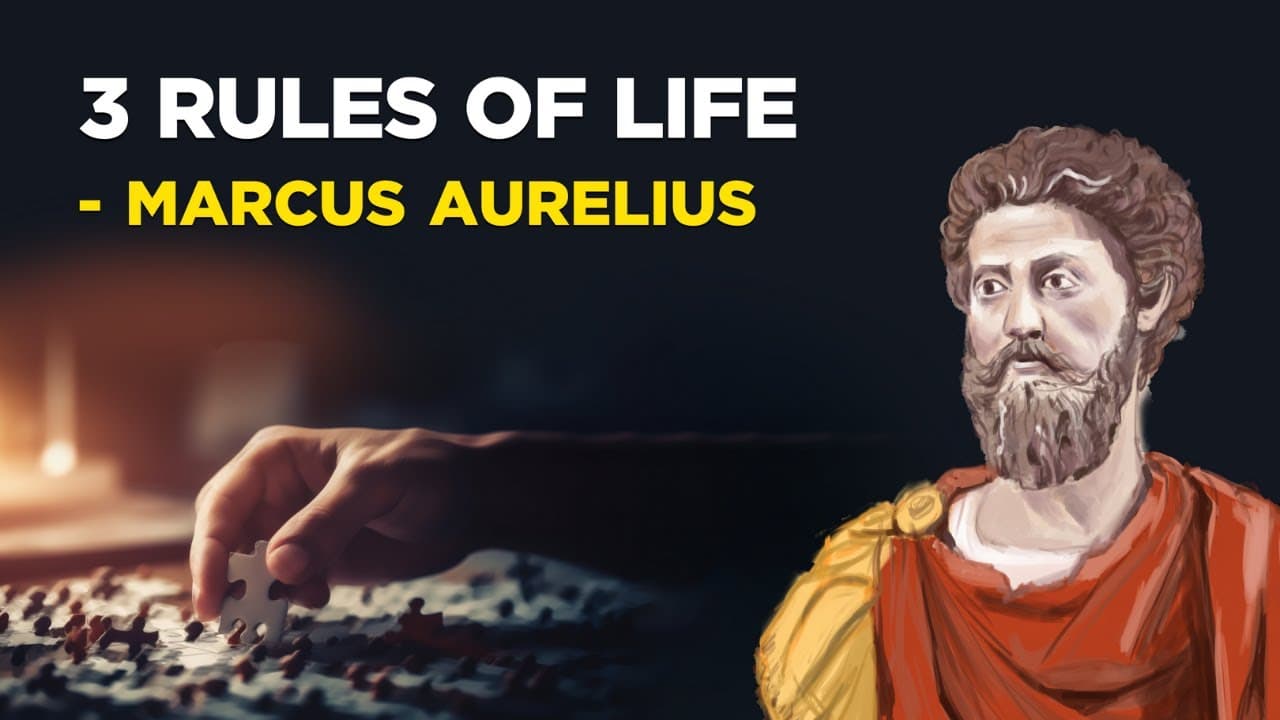
What Are Marcus Aurelius’ 3 Rules of Life in Stoicism?
TL;DR
Marcus Aurelius’ three rules for a good life are to aim for pure judgment, desire only what is within your control, and act for the common good. His Stoic approach separates external events from the value judgments that can create worry or anger, using reason, cognitive distancing, and mindfulness to examine beliefs. Read on for practical ways to apply these rules.
Transcript
this video is sponsored by North Vee PN Nord VPN is a virtual private network service provider that protects your identity online by encrypting your internet traffic whether you're operating from the airport or a hotel or anywhere we'll talk more about Nord VPN at the end of this video but for now let's get into it and take a look at Marcus or alia... Read More
Key Insights
- "He was a student of Stoicism, a philosophy that emphasized fate, reason, and self-restraint." (0:46)
- "Aurelius tells us that we make judgments about everything." (2:20)
- "The only thing that you are doing is venting your frustration, which not only serves no purpose, but could even be counterproductive as it makes you more agitated and more prone to an accident." (3:21)
- "Cognitive distancing, being the main precursor of cognitive-behavioral therapy or CBT, is basically the ability to become aware of our own beliefs and assumptions and to distance them from external events." (4:33)
- "The consequences are the behavior or feelings that are caused by the belief, perhaps we feel sadness or anger." (5:12)
Install to Summarize YouTube Videos and Get Transcripts
Explore YouTube Video Summarizer or Get YouTube Transcript Extractor
Questions & Answers
Q: What are Marcus Aurelius’ three rules of life?
The three rules are to always aim for pure judgment of events, desire only what is within your control, and act for the common good. Marcus Aurelius considered these rules important for living a good life, and the video explains how to adapt them to modern life.
Q: Who was Marcus Aurelius?
Marcus Aurelius was emperor of Rome during the 2nd century A.D. and is said to be the last of five good emperors. He studied Stoicism, and his leadership was guided by virtue and wisdom.
Q: What is Stoicism according to Marcus Aurelius’ teachings?
The transcript describes Stoicism as a philosophy emphasizing fate, reason, and self-restraint. For Marcus Aurelius, living according to nature involved using reason to judge impressions without adding personal distortions.
Q: What does pure judgment of events mean?
Pure judgment means seeing an event for what it is without adding a personal value judgment about its meaning or harm. Marcus Aurelius advises using rational thought to decide whether to accept or reject an impression.
Q: How does anger interfere with pure judgment?
Emotions can alert a person to immediate danger, such as the risk of a car collision. After the danger has passed, continued anger serves no purpose and can increase agitation, making another accident more likely.
Q: What is cognitive distancing?
Cognitive distancing is the ability to become aware of personal beliefs and assumptions and separate them from external events. The transcript describes it as the main precursor of cognitive-behavioral therapy, or CBT, and connects it to the Stoic practice of reasoning about impressions.
Q: How does the ABC model from CBT work?
The ABC model consists of adversity, belief, and consequences. If the adversity is losing a job, the belief might be that you are useless, while the consequences may include sadness or anger caused by that belief.
Q: How can mindfulness meditation support Stoic judgment?
Mindfulness meditation involves paying attention to thoughts as they come and go and recognizing that you are not your thoughts. It can clarify the difference between the event of getting fired and the added belief that you were fired because you are worthless.
Summary & Key Takeaways
-
Marcus Aurelius, the emperor of Rome during the 2nd century AD, was a student of Stoicism and emphasized virtue, wisdom, and self-restraint.
-
The Meditations, his autobiographical writings, show that the most powerful man on the planet faced similar problems to those we face today.
-
Marcus Aurelius' three rules of life are: aim for pure judgment, desire only what is within your control, and act for the common good.
Read in Other Languages (beta)
Share This Summary 📚
Summarize YouTube Videos and Get Video Transcripts with 1-Click
Try YouTube Summary with ChatGPT & Claude or YouTube Transcript Generator
Explore More Summaries from Philosophies for Life 📚



Summarize YouTube Videos and Get Video Transcripts with 1-Click
Try YouTube Summary with ChatGPT & Claude or YouTube Transcript Generator