How does vigorous exercise protect the heart and fight cancer
TL;DR
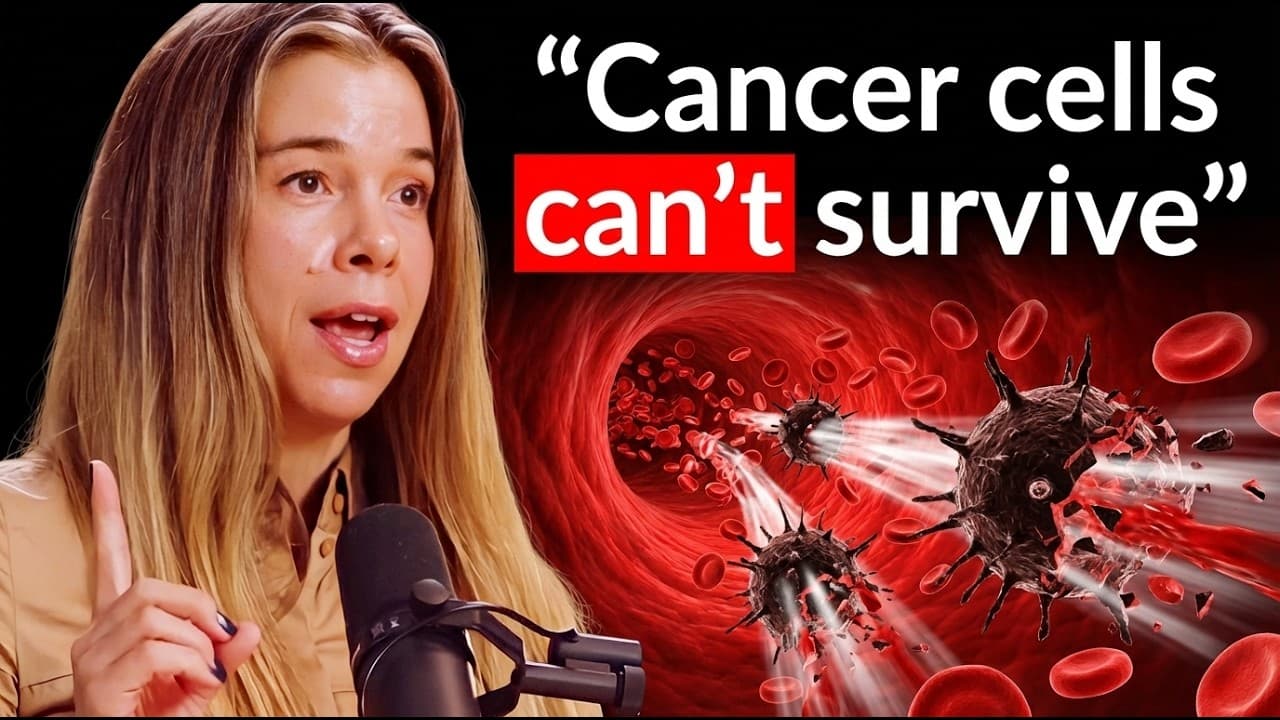
Vigorous exercise increases blood flow and shear stress on the arterial lining, boosting endothelial function and arterial flexibility, which strengthens cardiovascular health. It also may help kill circulating tumor cells by mechanical forces in the blood, potentially reducing cancer spread. These adaptations come from stronger stimuli than moderate activity.
Transcript
Okay. So, let's I think that's pretty clear that we are dramatically underestimating the value of vigorous intensity physical activity in in terms of reducing the risk of a variety of different you know negative health outcomes right and so that's pretty clear but the question is why is that right and this is something that I would say we've sort o... Read More
Key Insights
- Vigorous exercise delivers a stronger stimulus that leads to greater cardiovascular adaptations than moderate activity.
- Increased blood flow from intense exercise creates shear stress on artery walls, triggering beneficial endothelial responses.
- Shear stress prompts endothelial cells to secrete nitric oxide and prostacyclin, improving vasodilation and blood flow.
- Endothelial adaptations from high intensity exercise help arteries become more flexible and resistant to atherosclerosis.
- High intensity training (HIIT) shows superior improvements in endothelial function compared with volume-matched moderate training.
- There is a link between vigorous activity and reduced cancer mortality risk, potentially via endothelial and immune-related mechanisms.
- Circulating tumor cells are affected by mechanical forces; vigorous activity may increase the likelihood of cancer cells dying in circulation.
- Regular exposure to strong shear stress can signal the body to strengthen the vascular system for future stressors.
Install to Summarize YouTube Videos and Get Transcripts
Explore YouTube Video Summarizer or Get YouTube Transcript Extractor
Questions & Answers
Q: What is the main cardiovascular benefit of vigorous exercise according to the video
The main cardiovascular benefit is the improved endothelial function and arterial flexibility due to increased shear stress from faster blood flow. This stress signals arteries to adapt, enhances vasodilation, and helps the vascular system handle stress better, contributing to lower risk of cardiovascular issues over time.
Q: How does shear stress relate to artery health in this discussion
Shear stress is the friction of blood flow against the inner lining of arteries. Vigorous exercise increases this friction, which stimulates endothelial cells to release beneficial molecules like nitric oxide and prostacyclin, improving vascular function and making arteries more resilient to stress and disease.
Q: Why is high intensity exercise preferred over moderate when it comes to endothelial function
High intensity exercise produces stronger shear stress for a given time, resulting in greater endothelial adaptations. When volume is matched, high intensity consistently shows superior improvements in endothelial function and arterial stiffness, indicating a more effective stimulus for vascular health.
Q: What role do nitric oxide and prostacyclin play in this context
Nitric oxide and prostacyclin are molecules released by endothelial cells in response to shear stress. They promote vasodilation, improve blood flow, and support vascular health, contributing to better endothelial function and reduced arterial stiffness over time.
Q: Is there a cancer-related benefit mentioned for vigorous exercise
Yes, the video suggests that vigorous activity may help reduce cancer mortality by mechanisms including the impact of mechanical forces on circulating tumor cells. The stronger shear stress in blood flow can act as a death signal for damaged cancer cells, potentially lowering metastasis risk.
Q: What is meant by circulating tumor cells dying under mechanical forces
Circulating tumor cells are cancer cells that have entered the bloodstream. The video explains that these cells have mechano sensors and are sensitive to mechanical forces; vigorous exercise creates shear stress that can act as a death signal, increasing the likelihood these cells die before establishing new tumors.
Q: How does the example study with middle-aged adults support the benefits of vigorous exercise
The study described involved mostly vigorous exercise over several hours per week and showed substantial cardiovascular adaptations, including reversing aspects of structural aging in the heart by a notable amount over two years. This supports that a strong, vigorous stimulus can yield meaningful long-term vascular benefits.
Q: What analogy is used to explain the difference between light and strong shear stress
The speaker uses the breeze versus strong wind analogy: a light breeze over a long time won’t knock over trees, while a strong wind delivers a much more impactful stimulus. This illustrates that the intensity of shear stress, not just duration, drives the vascular adaptations.
Summary & Key Takeaways
-
Vigorous activity creates strong cardiovascular adaptations by increasing shear stress and blood flow, which improves arterial function and resilience.
-
Endothelial cells respond to high shear stress by releasing beneficial molecules that promote vasodilation and vascular health.
-
Circulating tumor cells may be more vulnerable to mechanical forces from vigorous movement, potentially reducing metastasis risk.
Read in Other Languages (beta)
Share This Summary 📚
Summarize YouTube Videos and Get Video Transcripts with 1-Click
Try YouTube Summary with ChatGPT & Claude or YouTube Transcript Generator
Explore More Summaries from FoundMyFitness Clips 📚






Summarize YouTube Videos and Get Video Transcripts with 1-Click
Try YouTube Summary with ChatGPT & Claude or YouTube Transcript Generator