How to Build a Claude-Powered Content System
TL;DR
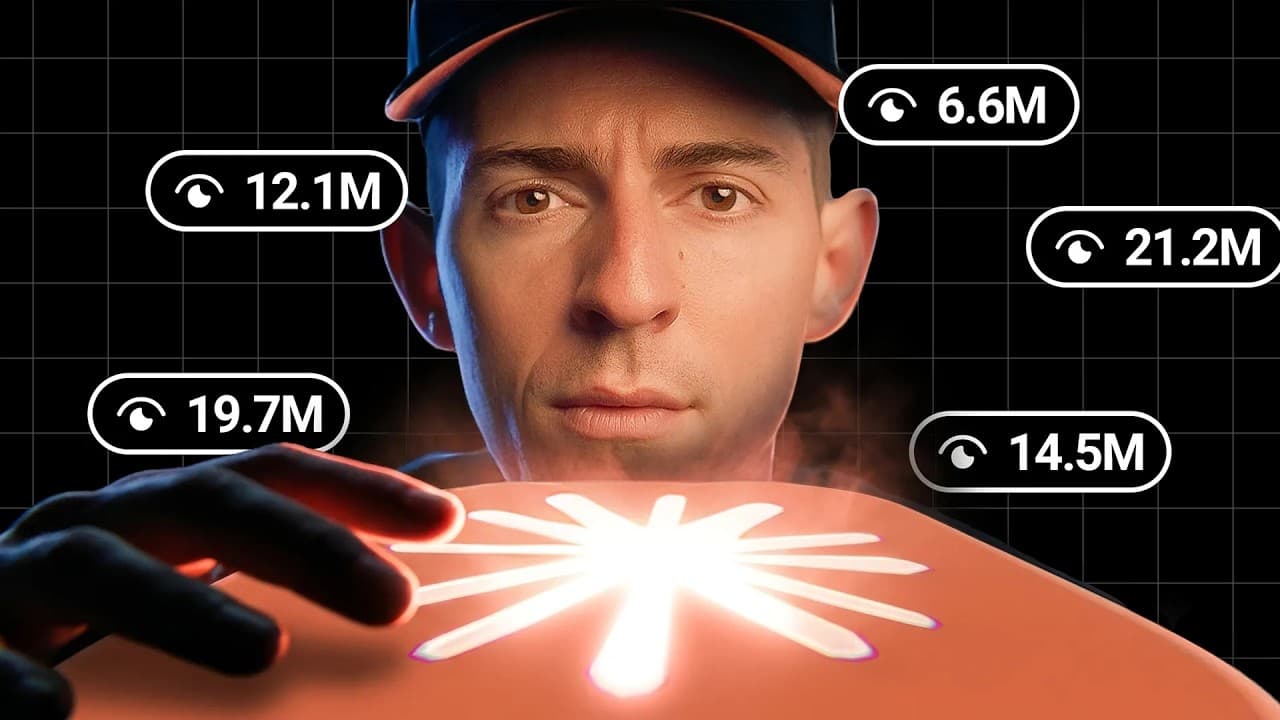
Connect Claude Desktop to Sandcastles.ai so content decisions are grounded in social media data from your channel, competitors, transcripts, and niche. Then move through positioning, topic selection, format development, production, and a learning loop that feeds winning content back into the system, helping you create stronger work faster instead of relying on context-free AI guesses.
Transcript
In this video, I'm going to explain how to use Claude to grow faster on any social media platform. And this will cover the entire content workflow from strategy and topics to formats, hooks, scripts, [music] edits, and systems. If you wanted to learn how to use AI to make better content faster that isn't slop, this is going to be a master class for... Read More
Key Insights
- Social media data is the foundation of the workflow because Claude needs context about the creator, successful videos, competitors, transcripts, and the broader niche. The Sandcastles.ai MCP supplies this data layer and acts as the bridge between social media information and Claude.
- The content growth system has three broad stages: strategy and positioning, the workflow for producing an individual video, and a learning loop. Together, these stages connect initial audience decisions with execution and the later analysis of content that performs well.
- The strategy sequence consists of the niche interviewer, unique positioning builder, bullseye builder, topic scanner, and format finder. The presenter recommends running these five Claude skills in succession, with a growth orchestrator serving as the master skill for the overall process.
- The niche interviewer establishes the creator's commercial and audience context through five to six questions. Its output covers the ideal avatar, target authority statement, audience pain points, dream outcome, and possible competitive differentiation, creating a foundation for later topic, hook, and script decisions.
- Detailed audience psychology improves downstream targeting because the system uses demographic traits, beliefs, concerns, prior spending, desired outcomes, and pain points when developing content. The presenter recommends spending five to ten minutes answering the interview questions with substantial depth instead of supplying vague descriptions.
- A target authority statement defines how the creator wants to be perceived in a single sentence. In the demonstration, the fictional surgeon is positioned as an honest educator about facial plastic surgery for women who have relied on injectables and are considering a more substantial procedure.
- Competitive differentiation can be built from seven core positioning attributes. The transcript explicitly identifies topic selection as one attribute, where a creator covers subjects that others in the niche typically ignore, and substance depth as another, where common subjects receive more thorough treatment.
- The production workflow moves from topic to research, format, hook, script, recording, and editing. AI is placed within this sequence to support specific decisions, while the final content coach examines winners and feeds their lessons back into the system for future work.
Install to Summarize YouTube Videos and Get Transcripts
Explore YouTube Video Summarizer or Get YouTube Transcript Extractor
Questions & Answers
Q: How do you use Claude to build a social media content system?
Start with Claude Desktop and connect the Sandcastles.ai MCP so Claude can access social media data instead of working without context. Run the growth orchestrator with the niche interviewer, unique positioning builder, bullseye builder, topic scanner, and format finder. Then use the resulting strategy to guide topics, research, formats, hooks, scripts, recording, and editing. Finally, analyze winning content and feed those lessons back into future decisions.
Q: Why does Claude need social media data for content strategy?
Claude needs social media data because it otherwise lacks context about the creator, the videos that are performing, competitor publishing patterns, and the structure of the niche. The Sandcastles.ai MCP brings channel videos, competitor material, transcripts, and niche information into Claude for deeper analysis. According to the presenter, this grounding prevents Claude from merely guessing and producing generic, low-quality recommendations.
Q: What tools are required for the Claude content workflow?
The workflow requires two primary tools: the Claude Desktop application and the Sandcastles.ai MCP social media plugin installed for Claude. MCP is described as the bridge that brings social media data into the model. The presenter uses the most expensive model option available in his setup because he wants the strongest possible insights, while the plugin supplies the contextual information those insights depend on.
Q: What are the five Claude skills for content strategy?
The five strategy and positioning skills are the niche interviewer, unique positioning builder, bullseye builder, topic scanner, and format finder. They are intended to run in succession as part of a larger content growth system. A separate growth orchestrator functions as the master skill that coordinates the process, while the five specialized skills develop the audience, positioning, targeting, topic, and format foundations.
Q: What does the niche interviewer skill produce?
The niche interviewer asks approximately five to six questions and takes about five minutes in the demonstrated workflow. It identifies the ideal audience avatar, target authority statement, audience pain points, dream outcome, and potential competitive differentiation. The questions also examine the business, what it sells, who pays, the most important revenue sources, the core viewer's characteristics, and the creator's unfair advantages.
Q: How detailed should an audience avatar be for content planning?
The audience avatar should include substantial demographic and psychological detail, including age, location, family or professional context, beliefs, previous purchases, concerns, pain points, and desired results. In the fictional example, the target is an affluent woman around age 52 who has spent heavily on Botox, filler, and other therapies but feels those approaches are no longer working. That detail later informs topics, hooks, and scripts.
Q: How can a creator develop unique positioning in a crowded niche?
A creator can develop unique positioning by identifying a distinct lane through seven competitive attributes. The transcript specifically describes topic selection, which means covering subjects that others in the niche rarely address, and substance depth, which means treating familiar subjects with greater depth. The unique positioning builder uses the creator's expertise, audience, authority statement, and unfair advantages to begin shaping that differentiated position.
Q: How does the content learning loop improve future posts?
The learning loop analyzes content that wins, extracts lessons from its performance, and reinforces those findings in the next round of strategy and production. The presenter calls this component the content coach. It follows the workflow for topics, research, formats, hooks, scripts, recording, and editing, ensuring that successful results become useful input for future content instead of remaining disconnected outcomes.
Summary & Key Takeaways
-
The workflow requires Claude Desktop and the Sandcastles.ai MCP, which brings social media information into Claude. That data layer can analyze videos, retrieve transcripts, examine competitors, and map a niche. Without relevant context, Claude must guess, which the presenter says produces weak, generic content rather than strategically informed recommendations.
-
Strategy begins with five Claude skills used in sequence: the niche interviewer, unique positioning builder, bullseye builder, topic scanner, and format finder. A growth orchestrator coordinates the system. The presenter demonstrates the process through a fictional Los Angeles facial plastic surgeon seeking leads and clients from social content.
-
The complete system extends from strategy into production, covering topics, research, formats, hooks, scripts, recording, and editing. After publishing, a content coach creates a learning loop that examines winners and reinforces successful lessons. This feedback process connects actual performance data to future decisions instead of treating every piece as an isolated attempt.
Read in Other Languages (beta)
Share This Summary 📚
Summarize YouTube Videos and Get Video Transcripts with 1-Click
Try YouTube Summary with ChatGPT & Claude or YouTube Transcript Generator
Explore More Summaries from Kallaway 📚


Summarize YouTube Videos and Get Video Transcripts with 1-Click
Try YouTube Summary with ChatGPT & Claude or YouTube Transcript Generator