How to Use Psychology to Keep Viewers Watching
TL;DR
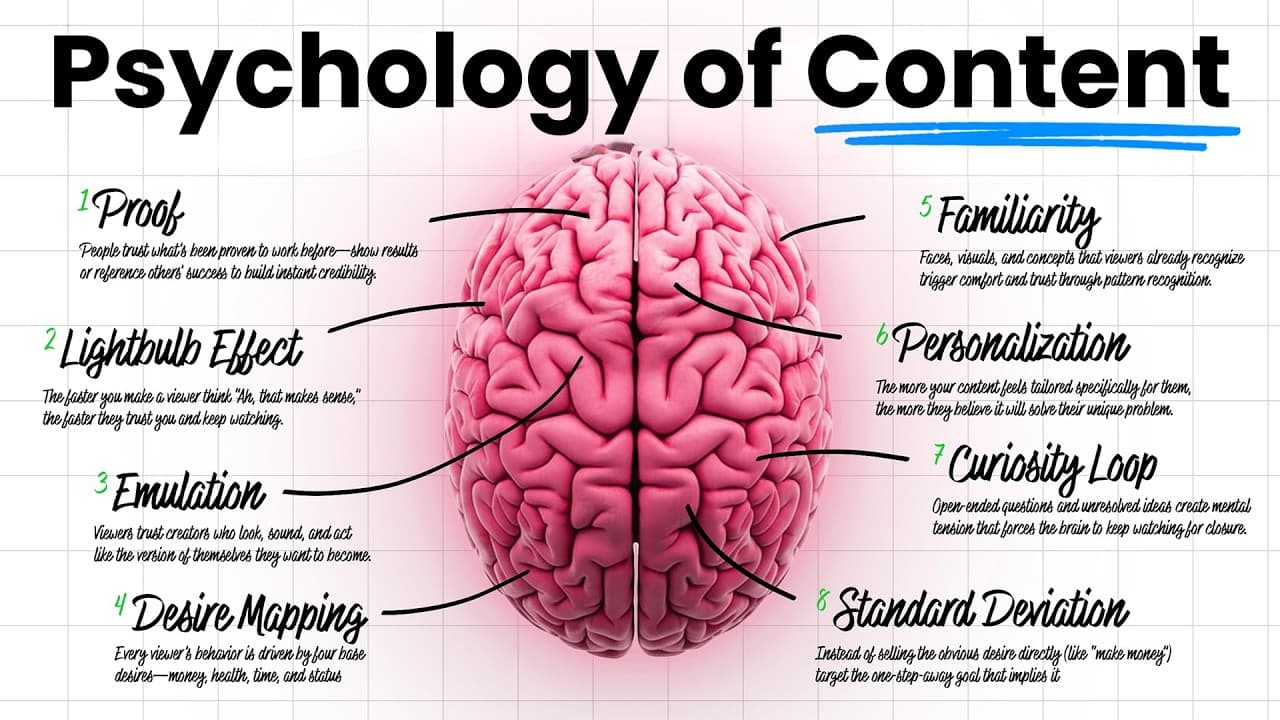
Match content to a viewer’s desired outcome, then preserve trust by making every moment feel useful and easy to understand. Clear language, familiar comparisons, supportive visuals, and an authentic persona can shorten the path to insight, while titles, thumbnails, introductions, and storytelling should consistently signal that continued attention will move viewers closer to money, time, health, or status goals.
Transcript
If you want your content to perform better, all you have to understand is human psychology. This is the number one thing that separates the great creators from everyone else. And if you can learn this one thing, there is absolutely zero chance you will fail in the content game. So, in this video, I'm going to walk through exactly how to use psychol... Read More
Key Insights
- Desire mapping is the practice of identifying what viewers want and framing content as a credible path toward that outcome. The framework presented connects most base desires to money, time, health, or status, which the creator calls the four horsemen of desires.
- Educational viewing is an exchange in which the audience spends time and attention because it expects useful skills or desired outcomes. A viewer continues only while believing that the remaining content will move them closer to something they value.
- Viewer drop-off is described as a loss of trust, not merely boredom. When people stop believing that additional viewing time will produce meaningful progress, they leave, so every section must reinforce the connection between continued attention and the promised result.
- The light bulb effect is the idea that rapid comprehension builds trust. When viewers think an explanation suddenly makes sense, they feel smart and credit the creator for producing that clarity, increasing their willingness to continue watching for more insights.
- Clear communication is built with simple vocabulary, short sentences, uncomplicated phrasing, and the removal of unnecessary detail. The recommended target is a fifth-grade reading level because viewers cannot absorb or act on an idea if they cannot understand the words used to present it.
- Comparisons improve comprehension by connecting unfamiliar ideas to experiences the audience already understands. An A-versus-B structure makes the present state recognizable and the desired future easier to imagine, reducing the mental effort required to grasp a new concept.
- Visuals support spoken explanations by giving the brain another way to process meaning. Long stretches of words can become difficult to absorb, while coordinated words and graphics can make information easier to understand for a longer period.
- Emulation builds trust when a creator authentically resembles the future identity desired by the target audience. Appearance, voice, behavior, surroundings, brands, and slang influence snap judgments, but adopting a false persona creates a charade that may become impossible to maintain.
Install to Summarize YouTube Videos and Get Transcripts
Explore YouTube Video Summarizer or Get YouTube Transcript Extractor
Questions & Answers
Q: How does desire mapping improve social media content?
Desire mapping improves content by identifying what the intended viewer wants, then presenting the content as a useful route toward that outcome. The framework groups base desires into money, time, health, and status. Titles, thumbnails, introductions, and storytelling can then signal that spending time on the content will provide skills or progress connected to one of those desires.
Q: Why do viewers spend time watching educational content?
Viewers spend time on educational content because they believe the investment will help them gain skills and eventually reach a desired outcome. Their payment is time and attention rather than money. They keep watching while they trust that the information is moving them closer to more money, more time, better health, greater status, or a related practical goal.
Q: Why do viewers stop watching a useful video?
Viewers stop watching when they lose confidence that the remaining material will help them reach the outcome they expected. The explanation presented distinguishes this response from simple boredom. Once additional viewing appears unlikely to produce useful progress, the value exchange breaks down, so the viewer protects their time and leaves rather than continuing to invest attention.
Q: What is the light bulb effect in content creation?
The light bulb effect occurs when an explanation quickly gives viewers an “I understand it now” moment. Comprehension makes people feel capable, and they tend to associate that feeling with the person who made the idea clear. Repeated moments of understanding strengthen trust and make viewers more willing to remain with the content in expectation of further useful insights.
Q: How can creators make explanations easier to understand?
Creators can improve comprehension by using simple words, short sentences, direct phrasing, familiar comparisons, concise introductions, and visuals that reinforce spoken points. The recommended language target is a fifth-grade reading level. Unnecessary details should be removed because clarity depends on reducing the effort required to understand both the individual words and the larger meaning.
Q: Why are comparisons effective when explaining new ideas?
Comparisons work because they connect an unfamiliar concept to something the audience already recognizes. An A-versus-B example lets viewers identify their current condition and contrast it with a desired future without imagining both states from nothing. This relative understanding reduces cognitive effort, speeds up comprehension, and helps create the light bulb moments that build trust.
Q: How do visuals help viewers understand spoken content?
Visuals help by supporting the meaning of spoken words and giving viewers another channel through which to process information. A long sequence of words alone can become difficult for the brain to absorb. When graphics directly match the explanation, the combined presentation becomes easier to digest for longer and can shorten the time required for viewers to understand the point.
Q: How does the mirroring effect build audience trust?
The mirroring effect, also called emulation, builds trust when a creator looks, dresses, sounds, and behaves like the person the audience wants to become. Viewers form rapid judgments from appearance, equipment, surroundings, brands, and language. Creators should emphasize genuine characteristics that match the audience’s desired future rather than inventing a character they cannot authentically sustain.
Summary & Key Takeaways
-
Desire mapping begins with four base desires: money, time, health, and status. Viewers pay for educational content with time and attention because they expect useful skills or outcomes in return. Effective titles, thumbnails, introductions, and stories connect that investment to a desired result and maintain confidence that watching remains worthwhile.
-
The light bulb effect links comprehension with trust. Viewers feel capable when an explanation makes immediate sense, and they associate that positive feeling with the creator. Simple words, short sentences, comparisons, concise introductions, and relevant visuals improve absorption, reduce the time required to reach an insight, and encourage continued viewing.
-
Emulation occurs when viewers see a creator as representing the person they hope to become. Clothing, speech, behavior, equipment, surroundings, brands, and slang can send rapid trust signals. The recommended approach is to emphasize authentic traits that fit the audience’s desired future instead of maintaining a fabricated character that cannot be sustained.
Read in Other Languages (beta)
Share This Summary 📚
Summarize YouTube Videos and Get Video Transcripts with 1-Click
Try YouTube Summary with ChatGPT & Claude or YouTube Transcript Generator
Explore More Summaries from Kallaway 📚

Summarize YouTube Videos and Get Video Transcripts with 1-Click
Try YouTube Summary with ChatGPT & Claude or YouTube Transcript Generator