How Does the Limbic System Influence Learning and Fear?
TL;DR
The limbic system, especially the nucleus accumbens, influences how we experience comfort, fear, and excitement, impacting learning outcomes. By creating a comfortable and predictable course environment, educators can help students face challenges with curiosity rather than fear, thereby enhancing engagement and effectiveness in learning.
Transcript
Hello and welcome to the Penguin Prof channel. This is Valerie Pennington, and today I want to talk about hacking the limbic system, and this really feeds into the importance of humanizing your courses, especially in the online environment. We're going to talk about neuroscience and we're going to talk about some real nuts and bolts of what you ... Read More
Key Insights
- 🗯️ The brain seeks both novelty and comfort, and finding the right balance is crucial for optimal learning and engagement.
- 😨 Fear and anxiety hinder learning, while curiosity and interest promote it.
- 🤩 The limbic system, particularly the nucleus accumbens, plays a key role in the brain's response to fear and reward.
- 🧠 Context matters when it comes to how the brain perceives and responds to challenges.
- 👾 Building trust is essential in education, as it creates a safe space for students to take risks and explore new challenges.
- 😄 Providing a scaffold of comfort and predictability can help students feel more at ease and motivated to learn.
- 😷 Encouraging and supporting students in asking questions, making mistakes, and handling embarrassment fosters a growth mindset.
Install to Summarize YouTube Videos and Get Transcripts
Explore YouTube Video Summarizer or Get YouTube Transcript Extractor
Questions & Answers
Q: What is the challenge zone and why is it important for learning?
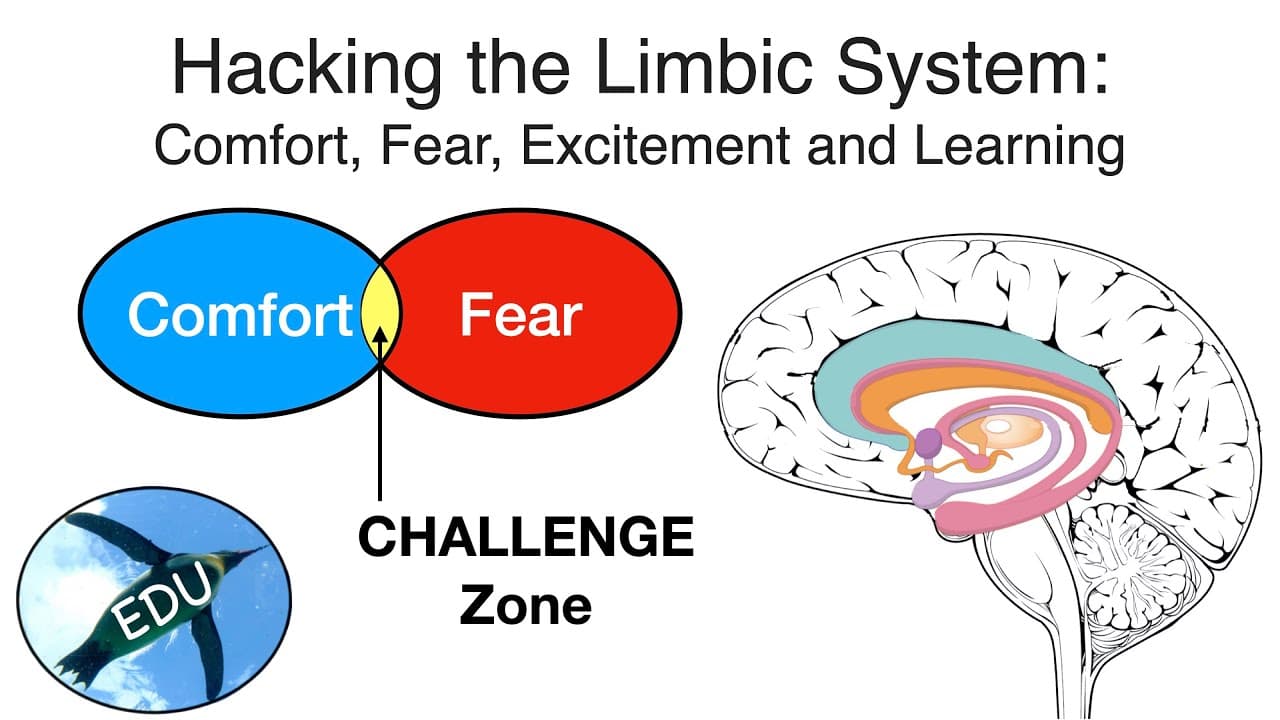
The challenge zone is the sweet spot between comfort and fear where students experience "good stress" and are motivated to learn and grow. It allows for peak performance and fosters curiosity and interest.
Q: How can educators create a challenging yet comfortable learning environment online?
Educators can achieve this by providing a scaffold of comfort and predictability, structuring modules consistently, using welcoming and encouraging language and design elements, and building trust through follow-through and frequent low-stakes assessments.
Q: Why is trust important in an educational setting?
Trust is crucial for students to feel safe and willing to take risks in asking questions and making mistakes. When students trust that their instructor cares about their success and follows through on their promises, they are more likely to actively participate and engage in their learning.
Q: How can educators help students overcome fear and embrace challenges?
By creating a supportive environment where students are encouraged to ask questions, make mistakes, and handle embarrassment, educators can help students overcome their fear and develop a growth mindset. This can be achieved through building comfort, providing feedback, and creating opportunities for self-analysis.
Summary & Key Takeaways
-
Teaching in an online environment presents unique challenges, but understanding how the brain works can reduce fear and anxiety in students.
-
The brain craves both novelty and comfort, but too much of either can hinder learning.
-
The challenge zone, located at the intersection of comfort and fear, is where optimal learning and growth occur.
Read in Other Languages (beta)
Share This Summary 📚
Summarize YouTube Videos and Get Video Transcripts with 1-Click
Try YouTube Summary with ChatGPT & Claude or YouTube Transcript Generator
Explore More Summaries from ThePenguinProf 📚






Summarize YouTube Videos and Get Video Transcripts with 1-Click
Try YouTube Summary with ChatGPT & Claude or YouTube Transcript Generator