How Does Fasting Affect Your Body Over 72 Hours?
TL;DR
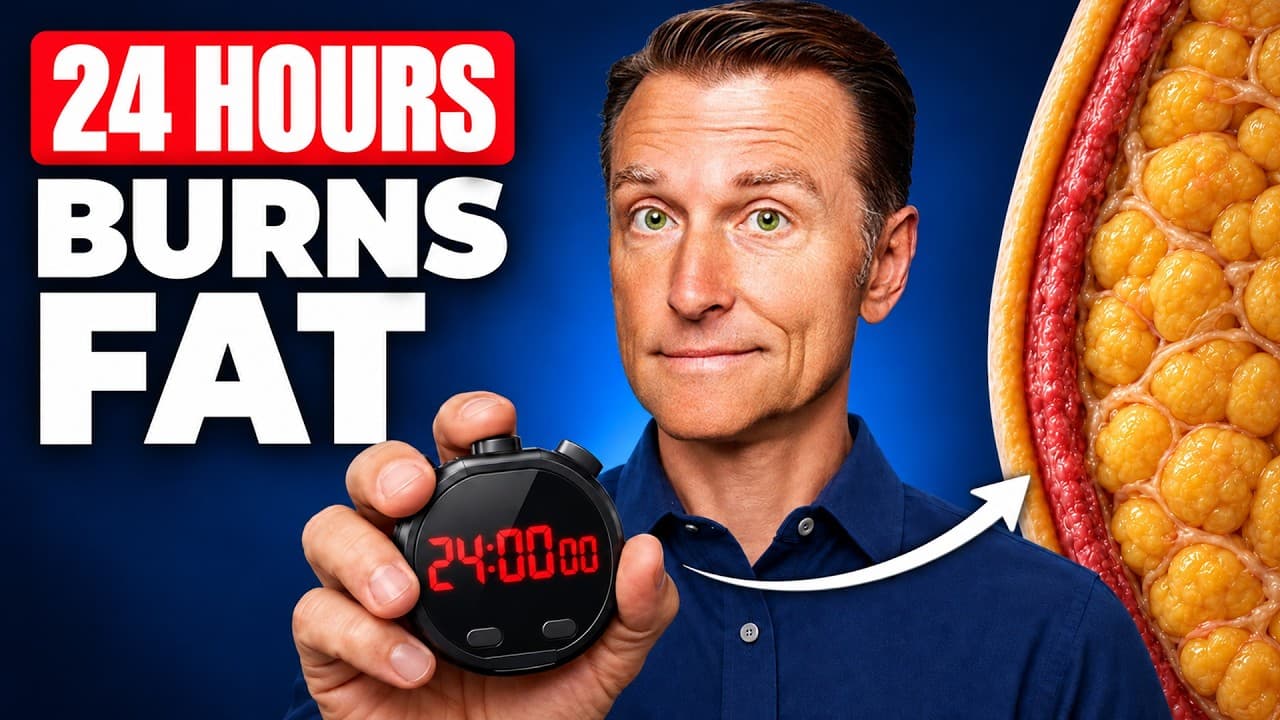
Fasting progressively shifts the body from stored glucose toward fat-derived ketones while activating processes associated with recycling damaged proteins, reducing inflammation, and supporting repair. The transcript recommends regular 18-hour fasts with a six-hour eating window, gradual progression toward occasional longer fasts, and intake of water, minerals, B vitamins, and salt during extended fasting.
Transcript
Let's talk about what happens on the inside of your body when you're fasting so over here we have a start of a fast and we go 24 hours 48 and 72 so there's a lot of really magical things that happen when you fast our bodies have developed over a long period of time and have adapted to starvation many many times so we have all these unique proteins ... Read More
Key Insights
- Growth hormone reportedly begins increasing around 12 hours of fasting and continues rising as the fast progresses. The transcript associates this hormone with fat burning, joint healing, protein synthesis, and anti-aging effects, while also noting that exercise can increase it.
- Autophagy reportedly begins around 18 hours and becomes stronger with continued fasting. This process recycles old or damaged proteins, microbes, and advanced glycated end products into reusable amino acids, helping renew tissues and clear cellular proteins that no longer function properly.
- Liver glycogen becomes substantially depleted around 24 hours, causing greater reliance on ketones as an alternative fuel. The transcript says stored body fat, including fat in a fatty liver, can then be converted into ketones and used as energy.
- Ketones are described as appetite-suppressing, antioxidant, and more efficient than glucose. According to the transcript, this efficiency may reduce hunger and cravings while allowing the thyroid to work less intensively, potentially producing lower T3 alongside normal thyroid-stimulating hormone.
- Inflammation reportedly declines significantly around 24 hours of fasting. The transcript connects this change with potential improvement in arthritis, bursitis, and autoimmune conditions, and states that vitamin D may accelerate the reduction in inflammation.
- Digestive repair reportedly increases after about 24 hours because the gut, gallbladder, and pancreas are no longer processing frequent meals. The transcript says fasting may help correct SIBO, increase intestinal stem cells, and support better gut, heart, and brain function.
- Stem-cell stimulation reportedly becomes pronounced around 48 hours and increases further near 72 hours. The transcript associates this response with tissue repair, anti-aging effects, mitochondrial production, improved immune function, and decreased risks or shrinkage involving certain cancers and tumors.
- Prolonged fasting should be introduced gradually because nutritional deficiencies may contribute to dizziness and other side effects. The transcript recommends regular 18-hour fasting with a six-hour eating window, occasional longer fasts, and consumption of water, minerals, B vitamins, and salt.
Install to Summarize YouTube Videos and Get Transcripts
Explore YouTube Video Summarizer or Get YouTube Transcript Extractor
Questions & Answers
Q: What happens to the body after 12 hours of fasting?
Around 12 hours into a fast, the transcript says growth hormone begins to rise and continues increasing as fasting lasts longer. Growth hormone is described as supporting fat burning, joint healing, protein synthesis, and anti-aging activity. Fasting is presented as a way to trigger this response automatically, while exercise is also identified as another activity that increases growth hormone.
Q: When does autophagy begin during fasting?
Autophagy reportedly begins at approximately 18 hours of fasting and becomes progressively stronger as the fast continues. The transcript describes it as a recycling process that clears old proteins, damaged proteins, microbes, and advanced glycated end products. These materials can be broken down into amino acids that the body reuses, supporting cellular cleanup, tissue renewal, and more efficient use of existing protein.
Q: What happens after 24 hours of fasting?
After about 24 hours, liver glycogen is described as becoming substantially depleted, so the body increasingly uses stored fat to produce ketones. The transcript also associates this stage with lower inflammation, digestive rest, gut healing, improved heart and brain function, increased BDNF, and continued autophagy. Hunger and cravings may decline because ketones are presented as an appetite suppressant.
Q: Why do hunger and cravings decrease during fasting?
Hunger and cravings reportedly decrease as the body shifts away from stored glucose and begins using more ketones for fuel. The transcript characterizes ketones as appetite-suppressing and more efficient than glucose. This fuel shift becomes more prominent as liver glycogen is depleted around 24 hours, allowing the body to access stored energy, including body fat and fat stored in the liver.
Q: Does fasting cause the body to lose muscle protein?
The transcript argues that fasting does not necessarily cause significant muscle-protein loss because the body becomes more efficient and activates genes that spare protein. Autophagy also recycles old and damaged proteins into amino acids that can be reused. Together with increased reliance on stored fat and ketones, these processes are presented as reducing the body's need to break down functional muscle protein for energy.
Q: What happens after 48 to 72 hours of fasting?
At approximately 48 hours, fasting reportedly produces stronger stem-cell stimulation, greater tissue healing, more repair, and increased mitochondrial production. By 72 hours, the transcript describes further stem-cell activity and improved immune function. It recommends treating fasts of 72 hours or longer as periodic practices because nutritional deficiencies, dizziness, and other side effects may occur when people begin extended fasting too quickly.
Q: What fasting schedule does the transcript recommend?
The recommended regular pattern is an 18-hour fast followed by a six-hour eating window. Within that window, a person would eat, wait six hours, eat again, and then begin the next 18-hour fast. The transcript suggests making the schedule stricter gradually, depending on individual progress, and adding occasional prolonged fasts when seeking further effects involving immune, gut, brain, heart, or skin function.
Q: What should you consume during a prolonged fast?
The transcript recommends a water fast with nutrients instead of a dry fast or a water-only fast. It specifically identifies minerals, B vitamins, and salt as important during fasting, particularly because some people begin with nutritional deficiencies. Maintaining these nutrients is presented as a way to reduce potential problems while the person gradually adapts to longer fasting periods.
Summary & Key Takeaways
-
The transcript presents fasting as a timed metabolic progression. Growth hormone reportedly rises near 12 hours, autophagy begins around 18 hours, and liver glycogen becomes substantially depleted after about 24 hours. Greater reliance on fat-derived ketones is associated with reduced hunger, fewer cravings, antioxidant activity, and more efficient energy production.
-
Around 24 hours, fasting is described as reducing inflammation while allowing the digestive system to rest. The transcript links this stage with gut repair, improved cardiovascular and brain function, increased BDNF, and preservation of muscle protein. Autophagy also recycles damaged proteins and helps remove microbes, fungus, mold, and yeast.
-
Stem-cell activity reportedly increases around 48 hours and becomes stronger by 72 hours, supporting repair, immune function, and mitochondrial production. Because longer fasting can cause dizziness or other problems in people with nutritional deficiencies, the transcript recommends gradual progression, regular 18-hour fasts, occasional prolonged fasting, and continued water, minerals, B vitamins, and salt.
Read in Other Languages (beta)
Share This Summary 📚
Summarize YouTube Videos and Get Video Transcripts with 1-Click
Try YouTube Summary with ChatGPT & Claude or YouTube Transcript Generator
Explore More Summaries from Dr. Eric Berg DC 📚


Summarize YouTube Videos and Get Video Transcripts with 1-Click
Try YouTube Summary with ChatGPT & Claude or YouTube Transcript Generator