How AI Agents Will Reshape Jobs and Enterprise Work
TL;DR
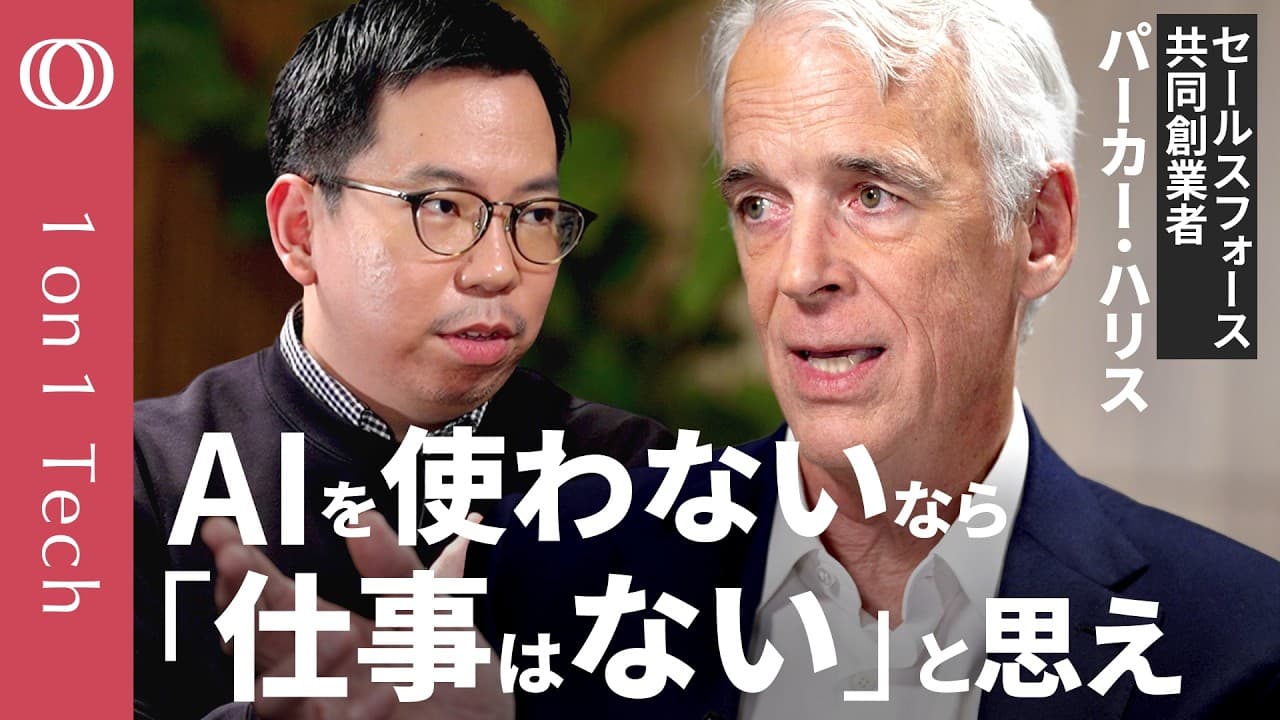
AI agents are already taking over routine support tasks, while affected employees are being encouraged to retrain and move into roles that require greater human capability. Parker Harris expects many AI ventures to fail as the market matures, but believes the underlying technology will transform enterprise work and create new kinds of jobs for people who learn to use it.
Transcript
There's always a bubble when something big happens. We started in the.com bubble that's happening again and I think there's and AI especially right now people going for the gold rush. How do you respond to investors skepticism? They want to discount that and say well you know AI is eating software and Slack is actually a jewel in our portfolio that... Read More
Key Insights
- Agentic AI is presented as a larger enterprise transformation than earlier shifts involving internet software, mobile access, and predictive AI. Its importance comes from enabling systems to perform tasks, not merely provide information or predictions, although the technology also introduces risks alongside potential benefits.
- AI booms produce both valuable companies and unsustainable ventures. Harris compares the current gold rush with the dot-com bubble, when some businesses became enormous while many others disappeared because their ideas lacked durable business models or could not survive the market correction.
- Successful AI deployment is harder than an impressive demonstration suggests. Generative systems can make a startup concept appear almost magical, but converting that demonstration into a dependable product and sustainable company presents challenges that will separate enduring businesses from those likely to fail.
- Salesforce redirected its priorities after generative AI reached a tipping point. The company used a replanning and realignment process to place AI at the center of its strategy, despite the difficulty of rapidly changing direction within a large global organization.
- Slack is positioned as an enterprise interface for AI. Harris calls it a valuable part of Salesforce's portfolio because employees could use its familiar work environment to interact with AI systems and conduct a broad range of business activities.
- AI agents are already handling routine customer-support requests. Tasks such as explaining password changes or two-factor authentication can be assigned to service agents, reducing the need for employees to spend their time repeatedly answering simple and predictable questions.
- Workforce adaptation depends on redeployment and retraining. Salesforce encourages people whose repetitive duties have been automated to apply for roles such as forward-deployed engineering, framing the transition as an opportunity to increase human capabilities rather than preserve every existing task.
- Jobs are expected to change dramatically rather than remain fixed. Entry-level research, legal support, and similar work may no longer be performed in the same way, while greater technological capability could create additional activities and occupations that people have not yet imagined.
Install to Summarize YouTube Videos and Get Transcripts
Explore YouTube Video Summarizer or Get YouTube Transcript Extractor
Questions & Answers
Q: Why does Parker Harris compare the AI boom to the dot-com bubble?
Parker Harris says major technological revolutions tend to produce speculative bubbles. During the dot-com era, some companies had clear business models and became major businesses, while many others attracted attention without a sustainable foundation and eventually disappeared. He sees a similar AI gold rush today, with impressive demonstrations, ambitious visions, many likely failures, and some potential future giants.
Q: How is Salesforce changing its strategy for agentic AI?
Salesforce responded to the rise of generative AI by revisiting its existing business plan and realigning priorities throughout the organization. Harris says the company now expects work to be AI first, Agentforce first, and Slack first. The change involves employees across the business, not only researchers or engineers, because Salesforce intends to bring enterprise customers into agentic work.
Q: How are AI agents changing customer support jobs at Salesforce?
AI agents are taking responsibility for repetitive support requests, including questions about password changes and two-factor authentication. As agents perform more of this routine work, some support employees no longer need to spend their time on the same tasks. Salesforce is encouraging those workers to seek different internal positions where their human judgment and expanded capabilities can be applied more effectively.
Q: What happens to employees whose routine tasks are automated by AI?
Salesforce's approach is to redeploy people when AI reduces the need for their previous routine duties. Harris says employees have been encouraged to apply for new roles, including forward-deployed engineering positions. He acknowledges that such transitions can require retraining and additional education, because workers cannot assume their responsibilities will remain unchanged during a major technological shift.
Q: Why is building a successful AI company harder than creating a demonstration?
AI can produce demonstrations that look remarkable and make a new startup's vision seem immediately convincing. Harris warns that a strong demonstration does not prove that the underlying technology can work reliably as a product or support a durable business. That gap between apparent magic and practical execution is why he expects many participants in the current AI rush to fail.
Q: Why does Parker Harris see Slack as important for enterprise AI?
Harris considers Slack a particularly valuable part of Salesforce because it can serve as the interface through which people use AI at work. Instead of treating AI as a separate technical system, Salesforce can place agents within a familiar environment for enterprise communication and activity. Harris believes that positioning could make Slack an interface for a wide range of professional work.
Q: Will AI eliminate jobs or create new kinds of work?
Harris expects jobs to change dramatically as AI assumes repetitive responsibilities and alters established entry-level work. He specifically questions whether legal support workers and investment-banking research analysts will continue performing their jobs in the same way. At the same time, he believes expanded human capabilities will inspire additional activities and create more jobs, although workers will need to adapt.
Q: What skills do workers need to remain relevant as AI adoption grows?
Workers need to use AI as part of their existing jobs and be prepared to retrain when their responsibilities change. Harris argues that people who ignore AI risk being left behind, while educational institutions also need to prepare students to work with these systems. Relevance therefore depends on active adoption, continued learning, and willingness to move into newly emerging roles.
Summary & Key Takeaways
-
Parker Harris describes agentic AI as a major technological shift that is advancing at an unusually rapid pace. Salesforce responded by changing its priorities across the company, emphasizing AI-first products, Agentforce, and Slack as an enterprise interface through which employees could interact with AI and perform their work.
-
The current AI boom resembles the dot-com era because compelling demonstrations and ambitious visions can attract attention before sustainable businesses exist. Harris expects many companies to disappear because deploying reliable AI is harder than producing an impressive demonstration, while some survivors could develop into the next generation of major technology companies.
-
AI is changing jobs by automating repetitive work rather than leaving every role untouched. Salesforce uses agents for basic support requests and encourages employees whose old tasks have diminished to pursue new positions. Harris argues that workers, employers, and educational institutions must prioritize AI skills, retraining, and adaptation.
Read in Other Languages (beta)
Share This Summary 📚
Summarize YouTube Videos and Get Video Transcripts with 1-Click
Try YouTube Summary with ChatGPT & Claude or YouTube Transcript Generator
Explore More Summaries from TBS CROSS DIG with Bloomberg 📚





Summarize YouTube Videos and Get Video Transcripts with 1-Click
Try YouTube Summary with ChatGPT & Claude or YouTube Transcript Generator