What Happens to Frozen Embryos in Divorce Cases?
TL;DR
In divorce cases involving cryogenically frozen embryos, courts evaluate consent forms and agreements to determine their enforceability. Generally, a court will uphold a prior agreement if it prevents one partner from becoming a parent against their will, whereas agreements that enforce parenthood may be ruled unenforceable due to public policy. The outcomes can vary significantly based on state laws.
Transcript
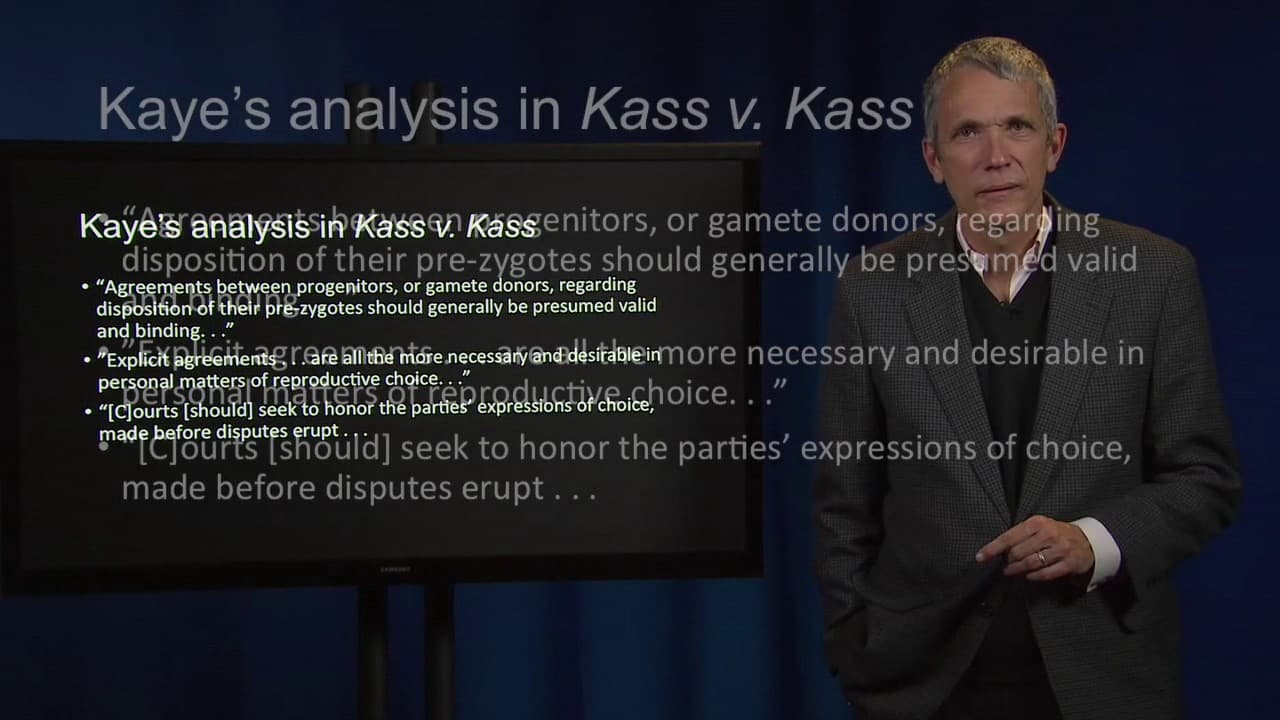
we're now going to look at a pair of cases cast V casts from New York and a Z versus BZ from Massachusetts in both of these cases courts had to decide what could happen with cryogenically frozen embryos left over from infertility treatments after a couple had gotten divorced the basic story is the same in both cases in each case a couple suffered f... Read More
Key Insights
- 💁 Consent forms in cryogenically frozen embryo cases serve as important agreements, helping to prevent future conflicts and litigation.
- 😑 Courts may enforce or invalidate these consent forms based on agreements, public policy, and the parties' expressed wishes.
- 💼 Different states may have varying approaches to these cases, with New York focusing on honoring agreements and Massachusetts considering public policy and individual autonomy.
- 🖐️ Public policy considerations play a significant role in determining the enforceability of consent forms, especially when it comes to reproductive choices and family relationships.
- 👪 The asymmetry in enforcing agreements regarding becoming parents or forcing parenthood highlights the complexity and ethical considerations involved.
- 🎁 Surrogacy contracts also present challenging ethical and legal questions, especially regarding termination of pregnancies.
Install to Summarize YouTube Videos and Get Transcripts
Explore YouTube Video Summarizer or Get YouTube Transcript Extractor
Questions & Answers
Q: What is in vitro fertilization (IVF)?
IVF involves collecting sperm and eggs, combining them to create embryos, and then implanting the embryos into a woman's uterus to achieve pregnancy.
Q: What role do consent forms play in these cases?
Consent forms specify the intended use of cryogenically frozen embryos, including what should happen in the event of separation or divorce.
Q: How did the courts decide in the Cass vs. Cass case?
The Court of Appeals for New York ruled in favor of the ex-husband, who wanted to prevent his ex-wife from using the frozen embryos contrary to their agreement that they would go for scientific research.
Q: What was the ruling in the AZ vs. BZ case?
In the Supreme Judicial Court of Massachusetts, the ex-husband was prevented from enforcing the consent forms against the ex-wife, as the court found them unenforceable based on public policy and the principle that one should not be compelled to become a parent against their will.
Summary & Key Takeaways
-
In both the cases presented, couples used in vitro fertilization (IVF) to address infertility.
-
Consent forms were filled out by the couples, specifying what should happen to the frozen embryos in various scenarios, including separation or divorce.
-
The courts had to determine whether one parent could enforce the consent forms against the other and decided based on agreements, public policy, and the parties' wishes.
Read in Other Languages (beta)
Share This Summary 📚
Summarize YouTube Videos and Get Video Transcripts with 1-Click
Try YouTube Summary with ChatGPT & Claude or YouTube Transcript Generator
Explore More Summaries from YaleCourses 📚





Summarize YouTube Videos and Get Video Transcripts with 1-Click
Try YouTube Summary with ChatGPT & Claude or YouTube Transcript Generator