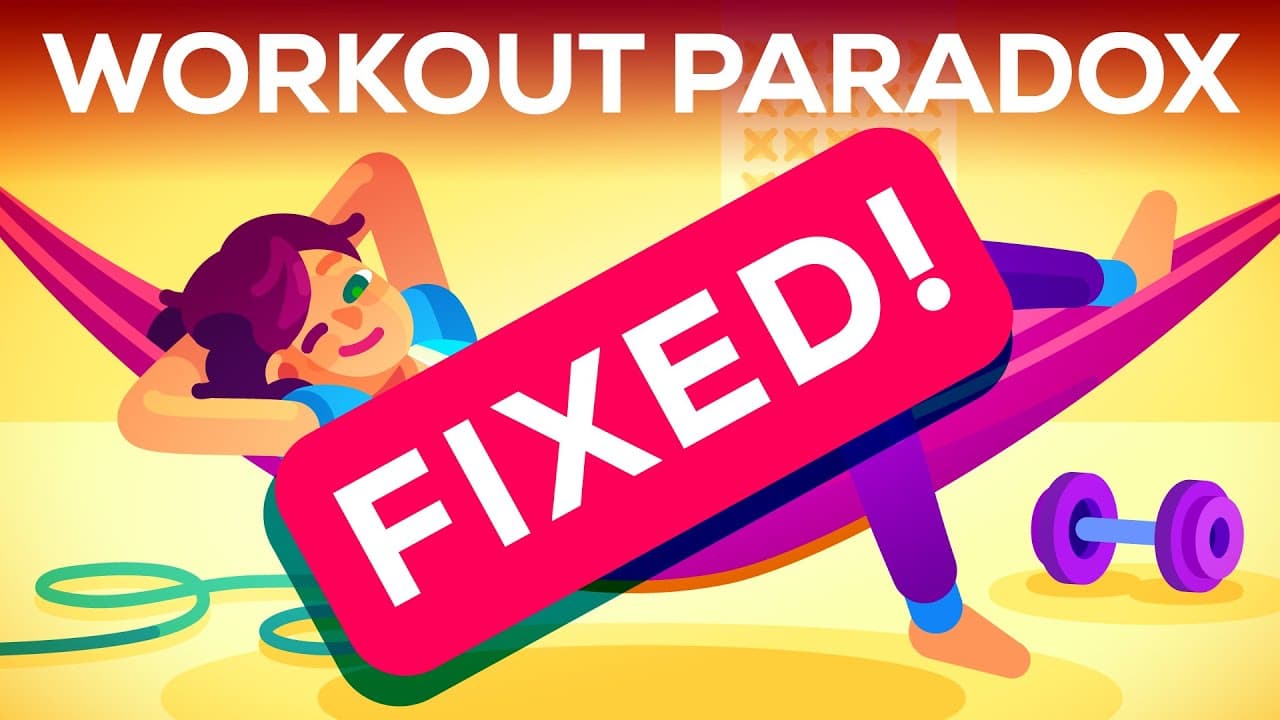
Why Exercise Doesn't Lead to Weight Loss
TL;DR
Exercise alone is not an effective method for weight loss due to the body's adaptive calorie budget, which remains stable despite increased activity. While exercise has significant health benefits, including reducing inflammation and stress, and improving heart health, it doesn't significantly increase calorie expenditure for weight loss. The primary factor in weight loss is reducing calorie intake.
Transcript
Losing weight is hard and unfortunately, your body is sabotaging you every step of the way. Your body is a biological machine that follows the laws of thermodynamics and needs energy and raw materials to stay alive, which is why you eat. The energy from food is measured in calories and you need a certain amount to power your internal machines. Yo... Read More
Key Insights
- Exercise alone is not a reliable method for weight loss due to the body's adaptive calorie budget.
- The body maintains a stable calorie expenditure despite increased physical activity.
- Exercise provides significant health benefits, such as reducing chronic inflammation and stress.
- Muscles burn more calories at rest than fat, but the difference is relatively small.
- The body's energy budget evolved to prevent starvation by maintaining stable calorie expenditure.
- The obesity epidemic is primarily caused by overeating rather than a lack of exercise.
- Human evolution favored efficient calorie harvesting, leading to modern overeating tendencies.
- Regular exercise helps restore physical balance, improving overall health and longevity.
Install to Summarize YouTube Videos and Get Transcripts
Explore YouTube Video Summarizer or Get YouTube Transcript Extractor
Questions & Answers
Q: How does exercise impact weight loss?
Exercise alone is not an effective weight loss strategy because the body adapts by maintaining a stable calorie budget. While initial increases in activity can lead to temporary weight loss, the body soon adjusts, reducing the extra calories burned. The primary factor for losing weight is reducing calorie intake rather than relying solely on exercise.
Q: Why doesn't increased activity lead to more calories burned?
The body has an adaptive calorie budget that evolved to prevent starvation, maintaining stable energy expenditure regardless of increased movement. This adaptation means that even with more physical activity, the body continues to burn a similar amount of calories, as it reallocates energy from other processes to accommodate the extra movement.
Q: What are the health benefits of regular exercise?
Regular exercise offers significant health benefits, including reducing chronic inflammation and stress, improving heart health, and enhancing longevity. It helps restore physical balance and promotes overall well-being, even if it doesn't significantly contribute to weight loss. Exercise is crucial for maintaining a healthy lifestyle and preventing diseases.
Q: Why is the obesity epidemic primarily caused by overeating?
The obesity epidemic is mainly due to overeating because humans evolved to be efficient calorie harvesters. Our ancestors needed to secure enough calories for survival, leading to an innate drive to consume more food. In modern times, this evolutionary trait results in overeating, as food is abundant and easily accessible, unlike in the past.
Q: How do muscles influence calorie burning at rest?
Muscles burn more calories at rest compared to fat, but the difference is relatively small. While having more muscle mass can slightly increase the body's overall calorie expenditure, it is not enough to significantly impact weight loss. The primary value of muscle lies in its benefits for health, performance, and longevity rather than substantial calorie burning.
Q: What role does the body's energy budget play in weight management?
The body's energy budget is a crucial factor in weight management, as it determines the amount of calories burned daily. This budget evolved to prevent starvation, maintaining stable energy expenditure even with increased movement. As a result, exercise alone is not sufficient for weight loss, emphasizing the importance of reducing calorie intake for effective weight management.
Q: How did human evolution influence modern eating habits?
Human evolution favored efficient calorie harvesting, as our ancestors needed to secure enough food for survival. This evolutionary trait led to a drive for calorie consumption, which persists in modern times. With abundant food availability today, this tendency results in overeating, contributing to the obesity epidemic, as our bodies are wired to seek calories.
Q: Why is exercise still important if it doesn't lead to weight loss?
Exercise is essential for overall health because it reduces chronic inflammation, lowers stress, and improves heart health, contributing to a longer, healthier life. While it may not significantly impact weight loss, its benefits for physical and mental well-being make it a crucial component of a healthy lifestyle, promoting resilience and disease prevention.
Summary & Key Takeaways
-
Exercise is not a reliable way to lose weight because the body adapts by maintaining a stable calorie budget, regardless of increased activity. While exercise can lead to temporary weight loss, the body eventually adjusts, reducing its extra calorie burn. However, exercise provides essential health benefits, such as reducing inflammation and stress, and improving heart health.
-
The body's calorie budget evolved to prevent starvation, maintaining stable energy expenditure even with increased movement. This adaptation explains why hunter-gatherers burn similar calories to sedentary individuals. The obesity epidemic stems primarily from overeating, driven by human evolution favoring efficient calorie harvesting.
-
Muscles burn more calories than fat, but the difference is minimal. Exercise's primary value lies in enhancing health rather than weight loss. Regular physical activity reduces chronic inflammation, lowers stress, and promotes longevity, making it crucial for overall well-being, despite its limited impact on weight loss.
Read in Other Languages (beta)
Share This Summary 📚
Summarize YouTube Videos and Get Video Transcripts with 1-Click
Try YouTube Summary with ChatGPT & Claude or YouTube Transcript Generator
Explore More Summaries from Kurzgesagt – In a Nutshell 📚

Summarize YouTube Videos and Get Video Transcripts with 1-Click
Try YouTube Summary with ChatGPT & Claude or YouTube Transcript Generator