How Did Churchill Influence Europe During World War II
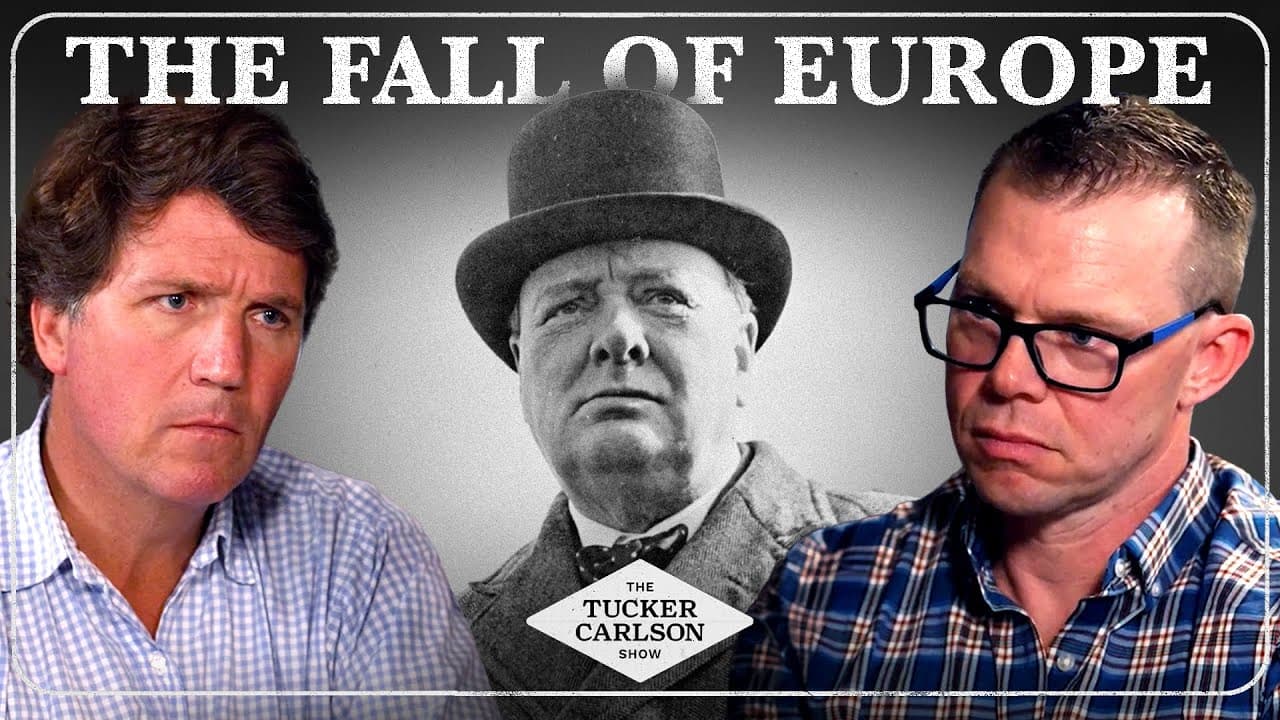
TL;DR
Churchill is examined as a key figure in shaping Europe during World War II and in the broader history discussed by Darryl Cooper. The discussion covers how historical perspectives are formed, the role of popular historians, and the depth of research behind major historical topics, including Zionism, the Israeli-Palestinian conflict, and World War II. The host emphasizes rigorous study, long form storytelling, and the value of honest inquiry in understanding the past.
Transcript
The big tech companies censor our content. I hate to tell you that it's still going on in 2024, but you know what? They can't censor live events. That's why we are hitting the road on a fall tour for the entire month of September. Coast to coast will be in cities across the United States. We'll be in Phenix with Russell Brand, Anaheim, California, ... Read More
Key Insights
- Churchill’s impact on Europe is discussed within a broad framework of World War II history and its complex causes.
- The host presents a view that deep historical research involves reading hundreds of books and many academic papers to build a coherent narrative.
- The Jonestown discussion appears as part of a larger interview series on political figures and history
- Cooper describes his intense preparation process for long form history projects, including years of reading and note taking.
- The Israel Palestine topic is framed as a 26 hour series that aimed to reveal multiple sides of the conflict.
- A central claim is that popular historians shape public understanding, for better or worse, based on how they present evidence.
- The conversation reflects on the role of media and podcasts in presenting historical narratives to a broad audience.
- The host emphasizes personal discipline and passion as essential to producing in depth history work
Install to Summarize YouTube Videos and Get Transcripts
Explore YouTube Video Summarizer or Get YouTube Transcript Extractor
Questions & Answers
Q: What is the main claim about Churchill in the video?
The main claim is that Churchill played a significant role in shaping Europe during World War II and is discussed as part of a broader analysis of history that includes other major topics. The interview frames Churchill as a central historical figure whose actions and policies influenced the course of events in Europe, and the discussion situates this within a larger narrative about how history is studied and interpreted.
Q: How does the host describe the process of researching history?
The host describes a rigorous, time consuming process that includes reading hundreds of books, consulting academic papers, and cross referencing sources to build a coherent narrative. He emphasizes starting with a deep dive into material and then refining understanding over years of study, often while balancing other professional responsibilities. This approach underpins the quality of long form history projects.
Q: What series does Cooper reference in relation to Zionism?
Cooper references a 26 hour series on the early history of Zionism and the Israeli Palestinian conflict. He explains that the project grew from initial exploration of a few books to a comprehensive examination that required extensive reading and revision, ultimately aiming to illuminate how different sides perceive and understand historical events.
Q: Why does the host believe popular historians matter?
The host argues that popular historians matter because their presentation of evidence and storytelling shapes public understanding. He notes that seriousness and honesty in research influence how audiences perceive complex topics, and he stresses the responsibility of historians to pursue truth with relentless curiosity and rigorous methods, even when the subject is controversial.
Q: What personal background does Cooper share that informs his work?
Cooper shares that he read a lot from an early age, moved between many schools, and used books as a source of continuity. He describes spending significant time reading while working overseas for the Department of Defense, and this background explains his lifelong habit of deep research and his nerd like passion for history.
Q: What does Cooper say about time spent reading for his projects?
Cooper explains that long form history projects require extensive reading over many years, sometimes hundreds of books and thousands of papers. He emphasizes that the depth of reading transforms initial drafts into coherent narratives, and he notes the need to keep refining work as new information and perspectives emerge during the research process.
Q: How does the video describe the balance between carious topics and focus?
The interview covers multiple topics, including Zionism, World War II, and the Israeli Palestinian conflict, showing a balance between broad historical themes and tightly focused case studies. This approach demonstrates how a historian can weave together diverse topics into a cohesive exploration of history while maintaining depth on each subject.
Q: What role does tour and media appearance play in the video?
The video reflects a tour and media appearances as part of a broader strategy to engage audiences and promote historical discussion. It highlights how historians use live events, podcasts, and public appearances to broaden access to complex historical topics, encourage dialogue, and curate a more informed public conversation about the past.
Summary & Key Takeaways
-
Cooper argues that understanding history requires deep research and persistence, often involving years of reading and cross referencing sources.
-
The dialogue highlights how popular historians influence public perception and the importance of a rigorous, evidence based approach to controversial topics.
-
The conversation spans multiple historical topics from Zionism to World War II and emphasizes the value of curiosity in historical inquiry.
Read in Other Languages (beta)
Share This Summary 📚
Summarize YouTube Videos and Get Video Transcripts with 1-Click
Try YouTube Summary with ChatGPT & Claude or YouTube Transcript Generator
Explore More Summaries from Tucker Carlson 📚

Summarize YouTube Videos and Get Video Transcripts with 1-Click
Try YouTube Summary with ChatGPT & Claude or YouTube Transcript Generator