How Does ADHD Differ in Men and Women? Dr. Amen Explains
TL;DR
ADHD treatment starts with the one-page miracle: write on a single sheet what you want for relationships, work or school, money, physical health, emotional health, and spiritual health, then ask whether your behavior fits those goals. Dr. Amen treats first with diet, supplements such as EPA fish oil and saffron, exercise, and neurofeedback, and considers medication only when those fail.
Transcript
The first exercise I do with all of my patients, but particularly my ADD patients, it's called the one-page miracle. On one piece of paper, write down what you want. Relationships. What do you want? Like with Tana, I want a kind, caring, loving, supportive, passionate relationship. Don't always feel it. I get rude thoughts that show up, but I don't... Read More
Key Insights
- The one-page miracle is Dr. Amen's first exercise with all patients: on one sheet of paper you write what you want for relationships, work or school, money, physical health, emotional health, and spiritual health, then repeatedly ask whether your behavior fits.
- The prefrontal cortex sets goals and helps you keep achieving them despite obstacles. Dr. Amen scored 42 on his first organic chemistry test, got a tutor, and reached medical school. With a low-functioning prefrontal cortex, a person scores 42 and simply gives up.
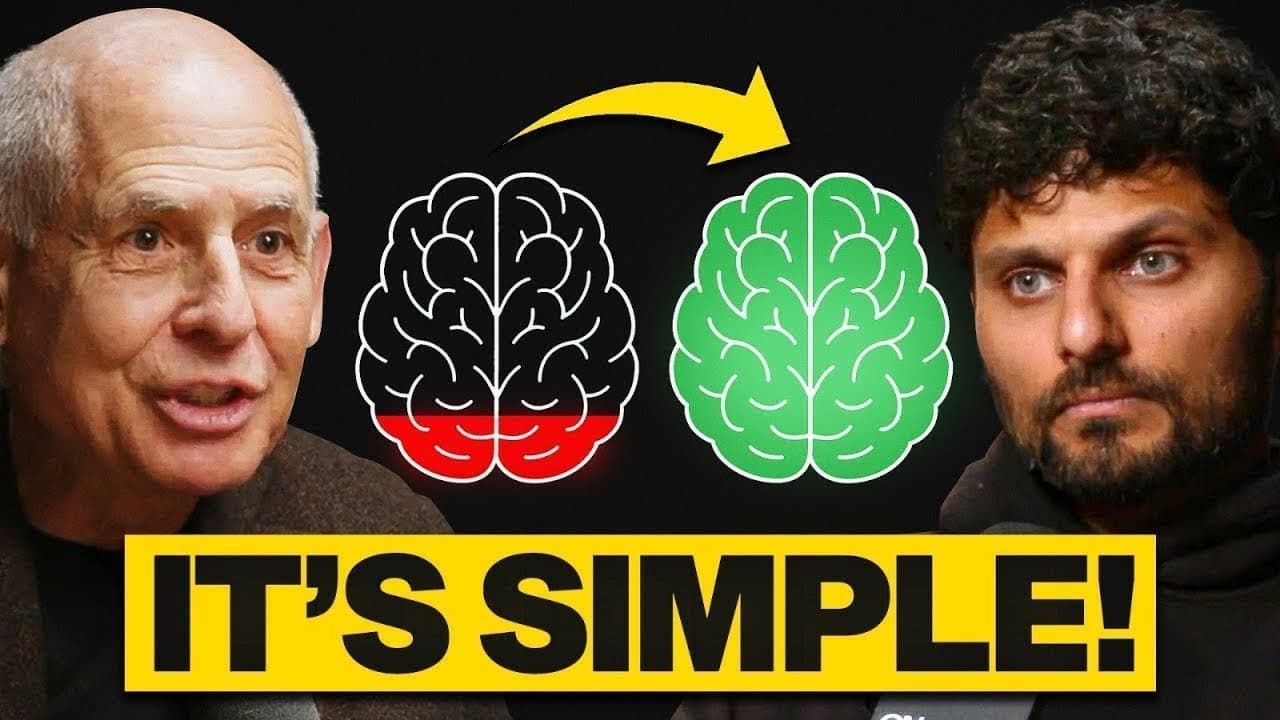
- Men have sleepier prefrontal cortex than women, according to Dr. Amen's imaging study of 46,000 patients, which found females have much stronger and more active prefrontal cortex. The behavioral marker he cites is that men go to jail 14 times more often than females.
- A repeating love pattern can signal ADD in teenage girls: excitement at falling in love produces a dopamine burst, and once it wears off they start picking on their partner, fight, break up with heavy drama, sometimes become suicidal, then repeat the cycle.
- ADHD types split by gender in Dr. Amen's clinical experience: men tend to be more hyperactive and to show the temporal lobe type, while women tend toward the inattentive type and the overfocused type.
- The temporal lobe type of ADD can arise in part from a concussion or head injury, and people with ADD have far more concussions and accidents, which Dr. Amen attributes to shorter attention span and impulse control problems.
- Untreated ADD is, in Dr. Amen's view, one of the hidden causes of divorce. The chronic stress it creates damages the immune system of both the person and the people who love them, and it carries a spiritual cost of feeling less than and uncared for.
- People with ADD often have a high negativity bias, so Dr. Amen teaches killing the ANTs, the automatic negative thoughts that steal happiness, and directing thoughts in a positive, helpful, hopeful way as a critical part of overcoming it.
Install to Summarize YouTube Videos and Get Transcripts
Explore YouTube Video Summarizer or Get YouTube Transcript Extractor
Questions & Answers
Q: What is the one-page miracle exercise for ADHD?
The one-page miracle is the first exercise Dr. Amen does with all of his patients, and particularly his ADD patients. On one piece of paper you write down what you want across life areas: relationships, work or school, money, physical health, emotional health, and spiritual health. He gives his own example of wanting a kind, caring, loving, supportive, passionate relationship with Tana. Once it is all on one page, the recurring question becomes whether your behavior fits the goals you have written for your life. Dr. Amen notes that most people never do this exercise, which he finds crazy.
Q: Why is ADHD more common in men than women?
The episode cites National Institute of Mental Health figures of 5.4% of adult men and 3.2% of adult women having ADHD. Dr. Amen's explanation is that men have sleepier frontal lobes than women. He published what he describes as the world's largest imaging study on gender, looking at differences between male and female brains in 46,000 patients, and found females have a much stronger, much more active prefrontal cortex while men have a sleepier prefrontal cortex and therefore a relative dopamine deficit compared to females. He points to incarceration rates as the visible statistic: men go to jail 14 times more than females.
Q: How can you spot ADD in a teenage girl?
Dr. Amen says girls still have ADHD and that when it is left untreated it devastates their lives. His diagnostic tip is to look at their love pattern. They get excited about falling in love, which produces a dopamine burst. After that wears off, what he calls the cocaine effect, they start picking on their partner and fighting, then break up with a great deal of drama around the breakup, and sometimes become suicidal. Then they fall in love again and repeat the same cycle. If you see that pattern repeatedly, he says to screen them for ADD. He adds a related caution: do not get married in the next two months, because you never really know someone until after the dopamine wears off.
Q: How does ADHD show up differently in men and women?
According to Dr. Amen, men tend to be more hyperactive, while women tend to have more of the inattentive type. Women also tend to have the overfocused type more often. Men more often have the temporal lobe type, which can be caused in part by a concussion or head injury. He notes that people with ADD have far more concussions and accidents than others, and attributes that to the shorter attention span and impulse control issues that come with the condition. These differences in presentation are part of why the condition is missed, particularly in women and in people without hyperactivity.
Q: What supplements does Dr. Amen recommend for ADHD?
Dr. Amen starts with supplements based on your ADHD type before considering medication. He names EPA fish oil and omega-3 fatty acids, which he says help with ADD and also help with mood. He highlights saffron, noting five studies showing it as effective as Ritalin in some studies, and 25 randomized controlled trials showing saffron helps with depression compared to antidepressants. He also names B vitamins and pycnogenol, which comes from pine bark, as helpful. His sequence is supplements plus getting the diet right first, and only if those things do not work does he think medication should be considered. He discloses that he owns Brain MD.
Q: Why does Dr. Amen scan patients twice?
Amen Clinics scan patients twice, once at rest and once while the person concentrates. The reason is that some people report doing everything right, eating well, working out, trying to stay motivated, and still losing motivation and energy every time they try. Scanning during concentration reveals whether brain activity drops when the person tries to focus. If the brain drops with activity, Dr. Amen concludes that the condition has to be treated. That finding then drives the treatment plan, which starts with getting the brain healthy through diet, supplements, exercise, and tools such as neurofeedback.
Q: How does untreated ADHD affect relationships?
Dr. Amen says untreated ADD is one of the reasons for divorce and is often the hidden cause. The effects are biological but produce psychological consequences, and the chronic stress it creates damages the immune system both of the person with the condition and of the people who love them. It is clearly social in its impact. There is also a spiritual cost: people come to believe they are less than, and that God or how they see God does not care about them. Dr. Amen adds that patients who tell him they are brutally honest often turn out to have ADD, because relationships require tact and forethought, and with ADD the inside voice gets out when it can be hurtful.
Q: What can someone with ADHD do to stop feeling like a failure?
Dr. Amen's answer is that you are responsible for getting it treated, because with treatment you can be amazing. People with ADHD often have the ability to see things other people do not see, and it is the undisciplined mind that creates the trouble. He notes that some of the greatest CEOs of big companies have ADHD. The path is to look at the brain, get it healthy through diet, supplements, exercise, medicine, or neurofeedback, and then reprogram the mind by killing the ANTs, the automatic negative thoughts that steal your happiness. Because people with ADD often carry a high negativity bias, learning to direct thoughts in a positive, helpful, hopeful way is critical to overcoming it.
Summary & Key Takeaways
-
Dr. Amen's opening exercise with every patient, especially ADD patients, is the one-page miracle: on one piece of paper, write what you want for relationships, work or school, money, physical health, emotional health, and spiritual health. The recurring question is whether current behavior fits those written goals, which is exactly the job of the prefrontal cortex.
-
National Institute of Mental Health data cited in the episode puts ADHD at 5.4% of adult men and 3.2% of adult women. Dr. Amen's imaging study of 46,000 patients found females have stronger, more active prefrontal cortex while men have sleepier prefrontal cortex and a relative dopamine deficit, and men go to jail 14 times more than females.
-
Treatment at Amen Clinics begins with getting the brain healthy through diet, supplements, exercise, and neurofeedback, which measures electrical activity in the brain and strengthens it through exercises. Patients are scanned twice, once at rest and once while concentrating, and a drop in activity during concentration signals the need for treatment. Medication is considered only after simpler steps fail.
Read in Other Languages (beta)
Share This Summary 📚
Summarize YouTube Videos and Get Video Transcripts with 1-Click
Try YouTube Summary with ChatGPT & Claude or YouTube Transcript Generator
Explore More Summaries from Jay Shetty Podcast 📚






Summarize YouTube Videos and Get Video Transcripts with 1-Click
Try YouTube Summary with ChatGPT & Claude or YouTube Transcript Generator