Fitbit Inspire 3 Review: Best Fitbit, With Limits
TL;DR
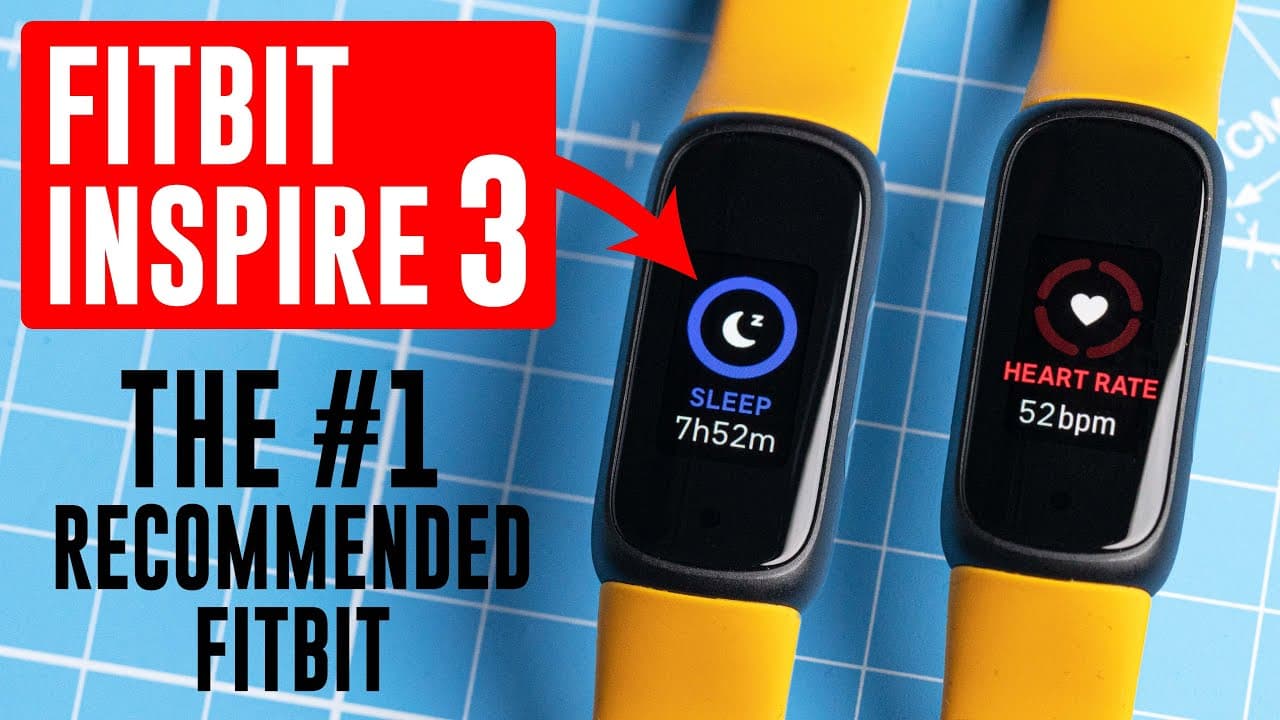
The Fitbit Inspire 3 is the reviewer’s preferred recent Fitbit, but its exercise heart-rate accuracy is mixed. It costs about $100, adds a color screen over the Inspire 2, and achieved correlations of 0.9 for indoor cycling, 0.69 for outdoor cycling, and 0.73 for weightlifting against a Polar H10 ECG chest strap. It also lacks built-in GPS, so read on to decide whether its strengths outweigh its tracking limitations.
Transcript
I've tested quite a few new fitbits over the last weeks and this little Fitbit the Fitbit Inspire 3 might actually be my favorite out of all of them if one of my friends wanted to buy a Fitbit this is the one I would most likely recommend and I'll show you why in this video where I'll systematically and unbiasedly test the heart rate tracking accur... Read More
Key Insights
- The Fitbit Inspire 3 is the reviewer’s preferred option among the recently tested Fitbit models, although that recommendation does not automatically mean a Fitbit is the best choice compared with devices from other brands.
- The Inspire 3 costs about $100 and is the most affordable Fitbit in its generation. Its primary visible upgrade over the Inspire 2 is a color screen, accompanied by a revised design that appears less bulky to the reviewer.
- The Inspire 3 lacks built-in GPS, so it depends on a connected phone when users want to track workouts with GPS. Buyers seeking phone-free workout tracking should account for this limitation before purchasing the device.
- Indoor cycling heart-rate accuracy is moderate, with a correlation of 0.9 against the Polar H10 ECG chest strap across four interval spinning sessions. Most readings agreed reasonably well, but quick heart-rate changes sometimes produced delays or incorrect values.
- The Inspire 3 can capture indoor-cycling heart-rate peaks that the more expensive Fitbit Versa 4 and Sense 2 sometimes miss. However, its overall correlation still places it around the middle of the 67 watches included in the reviewer’s comparison.
- Running accuracy appears unreliable in the limited evidence presented. During one interval run, the Inspire 3 followed the reference only partially and frequently reported heart rates that were too low, although the reviewer cautions that this conclusion is based on a single run.
- Outdoor cycling heart-rate accuracy is inconsistent, with a correlation of 0.69 across nine rides. Some sessions tracked the chest strap reasonably well, while others became stuck near 120 to 130 BPM and failed to reflect substantial heart-rate variation.
- Weightlifting heart-rate tracking is challenging because wrist and arm tension interfere with a clean optical signal. Across four sessions, the Inspire 3 often reported incorrect values and achieved a correlation of 0.73 against the ECG chest strap.
Install to Summarize YouTube Videos and Get Transcripts
Explore YouTube Video Summarizer or Get YouTube Transcript Extractor
Questions & Answers
Q: Is the Fitbit Inspire 3 worth buying?
The reviewer would most likely recommend the Inspire 3 to a friend who specifically wanted a Fitbit. It costs about $100, has a color screen, and looks less bulky than the Inspire 2, but buyers must accept mixed exercise heart-rate accuracy and no built-in GPS.
Q: How accurate is the Fitbit Inspire 3 heart-rate monitor?
Accuracy varied considerably by activity across 18 workout sessions compared with a Polar H10 ECG chest strap. Correlation was 0.9 for indoor cycling, 0.69 for outdoor cycling, and 0.73 for weightlifting, with errors including delays, readings that were too low, and extended periods near an incorrect value.
Q: How accurate is the Fitbit Inspire 3 for indoor cycling?
Across four interval spinning sessions, the Inspire 3 achieved a correlation of 0.9 with the Polar H10 ECG chest strap. Most readings matched reasonably well and it often captured heart-rate peaks, although quick changes sometimes caused delays or incorrect measurements.
Q: How does the Fitbit Inspire 3 rank against other watches for indoor cycling?
The Inspire 3 ranked roughly in the middle of 67 watches the reviewer had tested over two years for indoor-cycling heart-rate accuracy. The reviewer therefore characterized it as a medium-performing watch rather than a leading option.
Q: Does the Fitbit Inspire 3 track running heart rate accurately?
The single interval run produced unreliable results, with the Inspire 3 only partly following the Polar H10 and frequently reporting heart rates that were too low. Because only one run was tested, the result does not provide a comprehensive assessment of running accuracy.
Q: How accurate is the Fitbit Inspire 3 for outdoor cycling?
Across nine outdoor bike rides, the Inspire 3 achieved a correlation of 0.69 with the Polar H10 ECG chest strap. Some rides tracked reasonably well, while others showed prolonged readings near 120 to 130 BPM despite much greater variation from the reference device.
Q: Does the Fitbit Inspire 3 have built-in GPS?
No, the Fitbit Inspire 3 does not have built-in GPS. Users must take a connected phone with them when they want to track workouts using GPS.
Q: Is the Fitbit Inspire 3 accurate for weightlifting?
Across four weightlifting sessions, the Inspire 3 achieved a correlation of 0.73 with the Polar H10 and frequently reported incorrect values. The review explains that wrist and arm tension during weightlifting can interfere with the clean optical signal needed for wrist-based heart-rate tracking.
Summary & Key Takeaways
-
The Inspire 3 is Fitbit’s entry-level model at about $100. Compared with the Inspire 2, it introduces a color screen, a revised design that the reviewer considers less bulky, and a more appealing appearance. It lacks built-in GPS, so users must carry a phone when they want to track workouts with GPS.
-
Heart-rate accuracy was tested across 18 workout sessions using a Polar H10 ECG chest strap as the reference. Indoor cycling produced a correlation of 0.9, although rapid heart-rate changes sometimes caused delays or errors. The Inspire 3 ranked around the middle among 67 watches previously tested for this exercise.
-
Performance became less reliable during harder tracking conditions. The single interval run frequently produced readings that were too low. Across nine outdoor bike rides, correlation fell to 0.69, with several rides showing prolonged readings near 120 to 130 BPM despite greater variation from the chest strap. Weightlifting correlation was 0.73.
Read in Other Languages (beta)
Share This Summary 📚
Summarize YouTube Videos and Get Video Transcripts with 1-Click
Try YouTube Summary with ChatGPT & Claude or YouTube Transcript Generator
Explore More Summaries from The Quantified Scientist 📚
Summarize YouTube Videos and Get Video Transcripts with 1-Click
Try YouTube Summary with ChatGPT & Claude or YouTube Transcript Generator