How to Optimize Gas Transfer Between Cylinders
TL;DR
To optimize gas transfer between cylinders, cool the receiving cylinder to condense the gas, reducing pressure and increasing transfer efficiency. The experiment achieved a transfer of 2.66 pounds of ethylene, but limitations such as measurement accuracy and system pressures affected the results. Effective control of temperature and pressure is essential for successful gas transfer procedures.
Transcript
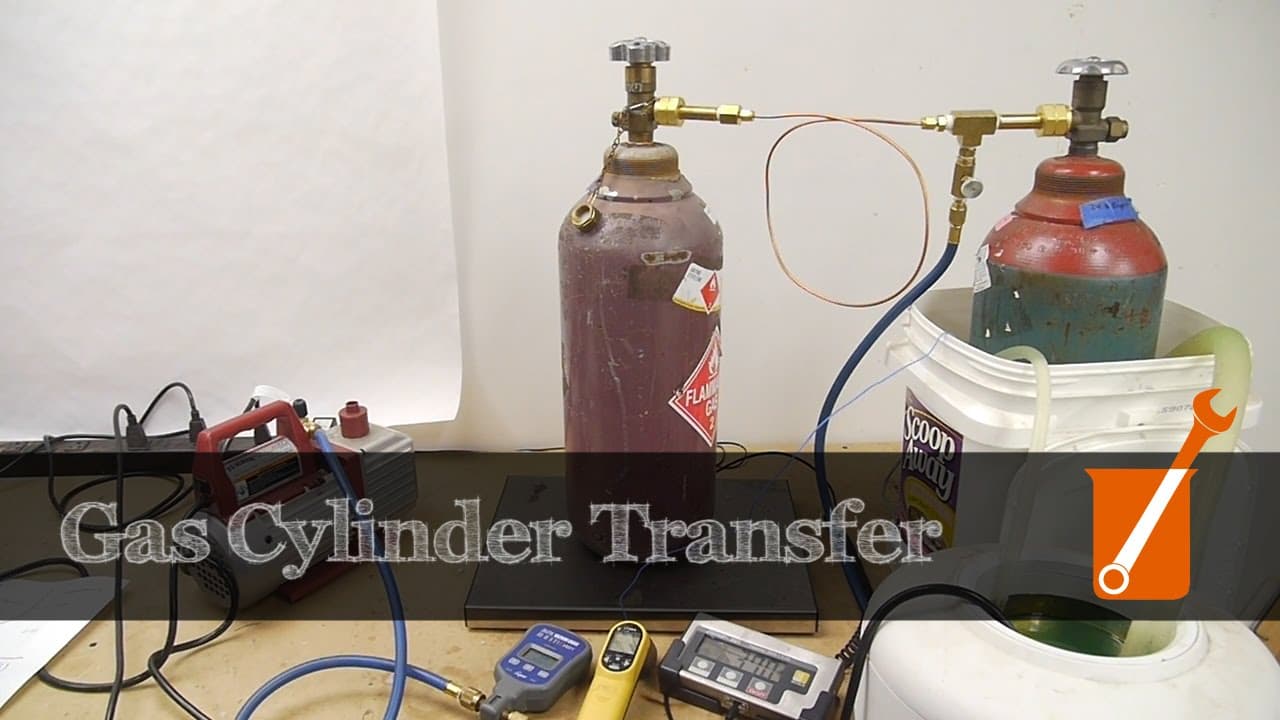
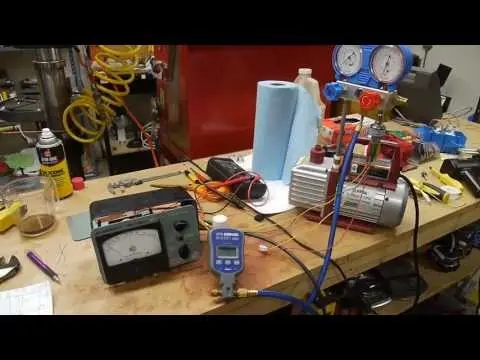
today on Applied Science I want to talk about passing gas from one cylinder to another so the problem is this cylinder is full of ethylene but it's a rental so I have to return it and I want to transfer the ethylene to this cylinder which is empty that I own so let me show you the setup I have the full cylinder connected to the empty cylinder with ... Read More
Key Insights
- 🎮 Temperature control and pressure play a crucial role in optimizing gas transfer efficiency.
- 🫢 Utilizing vacuum pumps and cooling methods can aid in turning gases into liquids for more efficient transfers.
- 🫢 System limitations and measurement accuracy are essential considerations for successful gas transfer experiments.
- 💆 Monitoring mass transfer using scales and pressure gauges provides valuable insights into the process.
- 🫢 Understanding gas properties like supercritical states is crucial for effective gas transfer procedures.
- 🫢 Contamination concerns highlight the need for clean transfer methods in gas handling experiments.
- 🫢 External factors like ambient temperature and system setup can impact gas transfer outcomes.
Install to Summarize YouTube Videos and Get Transcripts
Explore YouTube Video Summarizer or Get YouTube Transcript Extractor
Questions & Answers
Q: What setup was used to transfer ethylene gas between cylinders?
The setup involved high-pressure copper lines, vacuum pumps, a water bath to turn ethylene into liquid, and a scale to measure mass transfer.
Q: Why was the ethylene gas cooled in the receiving cylinder?
Cooling the ethylene in the receiving cylinder helps it turn into a liquid, allowing for more efficient gas transfer by lowering the system pressure.
Q: What challenges were faced during the gas transfer experiment?
The experiment faced challenges in maximizing gas transfer efficiency, with potential issues such as system limitations, underfilling, or measurement inaccuracies.
Q: How did the experiment determine the presence of supercritical ethylene?
A pressure gauge was used to confirm the absence of supercritical ethylene, indicating that the system contained gas and gas-liquid mix instead of a purely supercritical state.
Summary & Key Takeaways
-
The video demonstrates an experiment transferring ethylene gas from a full cylinder to an empty one.
-
Setup involves high-pressure copper lines, vacuum pumps, and a water bath to turn ethylene into liquid.
-
Despite efforts to optimize the transfer, only 2.6 pounds of gas was successfully transferred, with potential system limitations.
Read in Other Languages (beta)
Share This Summary 📚
Summarize YouTube Videos and Get Video Transcripts with 1-Click
Try YouTube Summary with ChatGPT & Claude or YouTube Transcript Generator
Explore More Summaries from Applied Science 📚
Summarize YouTube Videos and Get Video Transcripts with 1-Click
Try YouTube Summary with ChatGPT & Claude or YouTube Transcript Generator