How to Create a Flexible Study Schedule
TL;DR
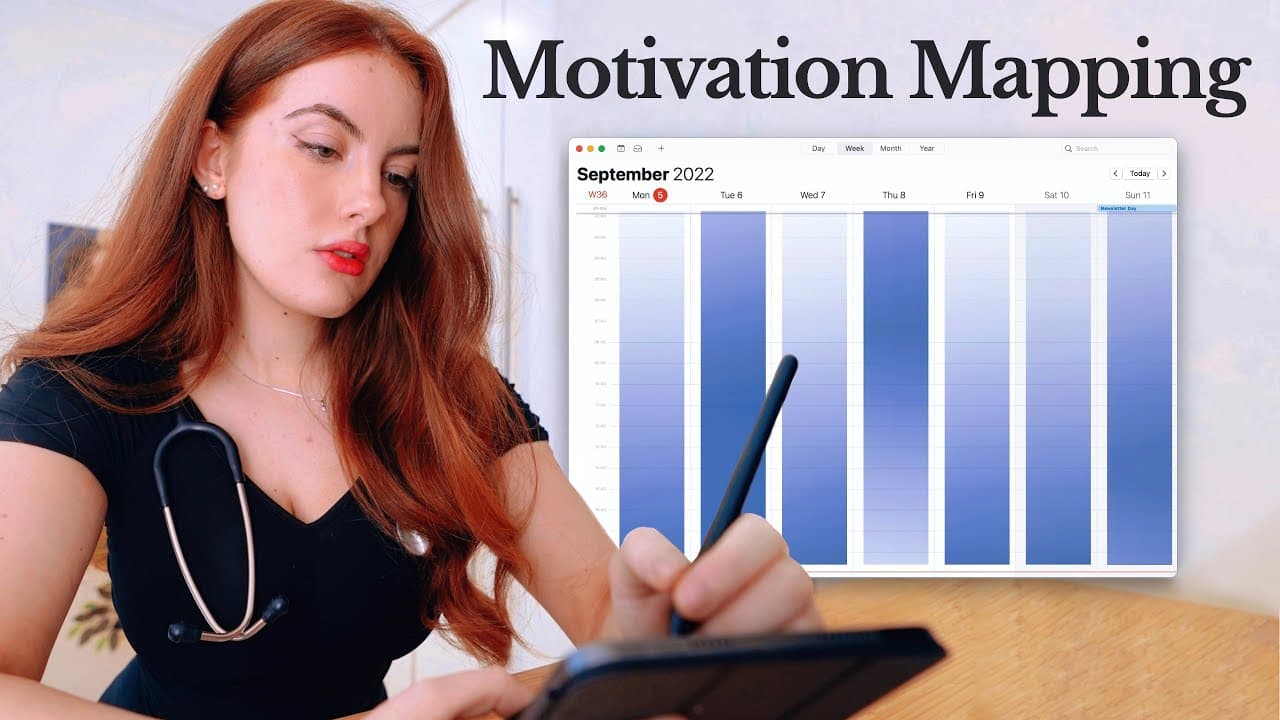
A flexible study schedule that aligns with your natural motivations can enhance productivity and well-being. Categorising tasks by attention, drive, and energy levels ensures you engage with what you feel most inclined to tackle at any given time, making the process more enjoyable and effective.
Transcript
it's funny isn't it we've got all this technology all these clever machines rules and schedules to organize ourselves but when it comes down to it it's just us able to force ourselves to do something but unable to force ourselves to actually pay attention to the thing the solution to the problem of getting things done i'm told is more discipline an... Read More
Key Insights
- 🛟 Rigid schedules based on discipline and habits may not be effective for everyone, especially those with busy lives.
- 🥺 Working alongside our natural tendencies can lead to increased productivity and happiness.
- ⚾ Categorizing tasks based on attention, drive, and energy levels can help prioritize and approach them effectively.
- 🥳 Understanding our own motivation and energy patterns throughout the day can optimize scheduling.
- 😫 Setting strict deadlines creates motivation loops and increases the likelihood of completing tasks on time.
- 🍂 Falling behind on tasks can be managed through a fall behind, catch up, and go ahead schedule.
- ❓ Using platforms like Brilliant can improve problem-solving skills and approach to learning.
Install to Summarize YouTube Videos and Get Transcripts
Explore YouTube Video Summarizer or Get YouTube Transcript Extractor
Questions & Answers
Q: Why does the traditional scheduling advice of discipline and habits not work for everyone?
For individuals with busy lives, such as medical students, a rigid schedule can be overwhelming and counterproductive. It may lead to unhappiness and decreased results.
Q: How can categorizing tasks based on attention, drive, and energy levels help with scheduling?
By understanding the levels of motivation required for each category of tasks, individuals can choose the best task to work on at any given moment and maximize their output and enjoyment.
Q: How does mapping motivation throughout the day help with scheduling?
By identifying their natural energy and motivation patterns, individuals can schedule high-energy tasks during peak motivation times and low-energy tasks during low motivation times, increasing efficiency and productivity.
Q: How can setting strict deadlines create motivation loops?
By setting deadlines for tasks and projects, individuals create motivation loops where their motivation gradually increases as the deadline approaches, ensuring that tasks are completed on time.
Summary & Key Takeaways
-
The mainstream scheduling advice of discipline and habits may not work for everyone, especially those with busy lives.
-
Instead of forcing ourselves into rigid schedules, we can work alongside our brains and do tasks when it feels like a reasonable time to do them.
-
Categorizing tasks based on attention, drive, and energy levels can help prioritize and approach them in a way that maximizes motivation and focus.
Read in Other Languages (beta)
Share This Summary 📚
Summarize YouTube Videos and Get Video Transcripts with 1-Click
Try YouTube Summary with ChatGPT & Claude or YouTube Transcript Generator
Explore More Summaries from Elizabeth Filips 📚






Summarize YouTube Videos and Get Video Transcripts with 1-Click
Try YouTube Summary with ChatGPT & Claude or YouTube Transcript Generator