5 Ways Top Students Study That You (probably) Don't
TL;DR
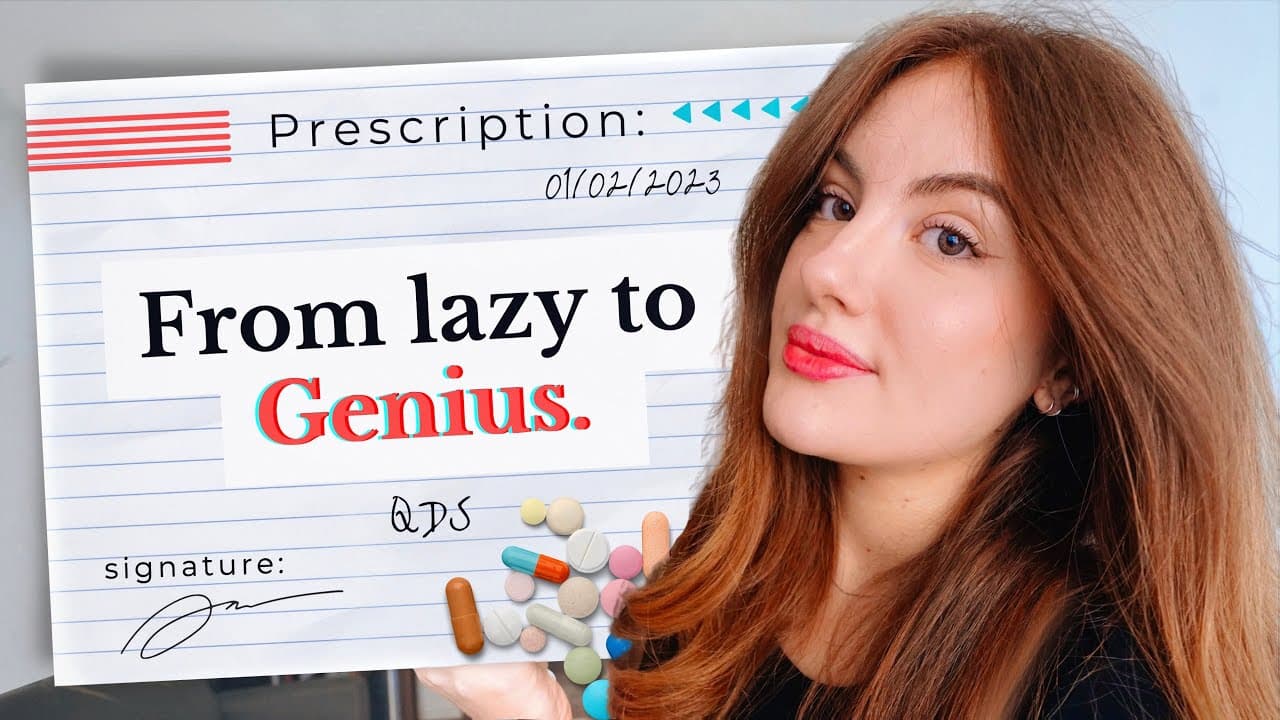
Top students study more effectively by using five systems: flood and retreat, Feynman’s clinical test, active recall, emotional motivation, and learning by osmosis. The medical student describes spending an hour, a day, or a week surveying advanced material before returning to learn it step by step. These methods build perspective, expose gaps, strengthen recall, and connect knowledge to practical situations. Read on to see how each one works.
Transcript
what comes to mind when you think of a medical student probably some structured organized consistent poor soul who has to learn absolutely everything there is to know about the human body and who won't shut up about it now clearly some of these things are absolutely true but at a fourth year medical student myself I don't think I know anyone at thi... Read More
Key Insights
- 🤔 The flooding and retreat method of learning in medicine allows students to be exposed to a large amount of information at once, followed by opportunities to apply and reinforce that knowledge over time.
- 💡 The Feynman technique, which involves explaining complex concepts in simple terms, is an inherent part of studying medicine. Medical students constantly have to break down and explain information to themselves and to patients.
- 💭 Active recall is pervasive in medicine, as students are constantly prompted to remember and apply information in various contexts. This constant recall helps prevent forgetting and allows for a deeper understanding of the material.
- 😅 The emotional toll of being a medical student can be damaging, but it can also serve as a powerful motivator for learning. Connecting the material to emotional impacts, such as saving lives or making mistakes with dire consequences, can provide a strong incentive for studying.
- 🧠 Learning through osmosis is a common phenomenon in medicine. Long exposure to medical environments and experiences can lead to the absorption of knowledge without active study, allowing students to unexpectedly recall information they have passively acquired.
- 📚 Using platforms like Nebula in conjunction with traditional educational resources can enhance the learning experience by providing unrestricted access to in-depth content. Curiosity Stream and Nebula offer ad-free, distraction-free environments for consuming educational material.
- 💪 Implementing the flooding and retreat method, the Feynman technique, active recall, emotional connections, and exposure through osmosis can improve learning in various subjects, not just medicine.
- ⚡️ It is important to be kind to oneself and others, and to challenge and question one's own thoughts and beliefs.
Install to Summarize YouTube Videos and Get Transcripts
Explore YouTube Video Summarizer or Get YouTube Transcript Extractor
Questions & Answers
Q: What are the five ways top students study?
The five methods are flood and retreat, Feynman’s clinical test, active recall, emotional motivation, and learning by osmosis. They are presented as systems built into medical education that students in other subjects can also apply.
Q: What is the flood-and-retreat study method?
First, expose yourself to the full scope and advanced material of a topic without expecting to retain everything. Then retreat to learning it step by step, using the initial overview as a framework that helps later information make more sense.
Q: How long should the flooding stage last?
The speaker suggests an hour, a day, or a week, depending on the size of the topic. During that period, the goal is broad exposure and perspective rather than complete understanding or memorization.
Q: Why can flooding yourself with information improve later learning?
The initial flood reveals the topic as a whole and makes its vocabulary and concepts familiar. When you return to individual parts later, they fit into a broader framework and sit more effectively in memory.
Q: How does Feynman’s clinical test reveal gaps in understanding?
Explain the concept in simple language as though speaking to a child or patient. If you cannot break down the jargon clearly, that difficulty exposes what you do not yet understand.
Q: Why is simplifying technical language useful for studying?
Complicated terminology can let students appear knowledgeable while missing the basics. Converting an idea into language understood by people of different ages, abilities, and backgrounds helps establish the underlying concept more firmly.
Q: How does active recall support medical students’ learning?
Medical students are repeatedly prompted to remember and apply information in health-related discussions and practical scenarios. This frequent retrieval interrupts forgetting and strengthens retention beyond scheduled study sessions.
Q: How do emotional motivation and learning by osmosis reinforce studying?
Connecting knowledge to its effects on patients can create a strong emotional reason to learn, although humiliation and shame should not be condoned. Prolonged exposure to medical environments also lets students absorb information through observation, listening, and experience, sometimes recalling material they never deliberately studied.
Summary & Key Takeaways
-
Medical students utilize the flooding and retreat method, where they are flooded with information and then allowed to apply it gradually.
-
They employ Feynman's clinical test by explaining concepts as if they were teaching them to patients, ensuring their own understanding.
-
Active recall is pervasive in medicine, as students are constantly prompted to remember and apply information in various real-life scenarios.
-
Emotional motivation plays a significant role in medical learning, as the impact of their studies on patients' lives serves as a driving force.
-
Learning by osmosis occurs through prolonged exposure to medical environments, leading to the absorption of knowledge even without active studying.
Read in Other Languages (beta)
Share This Summary 📚
Summarize YouTube Videos and Get Video Transcripts with 1-Click
Try YouTube Summary with ChatGPT & Claude or YouTube Transcript Generator
Explore More Summaries from Elizabeth Filips 📚
Summarize YouTube Videos and Get Video Transcripts with 1-Click
Try YouTube Summary with ChatGPT & Claude or YouTube Transcript Generator