How Does a Data Center Power the Internet?
TL;DR
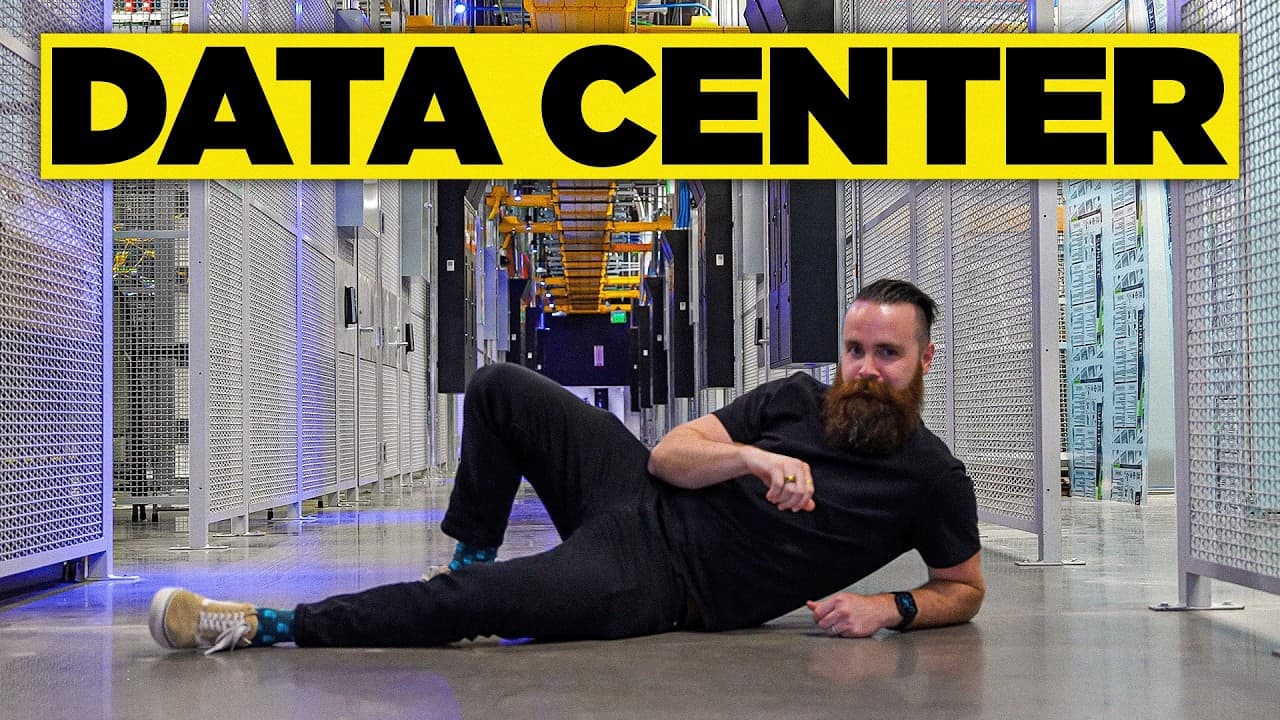
Major companies can exchange traffic through direct connections inside highly connected data centers, avoiding the wider public internet for those exchanges. At the Dallas Infomart, Equinix combines extensive fiber connectivity, layered physical security, customer-controlled cages, high-capacity cooling, and resilient infrastructure to house critical servers, networking equipment, and AI hardware.
Transcript
What if I told you the world's biggest companies don't use the internet like you and I do? They have a direct connection to each other. They're neighbors bypassing the big bad wild internet. And they do that here. This is where the internet lives. This is the Dallas info Mart. 1.5 million square ft of data center goodness. 8,700 strands of fiber. M... Read More
Key Insights
- The Dallas Infomart is a 1.5-million-square-foot data center complex with 8,700 fiber strands, multiple internet exchanges, and more than 140 networks peering at terabit speeds, making the building a major point for moving traffic between connected organizations.
- Large companies can connect directly inside a shared data center, allowing neighboring networks to exchange traffic without relying on the wider public internet for that connection. Physical proximity and dense fiber availability make these private interconnections practical at significant scale.
- Data center security is built from multiple independent layers, including reception checks, identification, badges, fingerprints, a two-door man trap, cameras, escorts, restricted floors, and locked customer cages. A failure at one checkpoint does not automatically expose protected equipment.
- A man trap prevents tailgating by requiring the first door to close before the second door can open. The person inside must authenticate again, making it difficult for an unauthorized visitor to follow an approved individual through a secure entrance.
- Customer equipment is separated into access-controlled cages that can include open mesh, enclosed tops, underfloor mesh, or fully concealed areas. Customers may add their own protections, and Equinix generally avoids entering a cage unless a serious security issue requires intervention.
- Equipment ownership is intentionally difficult to identify from the aisle because visible brands and configurations could expose trade secrets. Blue lighting also historically made labels harder to read, adding a subtle security measure alongside the facility's more direct access controls.
- Slab floors support heavier server racks than the raised floors commonly associated with data centers. Cooling air is pushed horizontally from air handlers, while equipment exhaust rises and is removed through overhead ventilation instead of being supplied from beneath a raised floor.
- Equinix technician candidates complete practical tests involving cable construction, fiber work, and fault diagnosis. This process verifies that applicants can perform physical infrastructure tasks instead of relying solely on certifications or their ability to discuss networking concepts during an interview.
Install to Summarize YouTube Videos and Get Transcripts
Explore YouTube Video Summarizer or Get YouTube Transcript Extractor
Questions & Answers
Q: How do large companies connect without using the public internet?
Large companies can place networking equipment inside the same highly connected data center and create direct connections with one another. At the Dallas Infomart, multiple internet exchanges, 8,700 fiber strands, and more than 140 networks support peering at terabit speeds. This arrangement makes participating networks physical neighbors and lets them exchange relevant traffic without routing that exchange across the wider public internet.
Q: What makes the Dallas Infomart an important internet facility?
The Dallas Infomart combines enormous physical capacity with dense network connectivity. It covers 1.5 million square feet, contains 8,700 fiber strands, hosts multiple internet exchanges, and supports more than 140 networks peering at terabit speeds. Companies can locate servers and networking equipment there, connect with neighboring networks, and operate services from a building through which local viewer traffic may pass.
Q: How does a data center man trap improve physical security?
A man trap creates a controlled space between two secure doors. After an authorized person enters, the first door must close before the second can open, and another authentication is required inside. This arrangement discourages tailgating, where an unauthorized person grabs a door or follows someone through, because both individuals become conspicuous while waiting inside the enclosed checkpoint.
Q: Why are data center customers limited to specific floors and cages?
Customers are granted access only to the locations containing their own equipment, including the appropriate floor and cage. Additional badge and fingerprint checkpoints enforce these boundaries after general building entry. This separation prevents one authorized customer from freely approaching another customer's servers, networking hardware, or configurations, reducing both physical risk and the possibility of exposing commercially sensitive infrastructure details.
Q: How do server cages protect customer equipment?
Server cages create customer-specific security zones inside the larger facility. Access can require both a badge and fingerprint, and cage designs may include open mesh, closed tops, mesh beneath the enclosure, or fully concealed rooms. Customers can add their own security controls, while continuous monitoring discourages climbing or bypass attempts. Equinix generally does not enter a customer's cage without a serious security reason.
Q: Why does the Equinix data center use blue lighting?
The blue lighting serves both an aesthetic and a security-related purpose. It contributes to the facility's nightclub-like design, which includes black walls and blue illumination. Historically, the color also made equipment labels more difficult to read from outside customer cages. That reduced the chance that a passerby could identify brands or configurations that might reveal competitive information or operational trade secrets.
Q: How is the data center cooled without raised floors?
The facility uses slab floors rather than raised floors because slab construction can support more weight from heavy server racks. Air handlers positioned at the ends of the halls push cooled air horizontally across the room. Heat produced by the equipment rises and is directed upward through ventilation, allowing the building to cool dense computing hardware without supplying cold air from beneath the floor.
Q: How does Equinix verify that technicians have practical skills?
Equinix uses hands-on testing during the technician interview process. Candidates may be asked to build cables, perform fiber-related work, splice fiber, and diagnose a deliberately broken circuit or unplugged connection. The assessment distinguishes practical ability from interview claims or certifications, confirming that a prospective technician can carry out the physical cabling and troubleshooting tasks required inside the data center.
Summary & Key Takeaways
-
The Dallas Infomart is a 1.5-million-square-foot data center complex containing 8,700 fiber strands, multiple internet exchanges, and more than 140 networks peering at terabit speeds. Its dense connectivity lets major companies place equipment near one another and establish direct links instead of sending every exchange across the wider public internet.
-
Physical security begins before visitors reach any servers. Entry requires authorization, identification, badges, fingerprints, a two-door man trap, and an escort. Customers receive access only to the appropriate floor and cage. Cameras, restricted movement, concealed ownership details, blue lighting, and customizable enclosures add further defensive layers throughout the facility.
-
The facility supports dense, heavy computing equipment through slab floors and side-delivered cooling. Air handlers push cool air across equipment, while rising hot air exits through overhead ventilation. Equinix can also receive preconfigured racks, install customer equipment, restrict cage access, and test technicians through practical cabling, fiber-splicing, and troubleshooting exercises.
Read in Other Languages (beta)
Share This Summary 📚
Summarize YouTube Videos and Get Video Transcripts with 1-Click
Try YouTube Summary with ChatGPT & Claude or YouTube Transcript Generator
Explore More Summaries from NetworkChuck 📚





Summarize YouTube Videos and Get Video Transcripts with 1-Click
Try YouTube Summary with ChatGPT & Claude or YouTube Transcript Generator