What Are Zero-shot, One-shot, and Few-shot Prompts?
TL;DR
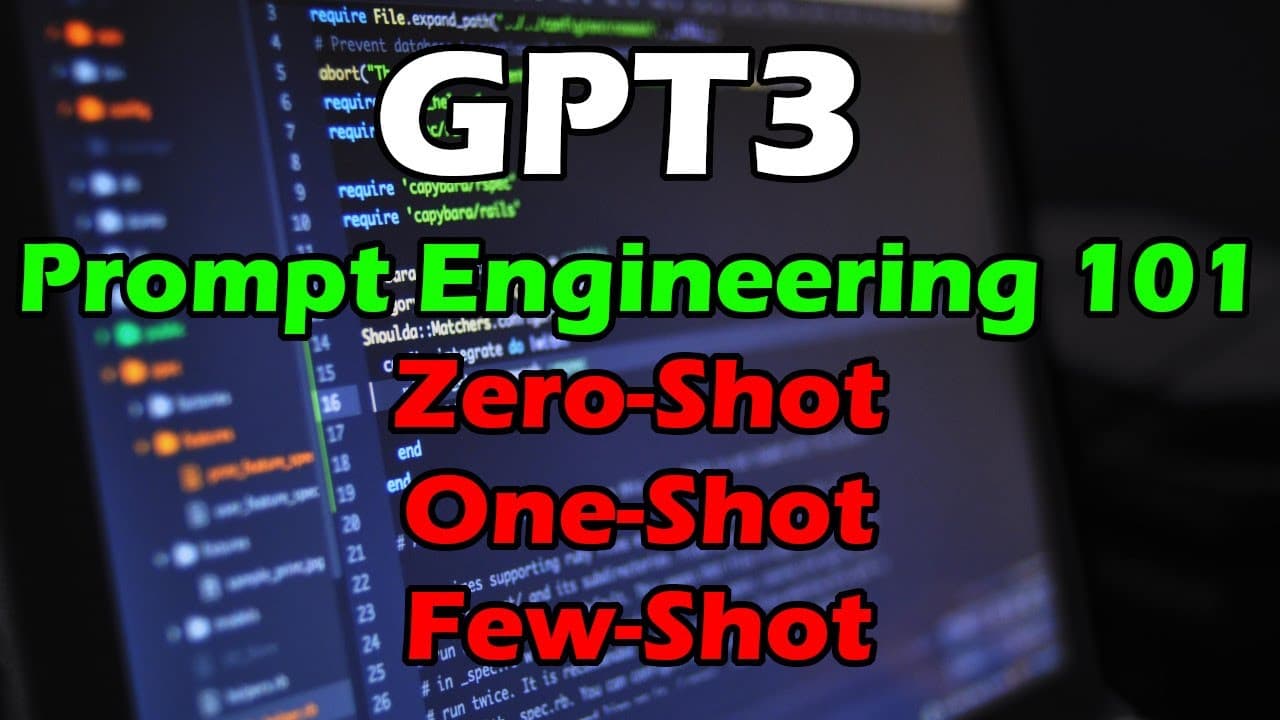
Zero-shot prompts let GPT-3 generate text from a single prompt, while one-shot prompts provide one example for better results. Few-shot prompting uses multiple examples to refine output further. Understanding these methods enhances the effectiveness of using language models like GPT-3.
Transcript
hey everybody david shapiro here with a uh another tutorial video so i know we've started with python and i'll show you something in a minute but um one thing that has come to my attention is that uh what we really need is some some basics with prompt engineering so if you're new to um to gpt3 uh and large language models the first thing that you n... Read More
Key Insights
- 🚒 GPT-3 functions as an autocomplete engine, generating text based on prompts or examples.
- 👻 Zero-shot prompting allows for text generation based solely on the initial prompt.
- ❓ One-shot prompting involves providing one example for GPT-3 to generate text from.
- 🦮 Few-shot prompting involves giving multiple examples to guide GPT-3's text generation.
- 👤 Clear instructions and specific patterns in prompts can help users achieve desired text output.
- ✋ Stop sequences, such as double newline characters, can be used to control the repetition of text generated by GPT-3.
- 🥠 Fine-tuned and instruct series models offer more specific and valuable text generation capabilities.
Install to Summarize YouTube Videos and Get Transcripts
Explore YouTube Video Summarizer or Get YouTube Transcript Extractor
Questions & Answers
Q: What is GPT-3 and how does it function?
GPT-3 is a large language model that works as an autocomplete engine. It generates text based on prompts or examples given by the user, providing suggestions or completing sentences.
Q: What is the difference between zero-shot, one-shot, and few-shot prompting?
Zero-shot prompting involves giving GPT-3 an initial prompt and allowing it to generate text based solely on that prompt. One-shot prompting involves providing one example of what is desired, and GPT-3 will generate text based on that example. Few-shot prompting involves giving multiple examples for GPT-3 to generate text from, ensuring more consistent output.
Q: How can users get GPT-3 to generate specific patterns or content?
Users can structure their prompts or examples in a specific pattern to guide GPT-3's text generation. By providing clear instructions and examples, users can better control the output.
Q: How can users stop or control the repetition of text generated by GPT-3?
Users can use specific stop sequences, such as double newline characters ("\n\n"), to signal GPT-3 to stop generating text. Additionally, users can experiment with different stop sequences to find what works best for their specific prompts.
Summary & Key Takeaways
-
GPT-3 is a large language model that functions as an autocomplete engine, similar to the recommended next word feature on a phone.
-
Zero-shot prompting allows users to give GPT-3 an initial prompt and let it generate text based on that prompt alone.
-
One-shot prompting involves providing GPT-3 with one example of what is desired, and it will generate text based on that example.
-
Few-shot prompting involves giving GPT-3 multiple examples to generate text from, allowing for more consistent output.
Read in Other Languages (beta)
Share This Summary 📚
Summarize YouTube Videos and Get Video Transcripts with 1-Click
Try YouTube Summary with ChatGPT & Claude or YouTube Transcript Generator
Explore More Summaries from David Shapiro 📚
![Claude 3 Review - LLMs are finally good at fiction and prose! [Cyberpunk Fanfic] thumbnail](/_next/image?url=https%3A%2F%2Fi.ytimg.com%2Fvi%2F3anercD5sLA%2Fhqdefault.jpg&w=750&q=75)
Summarize YouTube Videos and Get Video Transcripts with 1-Click
Try YouTube Summary with ChatGPT & Claude or YouTube Transcript Generator