Martin Casado on AI Model Markets and Investing
TL;DR
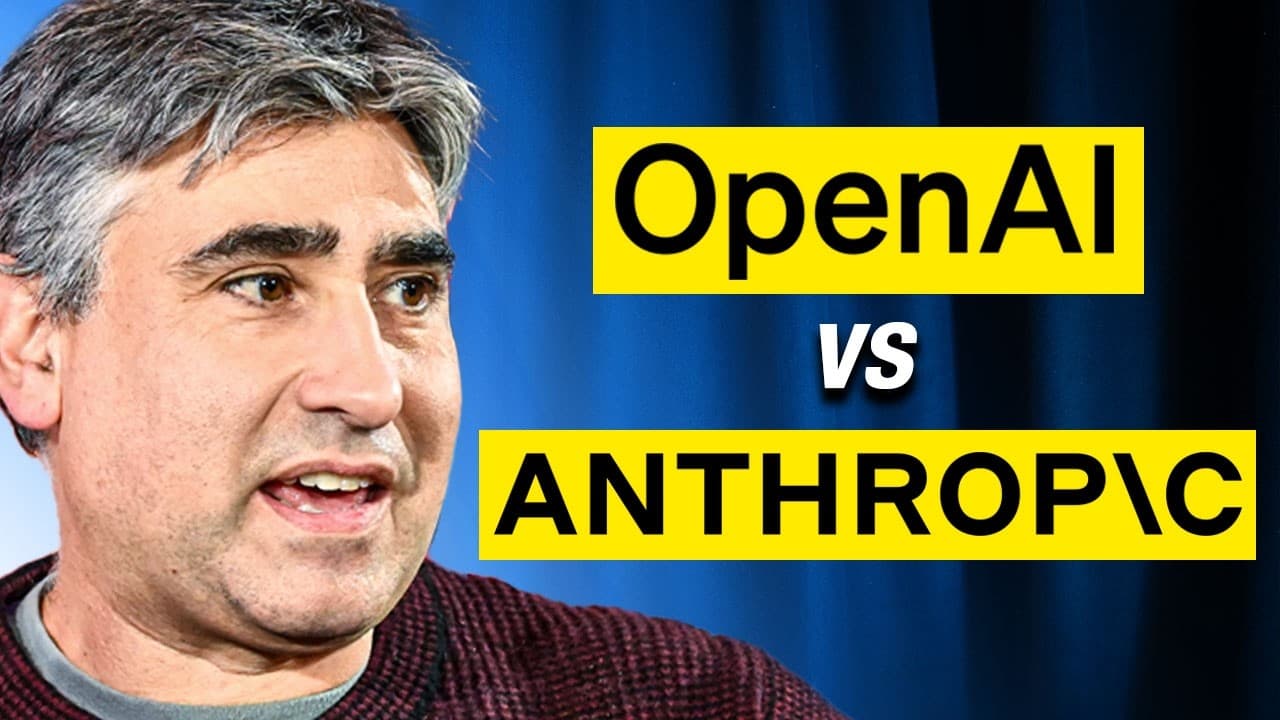
AI investors have made one main mistake: zero-sum thinking. In this cycle every layer of the stack has produced value and winners. Martin Casado, a GP at a16z, expects coding models to become an oligopoly, as cloud did, rather than an Anthropic monopoly, because models are easy to distill and well-funded rivals like Google can subsidize them as much as they want.
Transcript
There's only been one sin and that one sin is zero sum thinking. We always worry about like oh is this defensible? Oh will this layer get margin? Will this layer get value? And the answer has kind of been unilaterally yes. The answer has been every layer has gotten value. Every layer has winners. These markets are so large and they're growing so fa... Read More
Key Insights
- Zero-sum thinking is the one sin of this AI cycle. Investors kept asking whether each layer was defensible or would earn margin, and the answer has been yes: every layer has gotten value and every layer has winners.
- Investor behavior should follow the business, not the marks. In 2021 behavior followed public valuations. In AI today, some of the fastest growing companies ever by users and revenue justify active investment.
- AI models rarely keep a lasting advantage because they are easy to distill. New models from providers such as Qwen and Kimi appear and get adopted quickly, which wears down any single provider's lead.
- Coding has two possible futures: an Anthropic monopoly, or an oligopoly or broader market of coding models. In the oligopoly case, an independent consumption layer for different user types becomes a healthy, valuable layer.
- A monopoly model provider decides where entering a market is not profitable for it, and puts pressure on anyone working inside its core focus. It will try to capture that margin or that market share.
- Cloud computing is the best analog for the AI model market. AWS once had about 70 to 80 percent market share, yet Microsoft and Google pushed their way in and the market ended up as an oligopoly.
- Model launches are episodic and shape perception too much. After each major release, such as Claude 4 or OpenAI's Ghibli-style image launch, people assume a monopoly is coming, and that has not happened.
- Models are different businesses depending on type. Diffusion model companies like ElevenLabs, Midjourney, Black Forest Labs and Ideogram have strong economics because their models are smaller and their ecosystems are less subsidized than frontier language models.
Install to Summarize YouTube Videos and Get Transcripts
Explore YouTube Video Summarizer or Get YouTube Transcript Extractor
Questions & Answers
Q: What is the biggest mistake investors have made in the current AI cycle?
According to Martin Casado, the one sin has been zero-sum thinking. Investors kept asking whether a given layer was defensible, whether it would earn margin and whether it would capture value. The answer has been yes almost everywhere: every layer has gotten value and every layer has winners. Things people thought were silly are making money, and there are profitable companies. He sees not playing the game as the real error.
Q: Should venture investors play the game on the field in AI?
Casado says investor behavior should follow the business, not the marks. In 2021 behavior followed public valuations, with firms like Tiger deploying large amounts of money because public markets valued companies highly, and he calls that a bad idea. AI is different: some of the fastest growing companies ever by users and revenue exist today, and a large amount of value has shifted to them. So investors should follow that.
Q: Will Anthropic become a monopoly in AI coding models?
Casado thinks an oligopoly is more likely than an Anthropic monopoly. Models do not keep much of an advantage because they are easy to distill, and new models like Qwen and Kimi keep arriving and getting adopted. Google's coding models are strong, and GPT-5 is rumored to be good at coding. He also notes the conversation took place soon after the Claude 4 launch, which can distort how dominant one provider looks.
Q: What happens to vibe coding companies if Anthropic dominates coding models?
If Anthropic became a monopoly in coding models, Casado expects it to decide where entering a market is not profitable for it, or to change its business model. It might want the consumption layer but avoid becoming an app dev tool company, since that needs a different sales motion and team. Nobody knows where that line falls, but it would put pressure on anyone inside its core focus to capture margin or market share.
Q: Why is cloud computing a good analogy for the AI model market?
Casado calls cloud the best analog. AWS created the category and early on had roughly 70 to 80 percent market share, more dominance than Anthropic has now, and nobody thought rivals could catch up. Microsoft and Google decided it was an important market to be in and pushed their way into it, and the result was an oligopoly. Big companies behind AI models, such as Google with Gemini, can subsidize them arbitrarily in the same way.
Q: How does Gemini 2.5 compare to Anthropic's models?
Casado calls Gemini 2.5 a great model and says it is the one he uses as his standard model. Taking price performance into account, he thinks it is better than Anthropic for some use cases. Google can also subsidize its models arbitrarily, without needing the economics of an independent company. He adds that OpenAI should never be counted out: it started the party, though it had not had a major coding model release in a while.
Q: Have the large AI model providers of the next decade already been created?
Casado expects models with different flavors and many new ones still to come. He points to new teams led by pioneers such as Mira and Ilya, and to models being built for the sciences. As models move further into reinforcement learning, they take on specific flavors and generalize less, which fragments the market. He notes that in earlier super cycles winners took two or three generations to emerge: Google was third-generation search, and Facebook came after Friendster and MySpace.
Q: Are AI model companies good venture investments?
Casado says it depends on what kind of model is meant, because models are very different businesses. Diffusion model companies like ElevenLabs, Midjourney, Black Forest Labs and Ideogram have great economics because their models are smaller and their ecosystems are not subsidized the same way. For example, Google subsidizes language, code and video but not speech. Frontier language models are more complicated because Meta, Google and several Chinese players heavily subsidize that space.
Summary & Key Takeaways
-
Martin Casado says his intuition from the last 20 years works less well now, because this is the first time software creation itself is being disrupted. Looking at what has actually happened, though, the only real mistake has been zero-sum thinking. Every layer of the AI stack has produced value, winners and profitable companies.
-
On vibe coding tools built on Anthropic, Casado describes two futures: an Anthropic monopoly or an oligopoly of coding models. He bets on the oligopoly. Models distill easily, rivals like Google and OpenAI are strong, and cloud computing went from AWS dominance to several large providers.
-
Casado argues there is no single way to think about AI models as investments. Diffusion model companies such as ElevenLabs and Midjourney have strong economics. Frontier language models are harder because Meta, Google and Chinese players subsidize them. He also warns that open source is risky because China is better at it.
Read in Other Languages (beta)
Share This Summary 📚
Summarize YouTube Videos and Get Video Transcripts with 1-Click
Try YouTube Summary with ChatGPT & Claude or YouTube Transcript Generator
Explore More Summaries from 20VC with Harry Stebbings 📚





Summarize YouTube Videos and Get Video Transcripts with 1-Click
Try YouTube Summary with ChatGPT & Claude or YouTube Transcript Generator