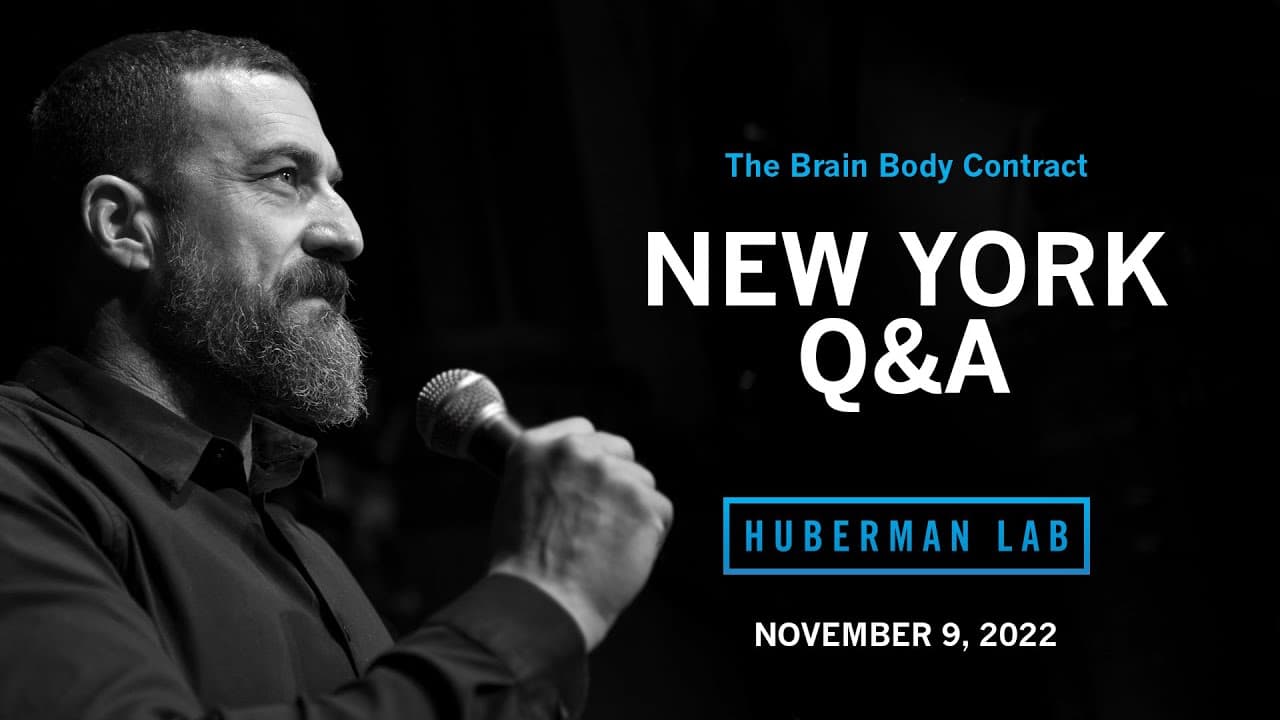
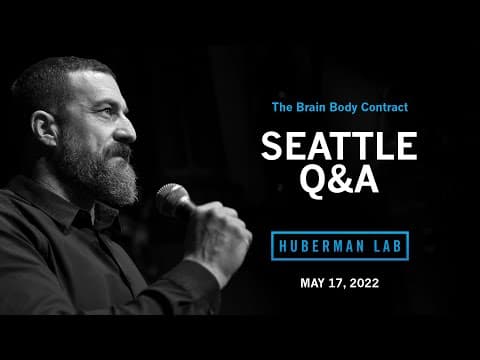
LIVE EVENT Q&A: Dr. Andrew Huberman Question & Answer in New York, NY
TL;DR
Neuroscientist Andrew Huberman discusses stress, microbiome, hypnosis, and the future of neuroscience in this live Q&A session.
Transcript
ANDREW HUBERMAN: Welcome to the Huberman Lab podcast, where we discuss science and science-based tools for everyday life. [MUSIC PLAYING] I'm Andrew Huberman, and I'm a professor of neurobiology and ophthalmology at Stanford School of Medicine. Recently, the Huberman Lab hosted a live event at the Beacon Theater in New York City. The event was enti... Read More
Key Insights
- ❓ The perception of stress can significantly impact its physiological effects on the body.
- 🦻 Hypnosis can harness neuroplasticity and aid in stress management.
- 😋 Prebiotic fiber and fermented foods are crucial for maintaining a healthy microbiome.
- 🧑 Shifting from being a night owl to a morning person requires consistency and gradual adjustments.
- 😌 The future of neuroscience and behavioral therapeutics lies in collaboration and developing actionable tools.
Install to Summarize YouTube Videos and Get Transcripts
Explore YouTube Video Summarizer or Get YouTube Transcript Extractor
Questions & Answers
Q: How can we know when stress becomes too much?
Dr. Andrew Huberman suggests two types of stress: short-term stress, which can be beneficial as long as one gets enough rest afterwards, and long-term stress, which can negatively impact sleep, immune function, and overall health.
Q: How has hypnosis impacted Dr. Huberman's life?
Dr. Huberman uses self-directed hypnosis to tap into neuroplasticity processes. It helps validate the relationship between vision and mind states, and allows him to address issues, such as anger, in a controlled therapeutic manner.
Q: What are the most effective protocols for boosting the microbiome?
Dr. Huberman suggests consuming prebiotic fiber and low-sugar fermented foods like kimchi, sauerkraut, and kefir. These improve gut health and reduce inflammation, positively impacting the microbiome.
Q: How can night owls function in a society designed for morning people?
While it is challenging for night owls to adjust their chronotype, Dr. Huberman recommends optimizing light exposure, temperature control, meal timing, and exercise patterns to help shift their sleep-wake cycle gradually. However, it may not be possible for everyone to become a morning person.
Q: What is the future of neuroscience and behavioral therapeutics?
Dr. Huberman anticipates a blurring of boundaries between different fields of psychology. He believes that collaboration and a focus on actionable tools will drive progress. The ability to access and maintain states of excitement and delight in one's work will become increasingly important.
Summary & Key Takeaways
-
Stress can have both positive and negative effects on the body, depending on how you perceive it. Understanding stress as a tool for sharpening decision-making and enhancing the immune system can help mitigate negative impacts.
-
Hypnosis can be a powerful tool for neuroplasticity and dealing with stress. It combines deep relaxation with focus to create a state of mental and physical calm.
-
Prebiotic fiber and low-sugar fermented foods are essential for a healthy microbiome. These improve gut health, immune system function, and overall well-being.
-
Shifting from being a night owl to a morning person requires consistency in light exposure, temperature regulation, meal timing, and exercise patterns. It may not be possible for everyone to make this shift, but small changes can help adapt one's sleeping pattern.
Read in Other Languages (beta)
Share This Summary 📚
Summarize YouTube Videos and Get Video Transcripts with 1-Click
Try YouTube Summary with ChatGPT & Claude or YouTube Transcript Generator
Explore More Summaries from Andrew Huberman 📚
Summarize YouTube Videos and Get Video Transcripts with 1-Click
Try YouTube Summary with ChatGPT & Claude or YouTube Transcript Generator