Dara Khosrowshahi on Uber's Delivery Hero Deal
TL;DR
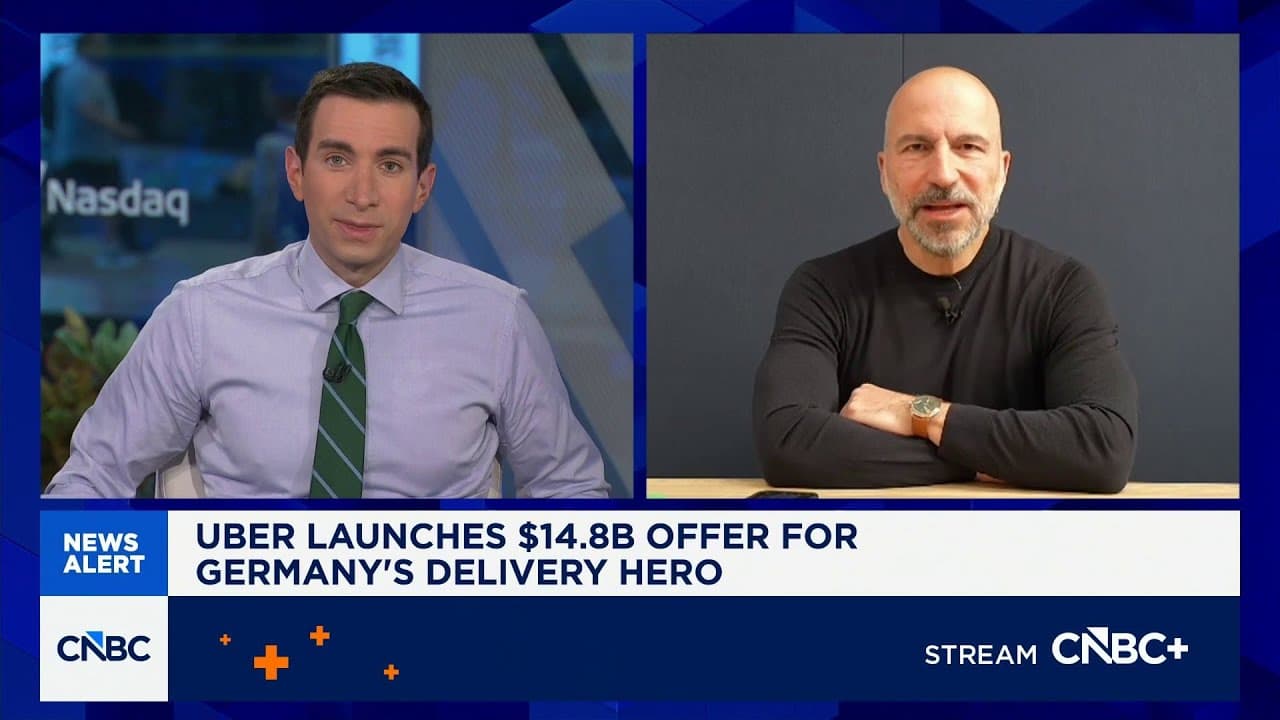
Uber sees its $14.8 billion Delivery Hero acquisition as a way to enter almost 50 new delivery markets, add more than 50 million customers, and expand the number of countries offering both mobility and delivery. Dara Khosrowshahi expects over $1 billion in synergies while preserving strong local brands and placing Uber's technology platform beneath them.
Transcript
WELCOME BACK TO SQUAWK BOX UBER BUYING GERMAN FOOD DELIVERY COMPANY DELIVERY HERO FOR ABOUT $14.8 BILLION TO CREATE THE WORLD'S LARGEST DELIVERY FIRM OUTSIDE OF CHINA. JOINING US RIGHT NOW IS UBER CEO DARA KHOSROWSHAHI. GOOD MORNING TO YOU. GOOD MORNING. TAKE US THROUGH THE BACKSTORY OF YOUR DECISION TO BUY THIS COMPANY. IT'S A BIG DEAL FOR YOU ... Read More
Key Insights
- Delivery Hero is one of the world's largest delivery platforms, and its acquisition would extend Uber into almost 50 new delivery markets. Uber expects to operate delivery services across 99 markets after completing the combination.
- Uber's platform strategy is based on operating mobility and delivery together. The acquisition would increase by almost 50% the number of markets where both services coexist, allowing Uber to move customers between rides and delivery.
- Customers using multiple Uber products spend three times more than customers using only one product, according to Khosrowshahi. That behavior makes cross-promotion between Uber and Delivery Hero's regional brands a central source of expected value.
- Delivery Hero's regional brands are intended to remain in place because they already hold strong market positions. Uber plans to deploy its technology underneath brands such as Talabat and HungerStation in the Middle East while preserving their established identities.
- The proposed combination is expected to generate more than $1 billion in synergies. Khosrowshahi says those savings would reduce the effective acquisition price after closing to eight times EBITDA, supporting Uber's financial case for the transaction.
- Delivery Hero's established market positions would be nearly impossible to rebuild from scratch, according to Khosrowshahi. Buying the company gives Uber immediate access to restaurants, couriers, customers, and recognized brands that would be costly and difficult to assemble organically.
- Scale improves marketplace liquidity by connecting more consumers with drivers, couriers, and restaurants. Khosrowshahi says this activity keeps partners busier, supports flexible earnings, and helps Uber grow faster and generate higher profits than competitors.
- Organic growth remains Uber's primary growth lever despite the acquisition. The company reported 22% constant-currency gross bookings growth in the previous quarter and plans to continue innovating, repurchasing stock, investing in autonomous technology, and integrating the transaction before pursuing more deals.
- More videos from this channel:
- More from this channel: CNBC Television
Install to Summarize YouTube Videos and Get Transcripts
Explore YouTube Video Summarizer or Get YouTube Transcript Extractor
Questions & Answers
Q: Why is Uber buying Delivery Hero for $14.8 billion?
Uber is buying Delivery Hero to enter almost 50 additional delivery markets, obtain leading regional brands, and expand the reach of its combined mobility and delivery platform. Khosrowshahi says these established market positions would be almost impossible to build from scratch. The acquisition would also add more than 50 million customers and create opportunities to move users between rides and delivery services.
Q: How will Delivery Hero strengthen Uber's platform strategy?
Delivery Hero would increase by almost 50% the number of markets where Uber operates mobility and delivery together. Khosrowshahi describes this combination as Uber's competitive advantage because customers can be moved between products through cross-promotion. He says consumers using multiple services spend three times more than customers who use only one product, improving the economic value of Uber's customer base.
Q: Will Uber replace Delivery Hero's regional brands?
Uber does not plan to discard Delivery Hero's strong regional brands. Khosrowshahi says those brands have substantial growth prospects and established positions, including Talabat and HungerStation in the Middle East and a leading player in Korea. Uber instead intends to put its global technology platform beneath the local brands, then cross-promote Uber's services with them to generate additional growth and operating efficiencies.
Q: How much does Uber expect to save through deal synergies?
Uber expects more than $1 billion in synergies from combining its technology and operations with Delivery Hero's businesses. Khosrowshahi says these benefits would make the effective price paid for the assets equal to eight times EBITDA after the transaction closes. The savings are expected to come from extending a technology platform in which Uber already invests billions of dollars across the acquired regional operations.
Q: Why does Uber prefer an acquisition over entering these markets organically?
Khosrowshahi argues that Delivery Hero has built market positions that are almost priceless and would now be impossible for a new entrant to reproduce from scratch. A delivery marketplace requires established relationships among consumers, restaurants, and couriers, along with trusted brands and sufficient activity. Acquiring Delivery Hero gives Uber these assets immediately, although management still views internal innovation and organic expansion as its primary growth engine.
Q: How does marketplace scale benefit Uber drivers and couriers?
Marketplace scale creates liquidity by maintaining a large pool of customers who are continually requesting rides or delivery services. Khosrowshahi says that greater demand keeps drivers, couriers, and restaurants busy and helps partners earn money flexibly. He connects this liquidity, together with Uber's technology, to faster growth and higher profits than competitors, even when another platform may offer a driver more per individual ride.
Q: What regulatory obstacles does Uber expect for the acquisition?
Khosrowshahi acknowledges that regulatory review is a normal part of mergers and acquisitions, but he argues that Uber and the Delivery Hero assets being purchased do not have like-for-like overlap. He says the meaningful connection is between Uber's mobility operations and Delivery Hero's delivery services. He also clarifies that a separate asset transaction involving Delivery Hero and private equity company SSW is not an Uber divestiture.
Q: Will Uber pursue more acquisitions after buying Delivery Hero?
Uber's immediate priorities will be organic growth and properly integrating the Delivery Hero acquisition, so Khosrowshahi says the company is not currently expecting to search for additional deals. Uber will nevertheless remain opportunistic. Its broader capital allocation plans include continued stock repurchases, investment in autonomous technology, internal innovation, and selective acquisitions that meet both financial and operational discipline requirements.
Summary & Key Takeaways
-
Uber is buying Delivery Hero for about $14.8 billion, gaining access to almost 50 additional delivery markets and reaching 99 markets in total. Khosrowshahi argues that Delivery Hero's established regional positions, including strong brands in the Middle East and Korea, would be extremely difficult for a new competitor to recreate organically.
-
The acquisition supports Uber's strategy of offering mobility and delivery in the same markets. Khosrowshahi says customers using multiple Uber products spend three times more than single-product users. By adding more than 50 million customers, Uber expects to create cross-promotion opportunities while keeping Delivery Hero's established consumer-facing brands in place.
-
Uber plans to place its global technology beneath Delivery Hero's regional brands and expects more than $1 billion in synergies. Management calculates that the effective acquisition price after synergies equals eight times EBITDA. Despite the deal, Uber intends to prioritize organic growth, continue stock buybacks, invest in autonomous technology, and remain opportunistic about acquisitions.
Read in Other Languages (beta)
Share This Summary 📚
Summarize YouTube Videos and Get Video Transcripts with 1-Click
Try YouTube Summary with ChatGPT & Claude or YouTube Transcript Generator
Explore More Summaries from CNBC Television 📚

Summarize YouTube Videos and Get Video Transcripts with 1-Click
Try YouTube Summary with ChatGPT & Claude or YouTube Transcript Generator