How to Build and Scale a Trusted Personal Brand
TL;DR
Start by defining the outcome your personal brand should produce, then reverse engineer what you must be known for, do, and learn. During the foundation stage, prioritize a sustainable publishing habit, audience trust, and enough content volume to discover what people value, instead of chasing virality or monetizing before credibility exists.
Transcript
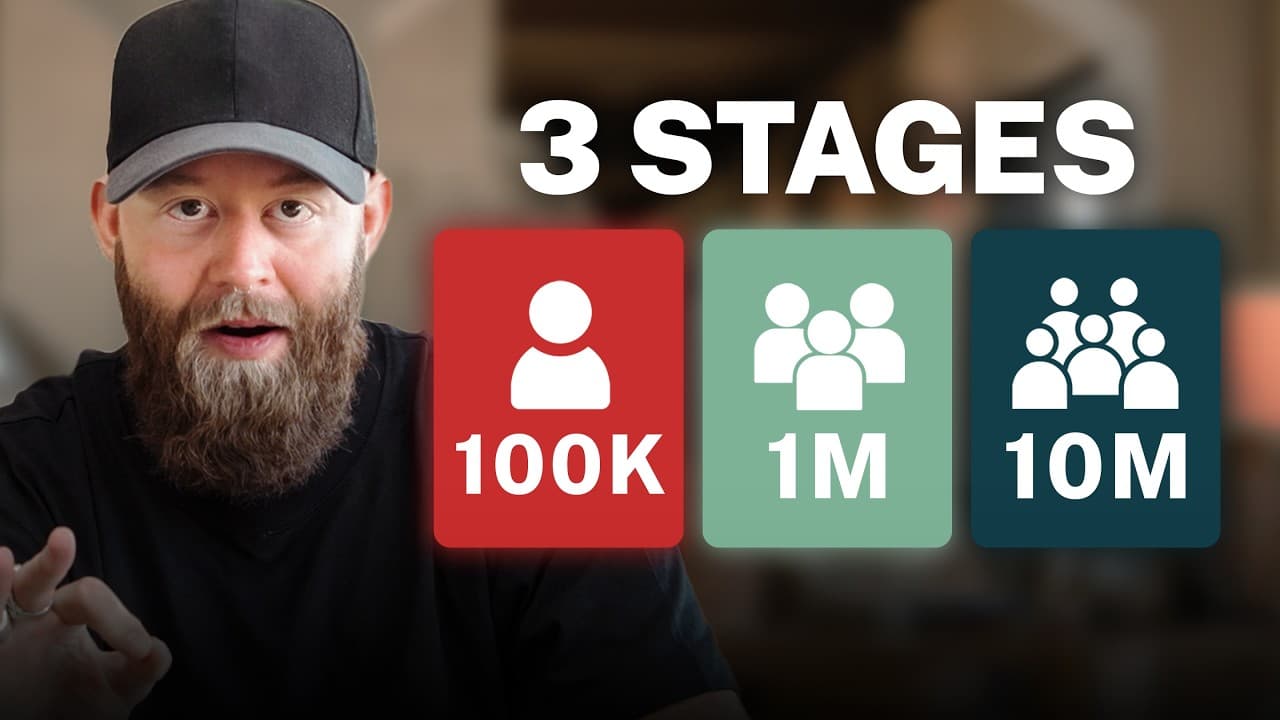
Whether you have 13 followers or 13 million followers, your personal brand is in one of these stages. I've been building personal brands online for almost 17 years now, and I've noticed that the majority of you stay stuck where you're at because you're using the strategy that you started with, or worse, you have no strategy at all. I'm going to sho... Read More
Key Insights
- The brand journey framework is a reverse-engineering exercise that begins with the desired outcome, identifies the reputation needed to produce it, specifies the actions that create that reputation, and determines which skills must be learned before those actions can be performed effectively.
- Brand associations are four ideas that should enter an audience’s mind when they think about a creator. Two should express what the creator supports, while two should clarify what the creator opposes, creating a more defined and memorable identity.
- Brand positioning is anchored by a belief about the world or an industry that differs fundamentally from the views of peers. That belief can become the north star repeatedly expressed through content ideas, hooks, titles, thumbnails, and the creator’s broader message.
- A preferred content medium should match the creator’s comfort and ability to continue producing. The available choices are video, audio, written content, and photos or graphics, with video described as highly leveraged but unnecessary as a starting point for everyone.
- The foundation stage covers the journey from zero to 100,000 followers and centers on building trust with yourself before earning audience trust. The creator reports that roughly 90% of online creators occupy this stage, with 90% of that group below 20,000 followers.
- A sustainable creation process is more valuable in the foundation stage than copying the output of an established creator. Publishing only when motivation appears creates an unstable cadence, while a manageable schedule makes consistent practice, audience learning, and long-term continuation more likely.
- Early content is evidence that a creator deserves an audience’s limited attention. Since viewers face competing messages and notifications, creators must repeatedly demonstrate useful ideas, credible actions, and relevant results before expecting people to follow them or transact with them.
- Early monetization can undermine a personal brand when trust has not yet been established. The foundation stage should focus on scaling trust, building a dependable operation, and gathering data about what the audience wants before treating transactions as the primary objective.
Install to Summarize YouTube Videos and Get Transcripts
Explore YouTube Video Summarizer or Get YouTube Transcript Extractor
Questions & Answers
Q: How do you create a strategy for a personal brand?
Create a personal brand strategy by beginning with the outcome you want the brand to produce. Next, determine what you would need to be known for to make that outcome possible. Identify the actions and results that would establish that reputation, then list the knowledge and skills required to perform those actions. This reverse-engineered sequence turns a distant objective into work you can begin now.
Q: What questions are included in the brand journey framework?
The brand journey framework asks four connected questions. First, what outcome do you want from building the personal brand? Second, what would you need to be known for to achieve it? Third, what actions would make you known for that quality or subject? Fourth, what must you learn to perform those actions? Together, the answers link an end goal to immediate skill development.
Q: How should creators define their brand associations?
Creators should choose four associations they want audiences to connect with their names. Two associations should state what they support, and two should state what they oppose. For example, the source supports brands built around durability and trust rather than virality, while opposing the use of fear to lead creative people. These contrasts make values and identity more explicit.
Q: What makes personal brand positioning distinctive?
Distinctive positioning comes from identifying a belief about the world or your industry that differs fundamentally from what peers and other speakers in the space believe. That perspective should not be a quick or superficial answer. It becomes the central idea repeatedly reinforced through topics, video concepts, hooks, titles, thumbnails, and other communication choices across the personal brand.
Q: Which content medium should a personal brand use first?
A personal brand should begin with the medium that feels most comfortable and sustainable for the creator. The four options identified are video, audio, written content, and photos or graphics. Although video is described as the highest-leverage activity, someone uncomfortable speaking to a camera can begin with an audio podcast or written work instead of forcing an unsuitable production process.
Q: What should creators prioritize before reaching 100,000 followers?
Creators in the zero-to-100,000-follower foundation stage should prioritize a sustainable content habit, personal confidence, audience trust, and learning. Their work should demonstrate why they deserve attention while producing enough material to reveal what the audience values. The immediate goal is not worldwide attention or exceptional view counts, but a repeatable operation that the creator can maintain consistently.
Q: Why do personal brands get stuck in the foundation stage?
Personal brands can remain stuck because they lack a sustainable and scalable process, publish only when motivation appears, or build around a niche they do not want to discuss over the long term. Some creators also attempt to monetize before audiences trust them. These choices create inconsistent output, unwanted audience expectations, and pressure to seek transactions before credibility has been established.
Q: When should a creator monetize a personal brand?
A creator should avoid making monetization the primary objective before earning meaningful audience trust. People who do not yet know whether a creator’s advice works have little reason to transact. During the foundation stage, content should scale trust by showing useful ideas, actions, and results. Transactions can come later, after the audience has received enough evidence to view the creator as credible.
Summary & Key Takeaways
-
A personal brand strategy should begin with a desired outcome and work backward. Determine the reputation required to achieve that outcome, the actions that would establish that reputation, and the skills needed to perform those actions. This process connects long-term ambition with practical learning and work that can begin immediately.
-
Clear associations and distinctive positioning make a personal brand easier to understand. Choose two ideas you want to support and two practices you want to oppose. Then identify a belief about your industry that differs fundamentally from your peers, using that perspective to guide topics, hooks, titles, thumbnails, and repeated messages.
-
The foundation stage focuses on becoming a consistent creator and gathering evidence about audience preferences. Select a comfortable medium, establish a publishing pace you can maintain, and create enough material to learn what resonates. Trust and repeatable operations should come before aggressive monetization, broad attention, or attempts to match another creator’s workload.
Read in Other Languages (beta)
Share This Summary 📚
Summarize YouTube Videos and Get Video Transcripts with 1-Click
Try YouTube Summary with ChatGPT & Claude or YouTube Transcript Generator
Explore More Summaries from Caleb Ralston 📚
Summarize YouTube Videos and Get Video Transcripts with 1-Click
Try YouTube Summary with ChatGPT & Claude or YouTube Transcript Generator