This Is Not a Shockwave
TL;DR
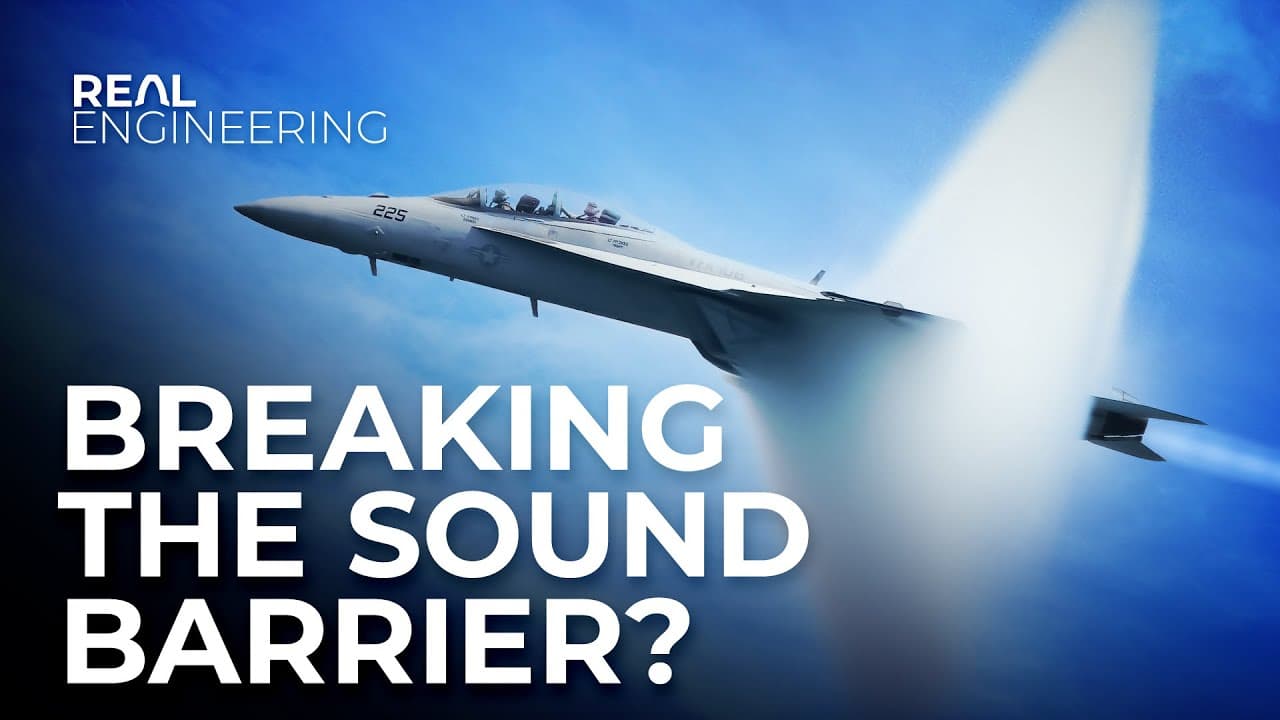
Vapor cones are not shockwaves but expansion fans.
Transcript
this is not a sonic boom but a quick search of google images will tell you otherwise image after image after image all showing something that is not a sonic boom so if this is not a sonic boom what is it to answer that question we first need to address what a sonic boom is shock waves occur as a result of the maximum speed of sound which is the spe... Read More
Key Insights
- Sonic booms are caused by shock waves, which occur when an object travels faster than the speed of sound, causing pressure waves to stack up.
- The speed of sound in air is approximately 340 meters per second, but it varies with atmospheric conditions, especially temperature.
- Vapor cones are visible due to water condensation caused by a drop in temperature, not by the pressure increase associated with shock waves.
- Expansion fans occur when supersonic flow travels over convex surfaces, causing air to expand and temperature to drop, resulting in vapor cones.
- Vapor cones can be observed in specific conditions where humidity is high enough for the temperature drop to force water out of the air.
- Shock waves can also be observed with light, such as when electrons travel faster than light in water, creating visible light shock waves.
- The video encourages viewers to explore more in-depth explanations and exclusive content on the Nebula platform.
- Nebula offers ad-free content and early access to videos, supporting creators and providing a platform for detailed and extended content.
Install to Summarize YouTube Videos and Get Transcripts
Explore YouTube Video Summarizer or Get YouTube Transcript Extractor
Questions & Answers
Q: What causes a sonic boom?
A sonic boom is caused by shock waves that occur when an object travels faster than the speed of sound. This speed is approximately 340 meters per second in air, but it can vary with atmospheric conditions. As the object catches up with its own sound waves, these waves stack up, creating a sudden spike in pressure, known as a shock wave, which we perceive as a sonic boom.
Q: How do vapor cones form?
Vapor cones form due to a sudden drop in temperature, which causes water vapor in the air to condense. This occurs when supersonic flow travels over convex surfaces, allowing the air to expand. The temperature drop forces water out of the air, forming visible vapor cones. Unlike shock waves, vapor cones are not caused by pressure increases but by temperature decreases.
Q: What is the difference between a shock wave and an expansion fan?
A shock wave occurs when an object travels faster than the speed of sound, causing pressure waves to stack up and create a sudden pressure spike. An expansion fan, on the other hand, occurs when supersonic flow expands over a convex surface, causing a drop in temperature and pressure. Vapor cones are a result of expansion fans, not shock waves.
Q: Can shock waves be observed with light?
Yes, shock waves can be observed with light under certain conditions. This occurs when particles, such as electrons, travel faster than light in a medium like water. This phenomenon creates visible light shock waves, which are different from the sound-based shock waves associated with sonic booms. The video provides more details on this topic in its extended version on Nebula.
Q: What conditions are necessary to see vapor cones?
To see vapor cones, specific atmospheric conditions are necessary. The humidity must be high enough so that when the temperature drops due to the expansion of air over a convex surface, water is forced out of the air, forming visible vapor cones. These conditions are not always present, which is why vapor cones are not always visible.
Q: Why are vapor cones often mistaken for sonic booms?
Vapor cones are often mistaken for sonic booms because they appear around aircraft traveling at high speeds, similar to when sonic booms occur. However, vapor cones are actually caused by expansion fans, which result in a temperature drop and water condensation, not by the pressure increase associated with shock waves that cause sonic booms.
Q: What additional content is available on Nebula?
Nebula offers exclusive content, including extended versions of videos, ad-free viewing, and early access to new releases. The platform hosts a variety of content from creators, such as in-depth series and podcasts. For example, the video mentions an extended explanation of light shock waves and an upcoming director's cut on the engineering of the 787.
Q: How can viewers support the channel and access more content?
Viewers can support the channel by subscribing to Nebula through CuriosityStream, which offers a discounted rate for access to both platforms. This subscription provides ad-free content, early access to videos, and exclusive series. Supporting the channel through Nebula helps creators produce more in-depth and high-quality content.
Summary & Key Takeaways
-
The video explains that vapor cones, often mistaken for sonic booms, are actually caused by expansion fans, not shock waves. These occur when supersonic flow expands over convex surfaces, causing a temperature drop and water condensation.
-
Sonic booms result from shock waves when an object exceeds the speed of sound, leading to pressure waves stacking up. Vapor cones, however, are formed due to temperature drops, not pressure spikes, and are visible under specific humidity conditions.
-
The video also discusses the visibility of light shock waves, which occur when particles travel faster than light in water. Viewers are encouraged to explore more detailed content on Nebula, a platform offering ad-free and extended videos.
Read in Other Languages (beta)
Share This Summary 📚
Summarize YouTube Videos and Get Video Transcripts with 1-Click
Try YouTube Summary with ChatGPT & Claude or YouTube Transcript Generator
Explore More Summaries from Real Engineering 📚





Summarize YouTube Videos and Get Video Transcripts with 1-Click
Try YouTube Summary with ChatGPT & Claude or YouTube Transcript Generator