Vinod Khosla: "I'm a Glorified Recruiter"
TL;DR
Vinod Khosla calls himself a “glorified recruiter” because hiring and retaining talent is the biggest limitation on startup success, and he spends more time recruiting than on any other activity. He also argues that investors should deliver help, advice, and hiring leverage, not merely money, and urges founders to plan for uncertainty with a sustainable burn rate. Read on for his practical guidance on teams, investors, disruption, and learning.
Transcript
So I I could run down the list of all of the achievements and things that you've done, invested in Juniper Nex, you know, incubated Juniper Networks, made Juniper Networks, you're also Daisy Systems, Sun Micros, that's boring. Let's not waste time. That's boring. Yeah. Yeah. Yeah. There's not so a lot of time, so we'll just get into it. Um I was al... Read More
Key Insights
- Hiring talent is the biggest limitation to startup success. Recruiting outside the Bay Area is hard in many areas, but inside it retaining and fighting for talent is hardest because the best people have so many competing offers.
- An investor's real worth is help and advice, not money. The right investor helps founders avoid costly mistakes and recruit people who wouldn't otherwise talk to them, so choosing an investor should not be driven by valuation.
- Khosla says 90% of VCs add no value and 70% actually add negative value. He frames the current environment's focus on money and valuations, rather than on what a startup actually needs to succeed, as troubling.
- Disruption always hurts someone. Doing anything significant means disrupting an incumbent, so resistance and opposition are an inherent part of being an entrepreneur, whether the company is Uber, Airbnb, or a food startup.
- Rate of learning matters more than experience. Experience carries bias, and much of the understanding gained from knowing a business is not useful, so founders should prize original thinking alongside some industry knowledge.
- Founders should seek critique, not agreement. People who agree with you 100% are not being useful, and Khosla deliberately challenges founders on areas like branding to offset the biases he thinks they hold.
- Prepare 'if-that-then' plans rather than one fixed plan. Founders should keep a sustainable burn rate and be able to hit the brakes hard within 90 to 180 days, since money becomes dangerous if you assume it will keep flowing.
- Khosla calls himself a 'glorified recruiter,' spending more time recruiting than any other single activity, working LinkedIn, making calls, sending emails, and personally interviewing even critical engineers, not just senior managers.
Install to Summarize YouTube Videos and Get Transcripts
Explore YouTube Video Summarizer or Get YouTube Transcript Extractor
Questions & Answers
Q: Why does Vinod Khosla call himself a glorified recruiter?
Khosla says hiring talent is the biggest limitation on a company’s success, so he spends more time recruiting than on any other single activity. He uses LinkedIn, makes calls, sends emails, and personally interviews candidates, including critical engineers as well as senior managers.
Q: What does Vinod Khosla think about the value VCs add to startups?
Khosla says 90% of VCs add no value and 70% add negative value. Nevertheless, he believes entrepreneurs should approach VCs because the right investor can offer useful advice, prevent costly mistakes, and help recruit people who otherwise might not speak with the founders.
Q: How should founders choose an investor, according to Vinod Khosla?
Founders should focus on the help and advice an investor can provide rather than only on money or valuation. Khosla says the right investor can give a startup leverage in hiring and help it avoid costly mistakes.
Q: How does Vinod Khosla advise entrepreneurs to prepare for a possible bubble?
Khosla recommends planning around different possibilities instead of claiming to know whether a bubble exists. Founders should secure plenty of financial fuel, maintain a sustainable burn rate, and be prepared to hit the brakes hard within 90 days or, at most, 180 days.
Q: Why does Vinod Khosla sometimes give founders contrarian advice?
Khosla says agreeing with a founder 100% adds little value, so he challenges areas where the founder may have a blind spot. For example, he may raise branding with a highly technical founder to offset that founder’s development-focused bias.
Q: What matters more than experience when building a startup team?
Khosla says rate of learning matters more than experience because experience can also create bias. He recommends combining some industry understanding with original thinking and actively seeking critique rather than agreement.
Q: What is Vinod Khosla’s advice about disruption and resistance?
Khosla says meaningful disruption inevitably hurts or threatens an incumbent, so opposition is part of entrepreneurship. He advises founders to recognize resistance early and position themselves to handle it, citing companies such as Uber and Airbnb as examples that encountered opposition.
Q: What is “gene-pool engineering” for a startup team?
Khosla uses “gene-pool engineering” to describe the critical process of selecting a startup’s initial team. His broader advice is to build around original thinking, include relevant industry understanding, and prioritize people with a strong rate of learning.
Summary
In this video, the speaker discusses various topics related to entrepreneurship, innovation, and technology. He emphasizes the importance of disruption and the challenges faced by entrepreneurs. He also talks about the role of venture capitalists and the advice he gives to startup founders. Additionally, he touches upon the valuation of companies and the significance of having a clear vision. The speaker mentions a wide range of industries, including food, healthcare, financial services, and robotics, and highlights the potential impact of various technologies such as virtual reality, 3D printing, and artificial intelligence.
Questions & Answers
Q: What important principle should entrepreneurs keep in mind when disrupting an industry?
When disrupting an industry, it is crucial to understand that someone will be affected negatively. Revolutions are hard on people, and there will always be opposition to significant and important changes. Entrepreneurs should be prepared to face these challenges and position themselves to navigate through them effectively.
Q: Should entrepreneurs seek investment from venture capitalists (VCs)?
Yes, entrepreneurs can benefit greatly from the right kind of help and advice that VCs can provide. The value of an investor is not just in the money they bring but also in the guidance, support, and access to resources that they offer. Entrepreneurs should focus on finding investors who can provide the necessary expertise and connections to help their startup succeed.
Q: Are companies like Uber and Airbnb overvalued?
It is difficult to determine whether companies are overvalued or not, and such opinions tend to be speculative. The important question for entrepreneurs is not whether the valuation is accurate but how to navigate through uncertain market conditions. Entrepreneurs should ensure that they have enough financial resources and be prepared to adjust their business plans based on the changing landscape.
Q: What is the biggest challenge for portfolio companies in terms of external risks?
Each company faces different challenges, but a common issue among companies is hiring and retaining the right talent. In competitive areas like the Bay Area, attracting top talent can be challenging, and talented individuals often have multiple offers to choose from. Hiring the right people is critical, and entrepreneurs should invest time and effort in recruiting the best team.
Q: What is the best advice the speaker has given to an entrepreneur recently?
The speaker mentions that he often advises entrepreneurs on topics that challenge their existing perspectives. He believes in challenging their thinking and adding elements that compensate for their biases. The best advice he gives varies depending on the entrepreneur and the specific situation, but it typically involves encouraging them to be open to critique and to iterate based on their learnings.
Q: What are the general trends in technology that entrepreneurs and investors should be aware of?
The speaker mentions several emerging technologies that are currently taking center stage, including virtual reality, augmented reality, 3D printing, drones, robotics, machine learning, AI, and genomics. However, he emphasizes that the most impactful trends are hard to predict and often result in surprising successes. Entrepreneurs and investors should focus on their own unique insights and remain adaptable to changing circumstances.
Q: Which area does the speaker believe is currently most interesting in terms of innovation?
The speaker mentions healthcare as an area where there are significant opportunities for innovation. He highlights the potential for improvement in various aspects of healthcare, such as the development of better diagnostic tools, revolutionizing psychiatry through big data, and reinventing how chronic diseases are managed. However, he also mentions that there are interesting advancements in other areas like 3D printing and robotics.
Q: Is genomics the most important aspect of healthcare innovation?
The speaker argues that genomics is just a small part of healthcare innovation. He suggests that other areas like epigenomics, proteomics, and metabolomics are equally, if not more, important. Understanding what is happening in the human body right now is more valuable than just knowing inherited genetic information. He stresses the need to look beyond individual technologies and take a holistic approach to healthcare innovation.
Q: What does the speaker believe is crucial for entrepreneurs to succeed?
The speaker emphasizes the importance of having a clear vision and being committed to it. He advises entrepreneurs to be obstinate about their vision while being flexible in their tactics. Learning from experimentation and iteration is key to success. Luck and timing play a role, but having a strong vision and adapting quickly to market changes are essential for long-term success.
Q: What is an interesting example of the application of robotics and machine vision?
The speaker mentions a company that can read fields using robotics and machine vision. This technology has the potential to eliminate the need for herbicides in agriculture. By being able to read and analyze fields, it may be possible to remove herbicides, which could lead to significant changes in the agriculture industry. This example demonstrates the power of technology to transform an industry by addressing one specific problem.
Takeaways
The speaker highlights the challenges faced by entrepreneurs in disruptive industries and the importance of having a clear vision. He encourages entrepreneurs to seek the right kind of help and advice from investors. The valuation of companies is less important than navigating through uncertain market conditions. Hiring and retaining talent is often a major challenge for startups. In terms of technology trends, he mentions virtual reality, augmented reality, 3D printing, drones, robotics, machine learning, and AI. However, he also discusses interesting opportunities in healthcare, financial services, and other sectors. He advises entrepreneurs to be flexible in their tactics while remaining committed to their vision.
Summary & Key Takeaways
-
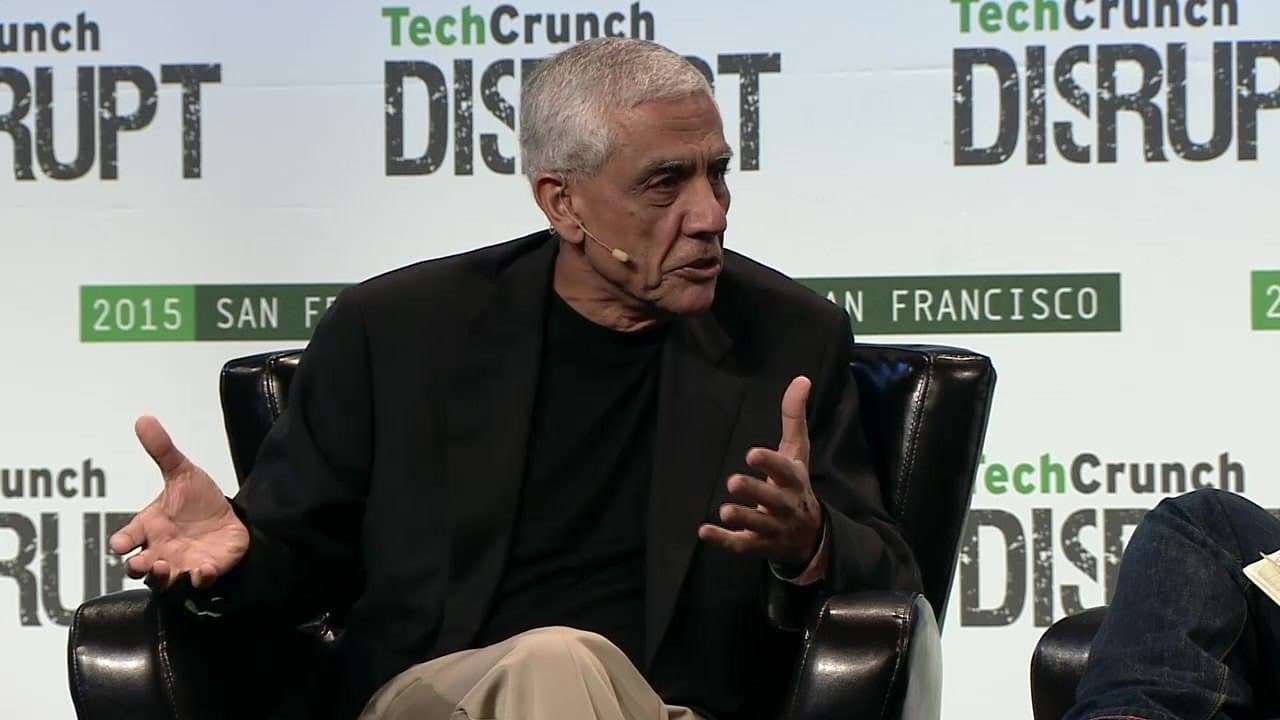
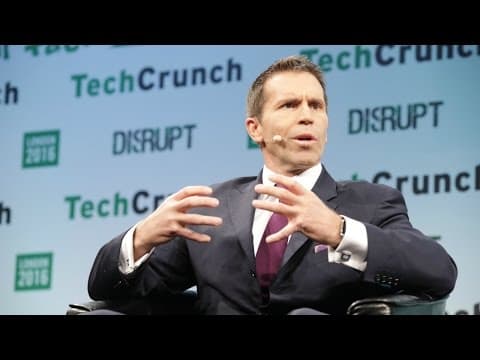
Vinod Khosla of Khosla Ventures, interviewed at TechCrunch Disrupt, opens with a tense exchange about food startup Hampton Creek, then pivots to a broader principle: any disruptive, important work harms an incumbent, so opposition and resistance are unavoidable parts of entrepreneurship.
-
He advises entrepreneurs to still go to VCs, because the right investor provides help, advice, and hiring leverage rather than just money. He criticizes focus on valuations, repeats that 90% of VCs add no value and 70% add negative value, and stresses gene-pool engineering the starting team.
-
On talent, hiring is the biggest limit to success, so Khosla acts as a 'glorified recruiter.' He gives founders contrarian advice to offset their biases, values rate of learning and critique over experience, and urges 'if-that-then' planning to survive a possible bubble.
Read in Other Languages (beta)
Share This Summary 📚
Summarize YouTube Videos and Get Video Transcripts with 1-Click
Try YouTube Summary with ChatGPT & Claude or YouTube Transcript Generator
Explore More Summaries from TechCrunch 📚
Summarize YouTube Videos and Get Video Transcripts with 1-Click
Try YouTube Summary with ChatGPT & Claude or YouTube Transcript Generator