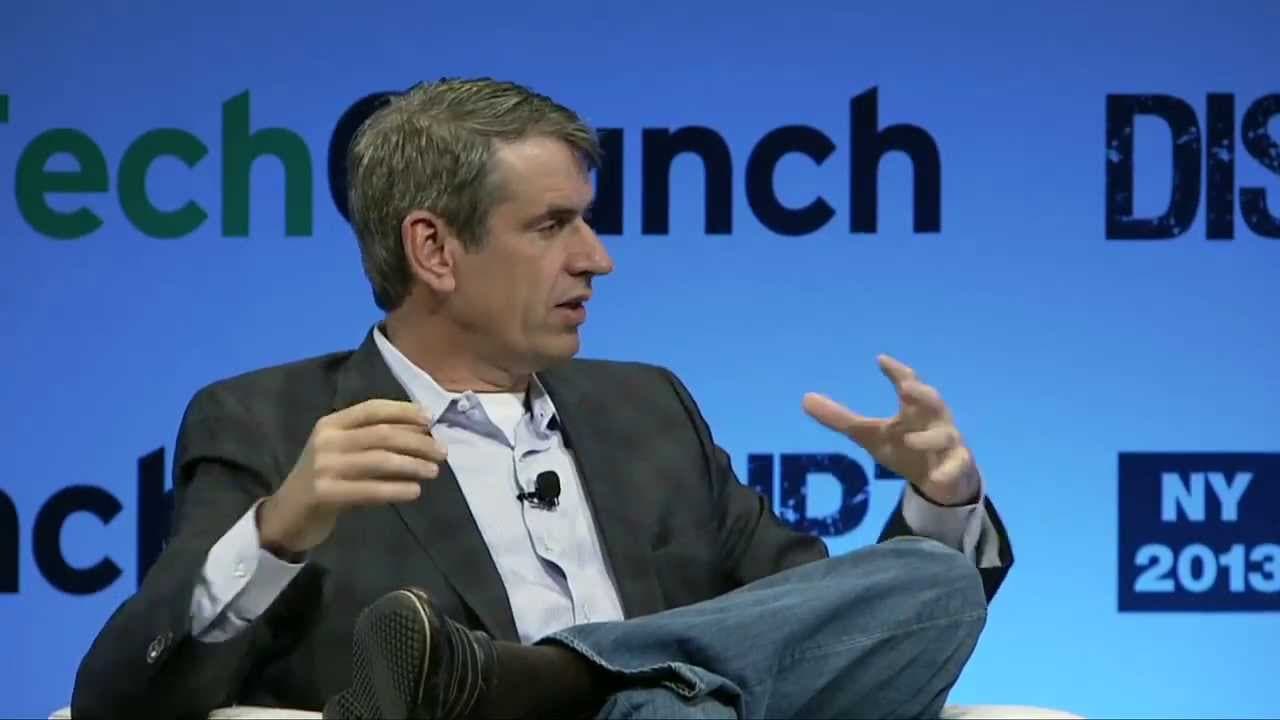
Fireside Chat With Bill Gurley (Benchmark) | Disrupt NY 2013
TL;DR
Bill Gurley argues that New York’s tech scene needs enduring, iconic companies and a stronger long-term equity mindset to reach the next level. In this Disrupt NY 2013 fireside chat, the Benchmark partner discusses New York investments FirstDibs and Sailthru, low interest rates, IPOs, venture capital cycles, Uber’s exceptional growth, and Nextdoor’s neighborhood network. Read on for his reasoning about building lasting companies.
Transcript
please welcome benchmark capital founder of partner sorry bill girly and TechCrunch founder and crunch fun partner Michael Arrington this is a different and better venue than last year so thanks for coming out to New York no problem I want to start with something that Eric and Chris were talking about they were saying they're comparing New York to ... Read More
Key Insights
- New York needs more iconic companies to reach its full potential as a tech hub.
- The Wall Street mentality can hinder the growth of startups by focusing on short-term gains.
- Low interest rates are propping up US equities, benefiting venture capital markets.
- The venture capital industry relies on large homeruns, which can be limited by cultural and systemic factors.
- Venture capital trends are cyclical, with current dynamics reminiscent of the late 1990s.
- Benchmark Capital focuses on early-stage investing and maintains a fully equal partnership model.
- Uber is one of the fastest-growing companies Benchmark has invested in, surpassing even eBay's growth.
- Nextdoor is building a social network for neighborhoods, focusing on high-quality, utilitarian content.
Install to Summarize YouTube Videos and Get Transcripts
Explore YouTube Video Summarizer or Get YouTube Transcript Extractor
Questions & Answers
Q: What does Bill Gurley think New York’s tech scene needs to reach the next level?
Gurley says New York already has entrepreneurs and engineers, but it needs more iconic companies that endure for a long time. Those companies would establish leadership points and precedents that other founders could follow.
Q: Why does Gurley see the Wall Street mentality as a problem for startups?
He describes the Wall Street mentality as focused on changing firms, earning cash compensation, and undervaluing equity. He argues that bringing this mindset into startups can work against the loyalty and long-term commitment required to build iconic companies.
Q: Which New York-area investments and companies does Gurley mention?
Gurley says Benchmark had recently made two New York investments: FirstDibs and Sailthru. He also discusses DoubleClick as an important New York exit and Indeed as a Connecticut company that built a strong business model and consumer brand before being sold.
Q: Why are iconic companies important to a technology ecosystem?
Gurley points to Microsoft, Amazon, Costco, and Starbucks as four pillars of Seattle’s ecosystem and says all were venture-backed. His argument is that enduring companies strengthen a community and create examples that later businesses can follow.
Q: Why is an anti-IPO attitude a concern for venture capital?
Gurley says an anti-IPO attitude can prevent companies from hitting the long ball. Because venture portfolios depend on huge home runs, system dynamics that limit a company’s options can make a market less attractive to venture investors.
Q: How do low interest rates affect venture capital markets according to Gurley?
Gurley says very low interest rates help equities perform well and were propping up US equities at the time. That environment kept the IPO market open and allowed investors to see liquidity, while higher rates could negatively affect the venture community.
Q: Why does Gurley avoid relying heavily on macroeconomic predictions?
He says the great investors he studied viewed macroeconomics as a poor use of time because it involves too many variables to predict reliably. Although unemployment, Europe, the Middle East, and Cyprus could appear frightening, he was cautious about letting those signals dominate his investment thinking.
Q: How does a lack of memory of the 1990s venture cycle affect younger entrepreneurs?
Gurley notes that some entrepreneurs he was meeting had been in high school during the 1990s or were even younger, so they lacked institutional memory of that period. He says this can be positive because young founders bring fewer biases and may not know the reasons they supposedly should not succeed, though abundant money could still shape their decisions.
Summary
In this video, Benchmark Capital founder Bill Gurley and TechCrunch founder Michael Arrington discuss the state of the venture capital industry, the differences between New York and Silicon Valley, and their thoughts on various companies including Uber and Twitter. They also touch on topics like the impact of macroeconomic forces on the venture community, the challenges of building iconic companies in New York, and the unique approach Benchmark Capital takes in its partnership structure.
Questions & Answers
Q: What are Bill Gurley's thoughts on the New York startup scene?
Bill Gurley agrees that there are many entrepreneurs and engineers in New York, but believes that the city needs more iconic companies that can stand the test of time.
Q: Why does Bill Gurley feel that New York needs more iconic companies?
Bill Gurley explains that iconic companies provide leadership and set the standard for others to follow. Without these precedents, it is harder for other companies to become successful and iconic.
Q: Is Zillow considered an iconic company?
Bill Gurley believes that Zillow has the potential to become an iconic company, but acknowledges that it may not be at the same level as Microsoft and Amazon currently.
Q: What does Bill Gurley think about the anti-IPO sentiment in the venture industry?
Bill Gurley believes that the venture industry has an anti-IPO attitude, which he thinks is a problem. He believes that it hinders companies from achieving long-term success.
Q: What are the concerns of the venture capital industry?
Bill Gurley shares that the venture capital industry relies on huge homeruns in their portfolio, and if the system dynamics prevent companies from reaching that potential, it becomes a concern.
Q: Does Bill Gurley think that system dynamics in New York stop companies from becoming iconic?
Bill Gurley points out that New York lacks the precedent of iconic companies, and he believes that the Wall Street culture, with its focus on cash and lack of loyalty, can hinder the growth of iconic companies.
Q: Does the current macroeconomic environment affect the venture community?
Bill Gurley acknowledges that the macroeconomic environment can be concerning, but he believes that trying to predict macroeconomics is a waste of time. He points out that interest rates being low is currently propping up US equities.
Q: What impact would higher interest rates have on the venture community?
Bill Gurley thinks that higher interest rates would have a negative impact on the venture community. He explains that the venture community has historically been a trailing indicator to the Nasdaq, and higher interest rates would affect the performance of equities.
Q: How has the memory of past market crashes affected entrepreneurs and venture capitalists?
Bill Gurley shares that the younger generation of entrepreneurs who did not experience the crash of 1999 does not have the same institutional memory. He believes that it can be positive because they bring fresh perspectives but also warns that it could lead to risky behavior.
Q: How did venture capitalists react to past market crashes?
Bill Gurley comments that venture capitalists tend to panic during market crashes and focus on preserving their capital, which leads to a downturn in investments. However, younger venture capitalists are not influenced by past crashes in the same way.
Q: What drives Bill Gurley in his work?
Bill Gurley says that he appreciates disruption and enjoys seeing new companies build something out of nothing. For him, the economics of venture capital are a way to measure success, and he loves working with entrepreneurs and contributing to their success.
Q: What does Bill Gurley think of Uber?
Bill Gurley believes that Uber is one of the fastest-growing companies he has ever been involved with. He praises the business model and the commitment to user experience. He also notes that Uber had a business model from day one, unlike many consumer internet companies.
Q: Does Bill Gurley think Twitter will become an iconic company or be acquired by Google?
Bill Gurley doesn't speak for Twitter or Google, but he highlights Twitter's incredible growth and success in recent years. He considers Twitter to be in a good position and believes it could become an iconic brand.
Q: What does Bill Gurley think about Nextdoor and its potential?
Bill Gurley is excited about Nextdoor, a social network for neighborhoods. He believes that the company has a long-term orientation and a good vision. He mentions the high-quality content and the unique position Nextdoor has created for itself.
Q: Is the hyperlocal space a difficult area to succeed in?
Bill Gurley admits that the hyperlocal space has had its challenges, but he believes that Nextdoor has the right team and approach to overcome those challenges. He mentions the value of quality and the difficulties in building successful user-generated content communities.
Q: Is there too much or too little money in the venture capital industry?
Bill Gurley acknowledges that there was an influx of angel money a few years ago, leading to a series A crunch. However, he clarifies that the actual amount of venture capital going into series A funding hasn't changed significantly.
Q: What is Benchmark Capital's unique approach to partnership and why do they do it?
Bill Gurley explains that Benchmark Capital has a fully equal partnership, which means that all partners have the same management fee and carry. He believes this creates a better team environment and eliminates political dynamics that can hinder collaboration in hierarchical structures.
Q: Why don't other venture firms adopt Benchmark Capital's partnership structure?
Bill Gurley suggests that other firms may be hesitant to adopt a fully equal partnership because it eliminates the negotiation process when raising new funds. However, he believes that the team orientation and lack of politics in their structure outweigh any negatives.
Q: What is the driving force behind Bill Gurley's commitment to venture capital despite his financial success?
Bill Gurley expresses his passion for disruption and building something out of nothing. He finds joy in helping entrepreneurs and views the economics as an efficient scorecard for success. He sees the venture capital industry as a way to be a part of something that he personally couldn't do.
Summary & Key Takeaways
-
Bill Gurley emphasizes the need for New York's tech scene to produce iconic companies like those in Silicon Valley. He believes that the Wall Street mentality can negatively impact startups by focusing on short-term gains rather than long-term success. Gurley also discusses the role of low interest rates in supporting venture capital markets.
-
Benchmark Capital maintains a unique approach by focusing on early-stage investments and operating with a fully equal partnership model. Gurley highlights Uber as an exceptionally fast-growing company, even surpassing eBay's growth rate. He also discusses the potential of Nextdoor, a social network for neighborhoods.
-
Gurley reflects on venture capital trends, noting that current dynamics, such as the abundance of late-stage private capital, are reminiscent of the late 1990s. He warns that the venture industry relies on large homeruns, which can be limited by cultural and systemic factors, particularly in the New York tech scene.
Read in Other Languages (beta)
Share This Summary 📚
Summarize YouTube Videos and Get Video Transcripts with 1-Click
Try YouTube Summary with ChatGPT & Claude or YouTube Transcript Generator
Explore More Summaries from TechCrunch 📚




Summarize YouTube Videos and Get Video Transcripts with 1-Click
Try YouTube Summary with ChatGPT & Claude or YouTube Transcript Generator