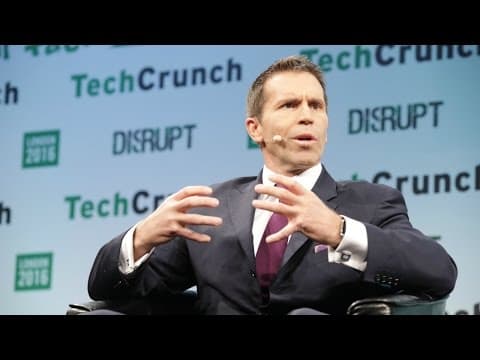
Delivering Success with Apoorva Mehta of Instacart at Disrupt SF

TL;DR
Instacart expects to succeed by focusing deeply on grocery delivery and earning revenue from delivery fees, retailer revenue-sharing, and CPG promotions. Apoorva Mehta reports that revenue grew about 500%, 90% of customers were repeat users, and the company operated in 26 U.S. markets. Read on to understand its customer engagement, retailer partnerships, shopper efficiency, and path to becoming cash-flow positive within 12 months.
Transcript
[Applause] Okay. So, um, quick show of hands. How many of you would say that you buy groceries more than you eat out? And of those folks, how many of you use Instacart? I'm pretty sure that's actually like two or three. And we're supposed to be like the core demographic for Instacart. So I think that we're going to discuss that now. Please welcome ... Read More
Key Insights
- Instacart's success is attributed to its unique revenue model, combining delivery fees, retailer partnerships, and CPG promotions.
- Apoorva Mehta emphasizes that Instacart's deep focus on groceries sets it apart from other on-demand companies.
- Instacart's rapid expansion requires constant adjustments, such as wage changes to suit different market dynamics.
- The company is working on building enterprise-level software for retailers to manage sales, merchandising, and inventory.
- Instacart's profitability is projected within 12 months, with cash flow positivity as a primary goal.
- Instacart's partnerships with CPG brands are expected to increase revenue share from 15% to 40-50% in the coming years.
- Instacart focuses on efficiency to ensure fair compensation for its shoppers, such as reducing checkout wait times.
- Diversity is a key focus, with initiatives like unconscious bias training and employee resource groups in place.
Install to Summarize YouTube Videos and Get Transcripts
Explore YouTube Video Summarizer or Get YouTube Transcript Extractor
Questions & Answers
Q: How does Instacart succeed in on-demand grocery delivery?
Instacart combines strong repeat usage with three revenue sources: customer delivery fees, revenue-sharing with retailers, and promotions from CPG companies. Its deep focus on groceries and partnerships with hundreds of U.S. retailers distinguish its model from on-demand companies with only one or two revenue sources.
Q: What customer engagement did Apoorva Mehta report for Instacart?
Mehta said 90% of Instacart customers were repeat customers. An average customer spent about $250 per month, while Instacart Express customers spent about $500 per month on average.
Q: Why did Apoorva Mehta believe Instacart would work after starting about 20 other companies?
Mehta said the earlier companies never achieved the traction or customer engagement that Instacart showed. When he started Instacart, he felt confident that the product would work. A feeling he had not experienced with his other attempts.
Q: How large and fast-growing was Instacart at the time of the interview?
Instacart operated in 26 U.S. markets and launched a market every month on average. Mehta also said its revenue had grown by about 500% since the beginning of the previous year.
Q: Why did Mehta think Instacart could succeed where Webvan failed?
Mehta pointed to widespread smartphone adoption as a major change since Webvan failed 15 years earlier. Smartphones let Instacart connect customers ordering groceries with people who can shop for those groceries and deliver them.
Q: How does Instacart make money?
Customers pay delivery fees, retail partners share revenue with Instacart, and CPG companies promote products through the service. Mehta named Pepsi, P&G, and Unilever among the brands using this third revenue source.
Q: What does Instacart Express offer?
Instacart Express is a subscription program that makes delivery fees free for the rest of the year after purchase. Mehta said Express customers spent about $500 per month on average, indicating that they conducted all their grocery shopping through Instacart.
Q: What profitability goal did Instacart set?
Mehta said Instacart could comfortably expect to become profitable within the next 12 months. When asked what kind of profitability he meant, he specified becoming cash-flow positive.
Summary
In this video, the founder of Instacart, Apoorva Mehta, is interviewed about the success and challenges of the online grocery delivery company. He discusses the growth of Instacart, with 26 markets in the US and 500% revenue growth in the past year. Mehta emphasizes the high level of customer engagement and the importance of repeat customers, particularly those who subscribe to the Instacart Express program. He also addresses the challenges faced by on-demand economy companies, the unique revenue sources for Instacart, and the company's goal of becoming profitable in the next 12 months. Mehta tackles questions about wage cuts for shoppers, layoffs, partnerships with retailers like Whole Foods, and competition in the industry. He highlights the deep focus on groceries as a key differentiator for Instacart and emphasizes that the company is committed to being an independent entity.
Questions & Answers
Q: Was Instacart a backup plan after the founder's failed startups?
Instacart was never intended to be a backup plan, but rather the main product that the founder, Apoorva Mehta, had in mind all along. He had started several unsuccessful companies before Instacart, but none of them had the same traction or customer engagement as Instacart. Mehta started Instacart with the belief that it would work, and the results today prove that he was right.
Q: How much revenue comes from repeat customers?
Approximately 90% of Instacart's customers are repeat customers. Instacart Express customers, in particular, spend an average of $500 per month on Instacart, as they rely on the service for all their grocery shopping needs. This loyalty and repeat business demonstrate the strong customer engagement that Instacart has achieved.
Q: What sets Instacart apart from other on-demand economy companies?
Instacart has multiple sources of revenue, unlike many other on-demand economy companies. While most companies rely solely on customer payments or merchant fees, Instacart has partnerships with hundreds of retailers in the US and collaborates with various consumer packaged goods (CPG) companies for product promotion. This multi-dimensional revenue model, combined with strong unit economics, makes Instacart stand out in the on-demand economy.
Q: Can Instacart survive without the Whole Foods partnership?
Instacart works with over a hundred grocery retailers, and while the partnership with Whole Foods is significant, it is not the sole driver of Instacart's revenue. The biggest source of volume varies by market, and overall, the selection available on Instacart is not limited to a single retailer. Instacart's goal is to offer customers the grocery selection they want, regardless of the specific partnerships in place.
Q: How does Instacart address the divide between corporate employees and on-ground workers?
Instacart ensures that shoppers, who are on-ground workers, are compensated fairly for their work. Efforts are made to improve the efficiency of picking and delivering groceries, allowing shoppers to complete more orders and increase their earnings. Instacart also focuses on diversity and has implemented unconscious bias training. They continuously evaluate their hiring processes to ensure fairness, and initiatives like employee resource groups and mentorship programs are in place to make Instacart a great place to work for all employees.
Q: Is Instacart going to sell to Whole Foods?
Instacart is committed to being an independent company and working with multiple grocery retailers. Selling to a grocery store, even one as prominent as Whole Foods, does not align with Instacart's goals and vision. Their focus is on becoming the category leader in online grocery delivery and continuing to provide excellent service to their customers.
Takeaways
Instacart has experienced significant growth and success in the online grocery delivery market. Their strong customer engagement, multi-dimensional revenue model, focus on groceries, and commitment to being an independent company set them apart from competitors. With efforts to support and compensate workers fairly, as well as initiatives to promote diversity and inclusion, Instacart is striving to be a leading example for startups in Silicon Valley.
Summary & Key Takeaways
-
Instacart differentiates itself by focusing deeply on grocery delivery, unlike other on-demand services. The company leverages partnerships with retailers and CPG brands to create multiple revenue streams, which include delivery fees, retail partnerships, and promotions from CPG companies.
-
Instacart's rapid growth has led to challenges such as adjusting wages and managing retailer partnerships. The company is addressing these by developing enterprise-level software for retailers and improving shopper efficiency. Instacart aims to be profitable within 12 months, focusing on cash flow positivity.
-
Diversity and fair compensation for shoppers are key priorities for Instacart. The company has implemented unconscious bias training and resource groups to foster an inclusive workplace. Efficiency improvements, like reducing checkout wait times, help ensure fair compensation for shoppers, aligning their success with the company's goals.
Read in Other Languages (beta)
Share This Summary 📚
Summarize YouTube Videos and Get Video Transcripts with 1-Click
Try YouTube Summary with ChatGPT & Claude or YouTube Transcript Generator
Explore More Summaries from TechCrunch 📚





Summarize YouTube Videos and Get Video Transcripts with 1-Click
Try YouTube Summary with ChatGPT & Claude or YouTube Transcript Generator