How to Do a 30-Minute Morning Full Body Pilates Workout
TL;DR
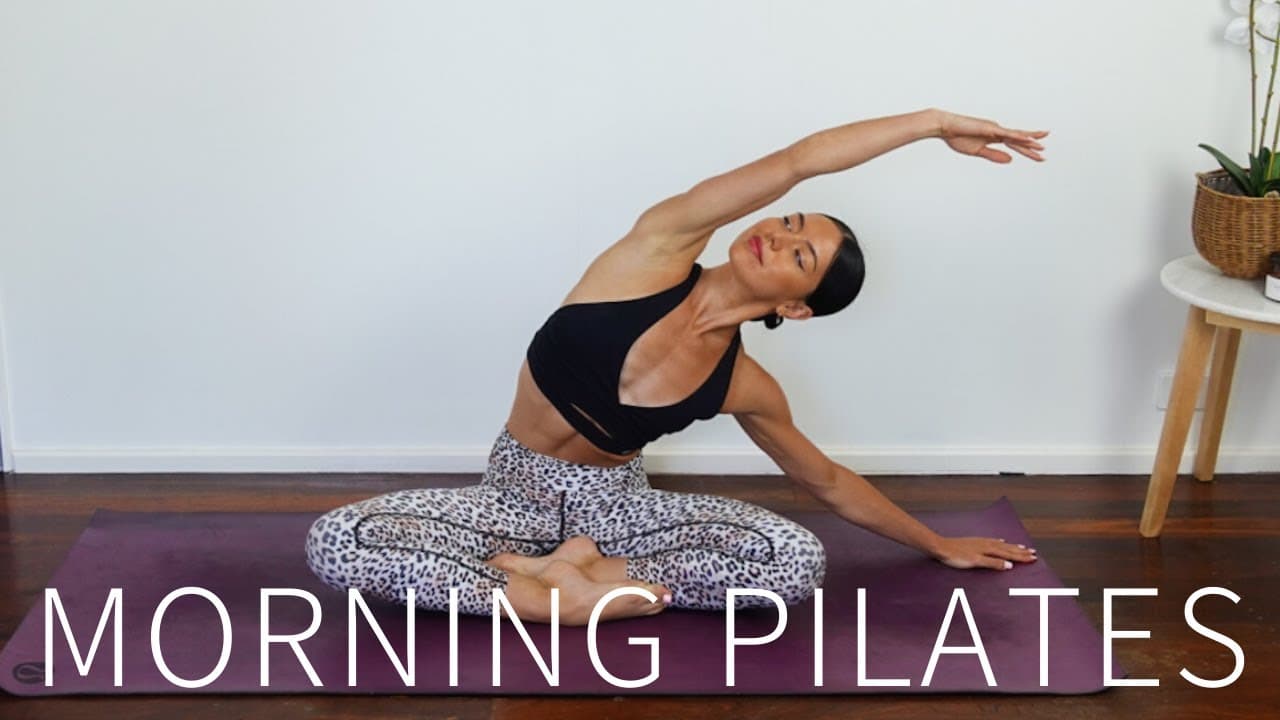
This 30-minute morning Pilates workout strengthens the full body with controlled, breath-led exercises for the core, arms, obliques, glutes, and legs. Nicole guides you through seated stretches, C-curves, bridges, abdominal curls, roll-ups, oblique twists, a sideline series, side planks, and a closing chaturanga-to-cobra flow. Read on for specific form cues that help you perform each movement with control.
Transcript
hello everyone and welcome back to my channel my name is nicole and for today i have a feel-good morning pilates workout for you so when you're ready to get started take a cross-legged position on your mat sitting up nice and tall close your eyes and rest your fingertips next to you on the mat as you take deep breaths here focus on rooting down thr... Read More
Key Insights
- Pilates posture is established by rooting down through the sitting bones, lengthening through the spine, and reaching the crown of the head toward the ceiling while breathing deeply in a cross-legged seat.
- The C-curve is created by drawing the ribs down toward the hips and tucking the pelvis under, then arms reach overhead one at a time while keeping the core engaged and the chest lifted.
- The bridge is performed by pressing through the heels and squeezing the glutes to lift the hips, being careful not to arch the spine, alternating with an abdominal head-and-shoulder curl.
- Arm circles with an extended leg keep the legs still so the work targets the arms and upper body, requiring you to stay lifted through the chest with the chin dropped toward it.
- Roll-ups build core strength by squeezing the thighs together and articulating the spine vertebra by vertebra, rolling up and down with control on each breath.
- Oblique twists are done by stopping halfway in a roll-up, stacking the forearms, and twisting side to side, with the option to straighten the leg for extra challenge to the obliques and legs.
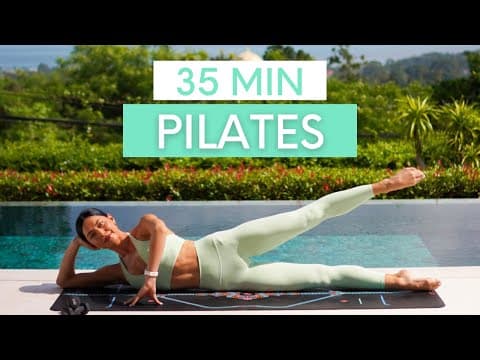
- The sideline series keeps hips stacked directly on top of one another so knee opens, toe taps, leg lifts, and circles isolate and strengthen the outer glute muscles.
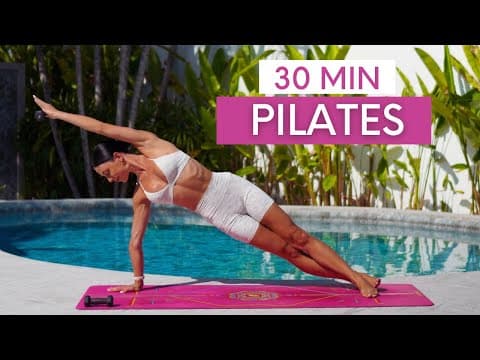
- The routine closes with a side arm plank progression, stacking the top foot over the bottom for the full plank, then flowing through chaturanga into cobra to open the chest.
Install to Summarize YouTube Videos and Get Transcripts
Explore YouTube Video Summarizer or Get YouTube Transcript Extractor
Questions & Answers
Q: How long is the morning Pilates workout, and what does it target?
The workout lasts 30 minutes and targets the full body. Its seated stretches, bridges, abdominal exercises, oblique twists, and sideline movements work the core, arms, obliques, glutes, and legs.
Q: How do you establish proper Pilates posture at the beginning?
Sit cross-legged with your fingertips beside you on the mat and take deep breaths. Root both sitting bones into the mat, lengthen your spine, and reach the crown of your head toward the ceiling.
Q: How do you perform the C-curve correctly?
Sit with your feet hip distance apart and hold the backs of your thighs. Exhale as you round backward, draw your ribs toward your hips, and tuck your pelvis under, then keep your core engaged and chest lifted while reaching one arm at a time toward the ceiling.
Q: What are the key form cues for the Pilates bridge?
Lie on your back with your heels near your glutes and your feet hip distance apart. Press through your heels and squeeze your glutes as you roll your hips into the bridge, avoiding an arch in your spine, then lower with control.
Q: How are roll-ups performed in this routine?
Begin lying long with both arms overhead, then inhale as you roll up to seated and exhale as you round over your legs. Squeeze your thighs together and use your core to articulate your spine with control as you roll up and down.
Q: How do the oblique twists work the core and legs?
Stop halfway through a roll-up, draw one knee toward your chest, and stack your forearms. Twist toward the bent knee and return to center, with the option to straighten the leg for an extra challenge to the obliques and legs.
Q: How do you maintain good form during the sideline glute series?
Keep your hips stacked directly on top of each other while opening the top knee, tapping the knees and toes, and lifting or circling the extended top leg. Preventing the hips from rocking helps isolate and strengthen the outer glute muscles.
Q: How does the 30-minute morning Pilates workout finish?
The final sequence progresses from a hip-lift glute stretch into a side arm plank, with the option to stack the top foot over the bottom. It then flows through chaturanga into cobra to open the chest.
Summary & Key Takeaways
-
The class opens seated cross-legged, establishing Pilates posture by rooting the sitting bones and lengthening the spine, then moves through side bends and folds over each knee to stretch the sides and back of the body before transitioning to spinal C-curves with alternating arm reaches.
-
On the back, the workout combines bridges with abdominal curls, single-leg holds with arm circles, and full roll-ups that squeeze the thighs and articulate the spine, then adds forearm-stacked oblique twists and scissor-switch leg work to strengthen the core and obliques.
-
A sideline series on each side opens the knee wide, taps knees and toes, and lifts and circles the top leg to target the outer glutes, followed by a hip-lift glute stretch, a side arm plank, and a closing chaturanga-to-cobra flow.
Read in Other Languages (beta)
Share This Summary 📚
Summarize YouTube Videos and Get Video Transcripts with 1-Click
Try YouTube Summary with ChatGPT & Claude or YouTube Transcript Generator
Explore More Summaries from Move With Nicole 📚
Summarize YouTube Videos and Get Video Transcripts with 1-Click
Try YouTube Summary with ChatGPT & Claude or YouTube Transcript Generator