How to Structure YouTube Shorts for More Views
TL;DR
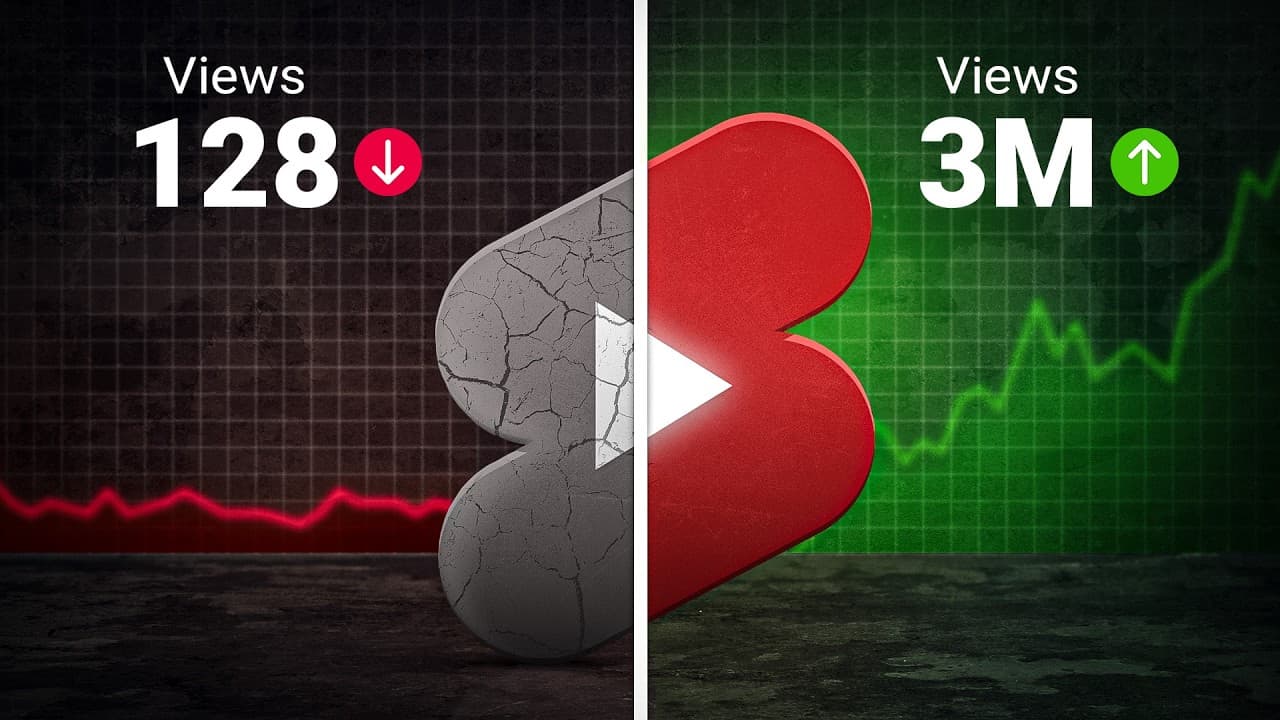
Capture attention within 1.5 seconds by creating an immediate curiosity gap through visuals, story framing, or foreshadowing. Then make the Short satisfying on its own while encouraging further interest, and sustain retention by triggering an emotion or answering a question. Frequent pattern interrupts, such as movement, text, zooms, and scene changes, can help maintain attention.
Transcript
This is how long you have for somebody to watch your short. Sora 2, what does it actually mean? That one and a half seconds is what you have to catch the viewers's attention. And as you can see, it's pretty difficult. But today, we're going to make this a lot easier because shorts are obviously taking over the YouTube homepage. So, naturally, I'm o... Read More
Key Insights
- Viewers decide whether to swipe within 1.5 seconds, creating a steep early drop in a typical Shorts retention curve. An opening must therefore communicate curiosity almost immediately, rather than spending that limited window on a conventional greeting or channel introduction.
- A strong hook is a gap between what the viewer currently understands and what they feel compelled to understand next. That gap can be created without much dialogue by showing an unusual image, introducing a remarkable situation, or revealing part of an outcome before explaining it.
- Visual shock works by presenting imagery that the eyes register before the brain can explain it. Zack D. Films uses unusual or uncomfortable opening frames as pattern interrupts, producing a brief moment of confusion that motivates viewers to remain long enough to understand what they are seeing.
- Story framing can turn an ordinary clip into a narrative viewers want to complete. Dylan Anderson uses titles and opening narration to establish a character, situation, and expectation of something remarkable, showing that presentation can substantially change how an existing clip is received.
- Foreshadowing creates curiosity by showing part of a process or outcome before supplying its explanation. Tina Yong's openings provide incomplete information near the beginning, making viewers seek the missing context while demonstrating that an effective hook can be subtle rather than shocking.
- Pattern interrupts are changes that refresh attention, including movement, text, zooming, jump cuts, and new scenes. The coaching recommendation described in the transcript is to introduce one every 2 seconds, preventing the visual presentation from remaining unchanged for too long.
- A successful standalone Short provides genuine entertainment or a useful answer while planting further interest. Marco's craftsmanship process makes viewers want the finished result, while Addie Bowley's completed mini experiments prompt viewers to imagine related tests without withholding the promised payoff.
- Retention is driven by emotion or unanswered curiosity, not only by technical editing tactics. Viewers remain because they are feeling something they want to continue feeling, or because they need an answer before leaving. Hooks stop scrolling, standalone interest supports channel visits, and retention expands reach.
Install to Summarize YouTube Videos and Get Transcripts
Explore YouTube Video Summarizer or Get YouTube Transcript Extractor
Questions & Answers
Q: How quickly must a YouTube Short capture attention?
A YouTube Short must capture attention within approximately 1.5 seconds because that is when the average viewer decides whether to swipe. A conventional introduction such as welcoming viewers back may consume the entire opportunity without creating interest. The opening should instead establish immediate curiosity through an unexpected visual, a compelling situation, or incomplete information that viewers want resolved.
Q: How do you create an effective hook for YouTube Shorts?
An effective Shorts hook creates a gap between what viewers currently know and what they feel they need to know. This can come from a visually confusing opening, narration that frames a clip as a remarkable story, or foreshadowing that reveals part of an outcome. The goal is to establish curiosity before viewers can decide to swipe away.
Q: What is a pattern interrupt in a YouTube Short?
A pattern interrupt is a noticeable change that breaks the visual or narrative state viewers were just watching. Examples from the transcript include movement, on-screen text, zooming in, zooming out, jump cuts, and changes to the scene. The coaching recommendation presented is to use a pattern interrupt every 2 seconds to repeatedly refresh attention throughout the Short.
Q: How can visual shock improve a Shorts hook?
Visual shock can improve a hook by presenting an opening frame that viewers cannot immediately explain. Zack D. Films uses unusual, uncomfortable, or confusing imagery to create a pattern interrupt. The useful mechanism is not shock for its own sake. It is the brief gap between what the eyes observe and what the brain understands, which encourages continued viewing.
Q: How does story framing help a YouTube Short perform?
Story framing gives a random clip a character, situation, and anticipated outcome. Dylan Anderson's approach combines titles with opening narration that signals someone is about to do something remarkable. This framing makes viewers want to finish the story. The underlying footage may already exist, but the hook changes how viewers interpret it and why they continue watching.
Q: How can YouTube Shorts lead viewers to long-form videos?
Shorts can lead viewers toward long-form content when they deliver a satisfying experience while creating natural interest in related material. A detailed process may make viewers want to see its finished result, while a completed experiment may inspire questions about similar tests. The creator does not need to force the transition with a call to action or an unpaid cliffhanger.
Q: Why should a YouTube Short work as standalone content?
A Short should work independently because viewers need to receive the entertainment, process, or answer they were promised. Cutting away before the payoff can feel frustrating and may make viewers feel cheated. A stronger structure completes the immediate experience, then plants a new question or desire that makes exploring the channel feel voluntary rather than something the viewer was ordered to do.
Q: What drives audience retention on YouTube Shorts?
Audience retention is driven by viewers either feeling an emotion they want to continue experiencing or pursuing an answer they need before leaving. Pacing, editing, and looping can support this behavior, but they are not the central reason a person stays. The third rule therefore focuses on triggering an emotion or answering a question, connecting human motivation with greater reach.
Summary & Key Takeaways
-
The first rule is to stop viewers from swiping within 1.5 seconds. Effective hooks create a gap between what viewers see or know and what they want to understand. Visual shock, immediate story framing, and foreshadowing demonstrate different ways to establish curiosity before a viewer has time to leave.
-
The second rule is to make each Short work independently while encouraging viewers to seek more. A satisfying process can create demand for a final result, while a completed experiment can inspire related questions. This approach avoids frustrating cliffhangers and makes visiting the creator's channel feel like the viewer's own choice.
-
The third rule is to trigger an emotion or answer a question because retention depends on why a person chooses to keep watching. Editing, pacing, and looping can support retention, but the central engines are emotional engagement and the need for an answer. Together, the three rules connect attention, channel interest, and reach.
Read in Other Languages (beta)
Share This Summary 📚
Summarize YouTube Videos and Get Video Transcripts with 1-Click
Try YouTube Summary with ChatGPT & Claude or YouTube Transcript Generator
Explore More Summaries from vidIQ 📚
Summarize YouTube Videos and Get Video Transcripts with 1-Click
Try YouTube Summary with ChatGPT & Claude or YouTube Transcript Generator