How Has Russia's Economy Survived Sanctions?
TL;DR
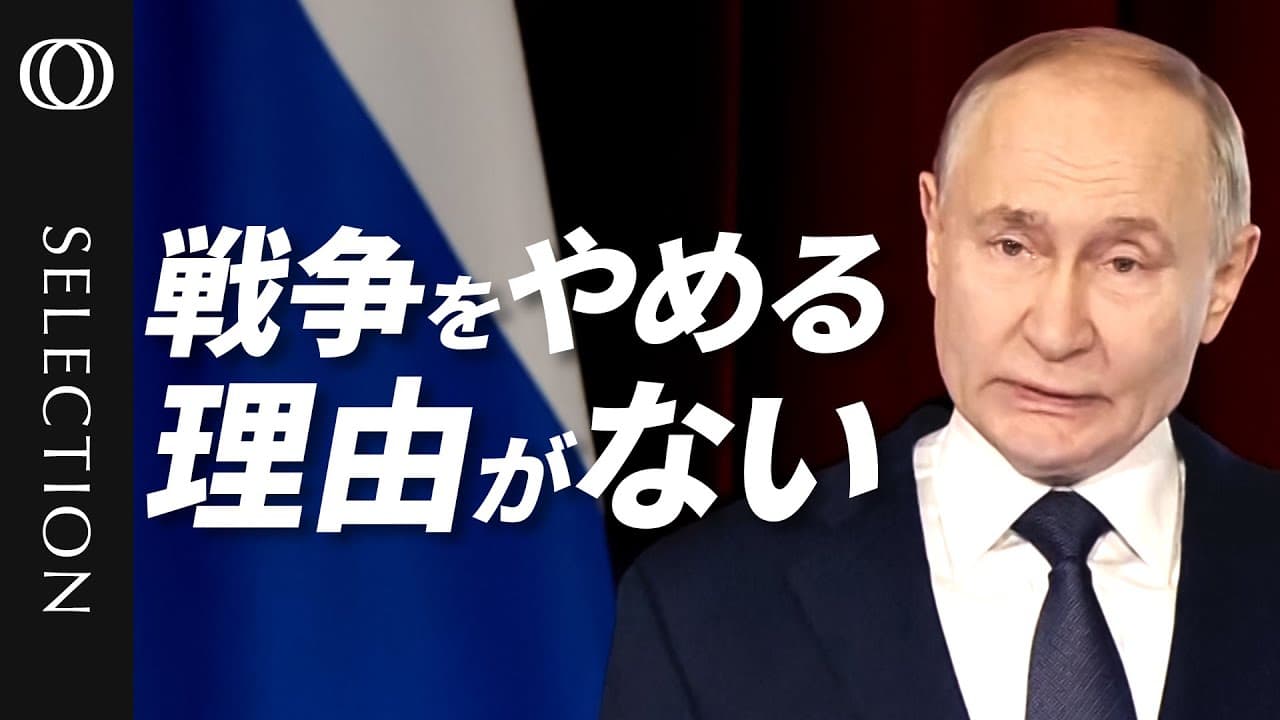
Russia's economy has survived sanctions because energy exports, military production, state spending, and expanded trade with China and India continue to generate revenue and sustain wartime activity. However, inflation, labor shortages, interest rates near 21%, dependence on Asian partners, and tighter sanctions create serious vulnerabilities, even though Russia currently has little military or domestic political incentive to withdraw from Ukraine.
Transcript
we've really witnessed a historic shift that has changed the world order this was the first time a US president had spoken with Putin since the invasion of 2022 that phone call between US president Donald Trump and Russian leader Vladimir Putin shifted Global alliances from the very beginning of the war you're not in a good position you don't have ... Read More
Key Insights
- Russia's economy is sustained by two central engines: exports of oil and natural gas, and a military-industrial complex that has become its most dynamic economic sector during the war.
- Russian state spending has supported defense producers and businesses hurt by sanctions without creating extreme fiscal imbalance, because federal revenue has remained roughly comparable to spending and the deficit has stayed below 3%.
- Russia's wartime labor competition is raising civilian wages because military service and defense production draw workers away from other industries, increasing consumer demand beyond what constrained domestic supply can satisfy and intensifying inflation.
- Russia's central bank has kept interest rates close to 21% because inflation resumed rising after being temporarily controlled through capital restrictions and higher rates, making business more difficult for private companies outside defense-related sectors.
- Russia produces around 10.4 million barrels of oil per day, ranking behind only the United States and Saudi Arabia, while the government captures energy income through taxation, sales revenue, dividends, and ownership stakes.
- Western oil sanctions were designed to restrict Russian revenue without removing its supply from global markets, since policymakers feared that tougher measures could cause an energy price shock and raise fuel prices in the United States.
- China and India are critical buyers and trade partners for Russia, with India's Russian oil share rising from about 1% before 2022 to roughly 35% to 40%, while China's yuan, goods, semiconductors, and microelectronics support Russian commerce and weapon production.
- Russia has little immediate reason to retreat because it currently holds the stronger battlefield position, while authoritarian repression reduces the ability of casualties, inflation, shortages, and other domestic costs to generate decisive public pressure against the war.
Install to Summarize YouTube Videos and Get Transcripts
Explore YouTube Video Summarizer or Get YouTube Transcript Extractor
Questions & Answers
Q: How has Russia's economy survived Western sanctions?
Russia's economy has survived through continued oil and natural gas exports, rapid growth in military production, and large government expenditures supporting defense factories and sanctioned businesses. Energy revenue has kept federal income broadly aligned with spending, leaving the deficit below 3%. China and India have also provided markets, currencies, goods, and technology that reduced the impact of lost Western trade.
Q: What are the main drivers of Russia's wartime economy?
Russia's wartime economy has two main drivers: energy exports and the military-industrial complex. Oil and natural gas sales provide revenue to producers and the state, while government funding makes defense manufacturing the economy's most dynamic sector. This spending also supports businesses affected by sanctions, but it draws labor and resources away from civilian industries and contributes to economic overheating.
Q: Why is inflation high in Russia during the war?
Inflation is high because the military and defense manufacturers compete with civilian businesses for a limited supply of workers. Civilian employers must raise salaries to retain employees, which increases household demand beyond the economy's capacity to provide goods and services. Labor shortages have also contributed to rising prices for ordinary products, including butter and potatoes, directly affecting Russian consumers.
Q: Why are Russian interest rates close to 21%?
Russian interest rates are close to 21% because the central bank needs tight monetary policy to restrain persistent inflation. Inflation surged in 2022, was temporarily managed through capital controls and interest-rate measures, then began rising again from the middle of 2023. Such high borrowing costs create serious difficulties for private companies that are not connected to defense production.
Q: Why have oil sanctions not stopped Russian exports?
Oil sanctions were structured to reduce Russian earnings while keeping Russian oil on the global market. Policymakers feared that removing the supply could trigger an energy price shock because replacement capacity was insufficient. Oil is also highly tradable and can be resold through intermediaries. Russia has additionally used a shadow fleet of tankers to move oil outside Western restrictions.
Q: How have China and India helped Russia sustain the war?
China and India have absorbed more Russian energy as Europe reduced its purchases. India bought about 1% of its oil from Russia before 2022, but that share rose to approximately 35% to 40%. China's yuan became Russia's dominant currency for international payments and even household savings, while Chinese trade supplied semiconductors and microelectronics needed for precision-guided weapons used in Ukraine.
Q: Why has Russia not withdrawn despite heavy casualties?
Western officials estimate that Russia has suffered around 800,000 killed and wounded since 2022, but casualties have not produced sufficient pressure for withdrawal. Russia is an authoritarian state with restricted political freedoms, political prisoners, and punishment for social-media activity. That control gives the government greater capacity to absorb public costs, while its current battlefield advantage provides no immediate military reason to retreat.
Q: What economic vulnerabilities could still weaken Russia?
Russia remains vulnerable to high inflation, labor shortages, expensive credit, tighter sanctions, and dependence on a limited group of Asian partners. Its energy revenue depends on oil prices and continued access to buyers and shipping networks. Tight monetary policy and sanctions imposed near the end of the Biden administration could create conditions for recession, while household price increases are already affecting ordinary Russians.
Summary & Key Takeaways
-
Russia's wartime economy rests primarily on energy exports and an expanding military-industrial complex. Government spending supports defense production and sanctioned sectors, while military recruitment and defense factories compete with civilian employers for labor. Higher wages have increased demand beyond available supply, contributing to persistent inflation and forcing the central bank to maintain tight policy.
-
Energy remains Russia's fiscal foundation, with production around 10.4 million barrels of oil per day and substantial government income from taxes, sales revenue, and corporate dividends. Western restrictions preserved Russian production to avoid a global energy shock, while oil's tradability, shadow-fleet tankers, and Asian buyers gave Russia multiple ways to bypass restrictions.
-
China and India have helped replace lost European demand, but this shift has made Russia increasingly dependent on Asian trade, Chinese currency, and imported technology. Despite roughly 800,000 Russian casualties, authoritarian control limits public pressure and the battlefield balance offers no immediate reason to retreat. Europe consequently faces higher military demands and strategic uncertainty.
Read in Other Languages (beta)
Share This Summary 📚
Summarize YouTube Videos and Get Video Transcripts with 1-Click
Try YouTube Summary with ChatGPT & Claude or YouTube Transcript Generator
Explore More Summaries from TBS CROSS DIG with Bloomberg 📚

Summarize YouTube Videos and Get Video Transcripts with 1-Click
Try YouTube Summary with ChatGPT & Claude or YouTube Transcript Generator