What Rights Do You Lose to Digital Surveillance?
TL;DR
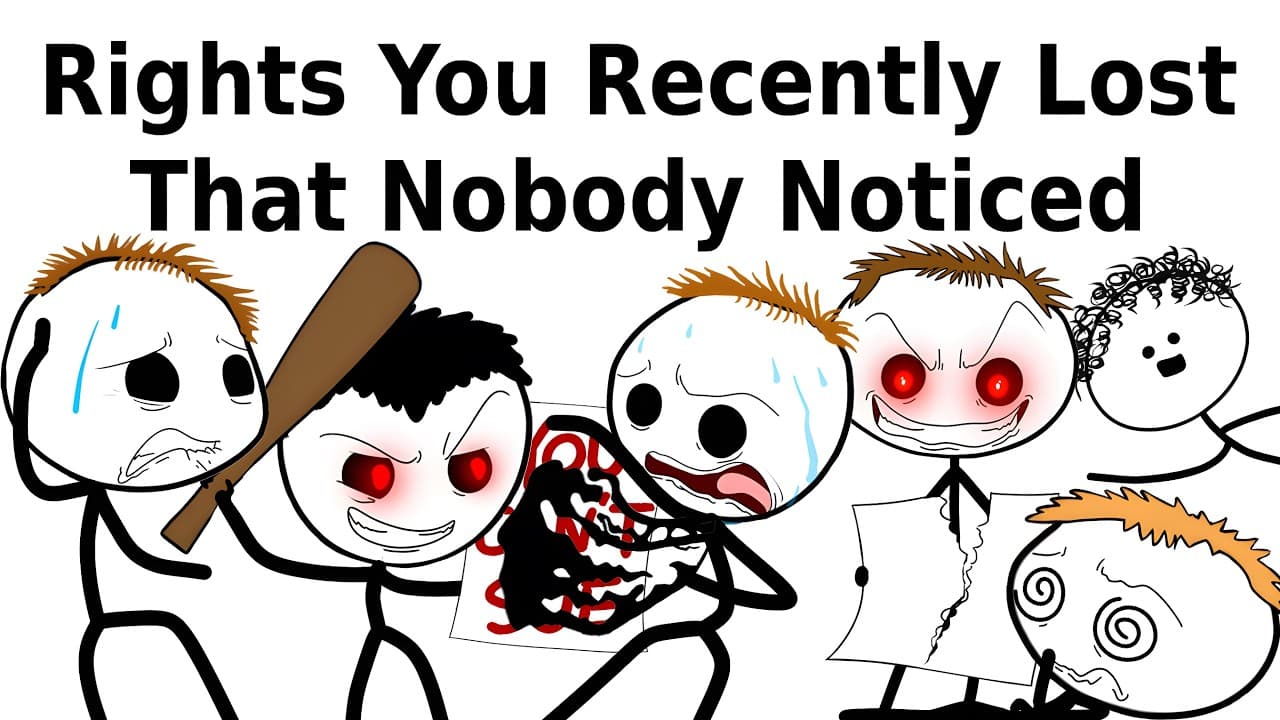
Reading in private is a thing of the past on e-readers that track speed, highlights, and duration. Keystroke dynamics can verify identity and reveal emotion, while your unscored life and credit-like scores follow you through services. Owning hardware and media is limited by licensing and subscriptions, not ownership.
Transcript
Let's get right into it. Number 10, the right to read in private. Reading a book used to be private. Just you, the pages, and your thoughts. That's gone. When you read on an e-reader, Amazon knows how fast you read, which sentences you highlight, and which page you were on when you gave up. They even know how long you stared at a single page. Amazo... Read More
Key Insights
- Reading in private is largely gone because e-readers collect read speed, highlights, and page data to build a reader database used for editing and marketing.
- Keystroke dynamics capture exact timing and rhythm of typing, allowing verification, risk assessment, and even mood or neurological cues, often without explicit consent.
- Unscored life refers to customer scores used by ride shares, hotels, and retailers that influence wait times, eligibility, and service levels without user appeal or transparency.
- Forced arbitration clauses hide disputes in private processes, enabling company control over lawsuits and limiting access to public courts.
- Ownership of real estate data is obscured by shell companies and LLCs, making it hard to identify actual property owners and empowering landlords at the expense of renters.
- Right to repair is undermined when manufacturers lock features behind subscriptions, forcing ongoing payments for functionality already embedded in hardware.
- Car data collection and telematics allow insurers and others to price risk, track behavior, and disclose information through app data and black box style event records.
- Digital media purchases often function as licenses that can be revoked, meaning users do not truly own purchased movies or files.
Install to Summarize YouTube Videos and Get Transcripts
Explore YouTube Video Summarizer or Get YouTube Transcript Extractor
Questions & Answers
Q: How does e reading impact privacy rights according to the video
The video explains that reading on e readers is tracked in detail, including reading speed, which sentences are highlighted, and where a reader stops. This data creates a database of reader behavior that publishers use to influence future works and can be sold to advertisers. The implication is that private reading becomes data that can be mined and monetized without consent.
Q: What is keystroke dynamics and why is it a concern
Keystroke dynamics measures the milliseconds between keystrokes and how long keys are held, creating a unique rhythmic fingerprint. This data is used for verification without user consent and can reveal emotional states and early signs of neurological conditions. It is collected alongside browsing data and sold, with users often unaware of its collection.
Q: What does the video say about the right to an unscored life
The video describes a system where apps and services assign scores to users based on behavior, demands, and complaints. These scores can affect wait times, service access, or approval decisions, and users cannot see, correct, or appeal them. The implication is a hidden mechanism controlling consumer experience and credit-like risk.
Q: How are arbitration clauses described in the video
Arbitration clauses force disputes into private processes, with arbitrators chosen by the company and payments handled by them. This process has no public record and limits the ability to sue in court. Examples include Wells Fargo and Uber, illustrating how private arbitration can suppress large-scale accountability for misconduct.
Q: What does the video claim about owning homes and property data
The video notes that property ownership data is increasingly hidden behind shell companies and Delaware LLCs. This obscures who actually owns the building, leading to higher rents and more aggressive evictions. It argues that in many markets, buyers are anonymous and there is little transparency.
Q: What does the video say about the right to repair
The video explains manufacturers like John Deere lock software behind licensing, meaning owners do not truly own the features even if the hardware exists. Farmers faced cracked software and long waiting times for repairs, while states pass right to repair laws, but companies resist, preferring subscription-based access to functionality.
Q: How is car data described in terms of privacy
Driving data is captured by event data recorders and car apps, and owners do not fully own this data. Data brokers or insurers can use it to adjust rates and determine risk. The video also notes you can access some data, but it is expensive and technically challenging, and opting out can raise risk signals.
Q: What happens to digital media purchases according to the video
Purchases are often licenses rather than ownership of the media, so content can disappear if streaming rights lapse or platforms shut down. The video cites examples where purchased movies vanished, underscoring that ownership is more about permission than a physical asset, with licenses revocable by the company.
Summary & Key Takeaways
-
Private reading is tracked by e-readers, creating data used by publishers and advertisers, unlike physical books.
-
Keystroke dynamics create a unique biometric pattern used for verification and mood prediction without user consent.
-
Many services assign invisible scores to users, affecting access, pricing, and eligibility without user visibility or recourse.
Read in Other Languages (beta)
Share This Summary 📚
Summarize YouTube Videos and Get Video Transcripts with 1-Click
Try YouTube Summary with ChatGPT & Claude or YouTube Transcript Generator
Explore More Summaries from Chill Dude Explains 📚
Summarize YouTube Videos and Get Video Transcripts with 1-Click
Try YouTube Summary with ChatGPT & Claude or YouTube Transcript Generator