How to spot health food scams in groceries today
TL;DR
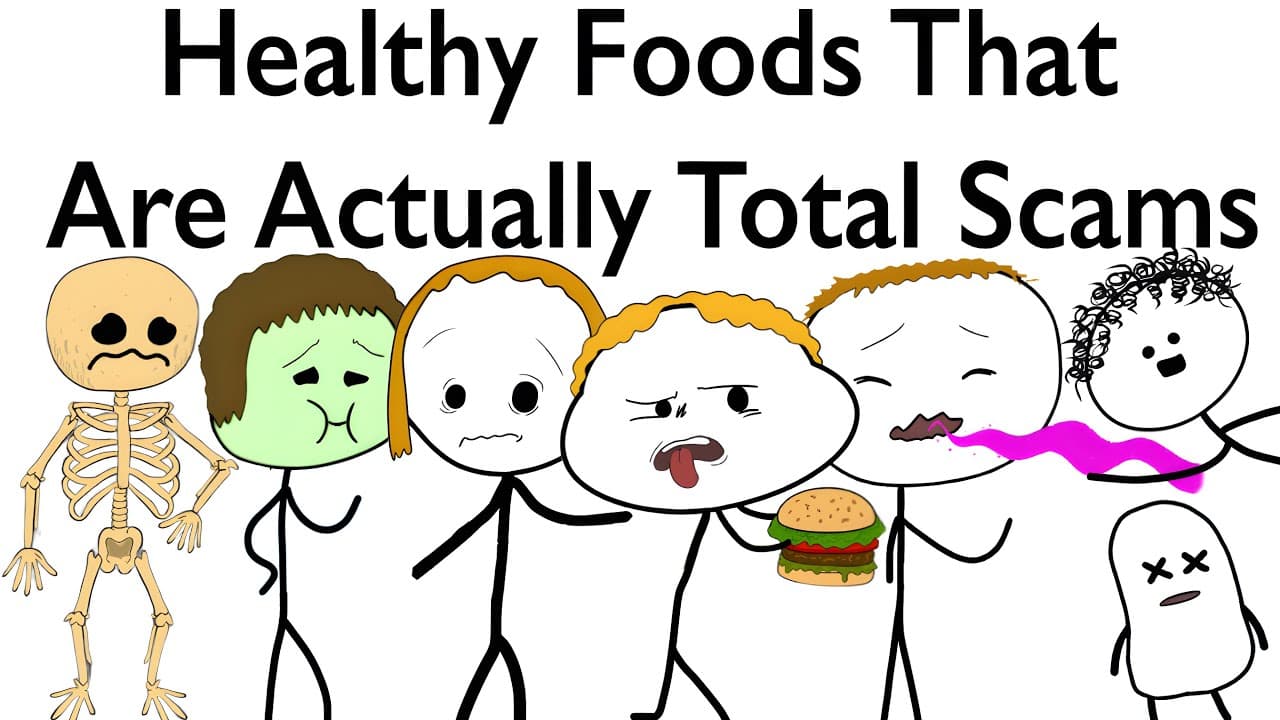
Frozen yogurt often contains more sugar than ice cream, challenging the healthy label. Restaurants can disguise high calorie salads with heavy toppings, while veggie chips and almond milk can be far less nutritious than presumed. Recognizing labels, serving sizes, and processing helps avoid common health food tricks.
Transcript
Let's get right into it. Number 10, frozen yogurt fallacy. Frozen yogurt is supposed to be this magical healthy alternative to ice cream. But here's the truth. Frozen yogurt actually has more sugar than ice cream. While ice cream has about 28 g of sugar per cup, fro yo is packing 37 g. That's like eating nine extra sugar cubes. And because we think... Read More
Key Insights
- Frozen yogurt often has more sugar per serving than ice cream, debunking the healthy image.
- Restaurants can create high calorie salads by adding cheese, croutons, fried chicken, and heavy dressings.
- Veggie chips may be as caloric as regular chips despite claims of vegetables, due to processing and oils.
- Store bought muffins can contain high sugar and calories, sometimes surpassing a Big Mac.
- Wheat bread can be white bread in disguise if it is not 100% whole wheat.
- Commercial almond milk is mostly water and additives, with very little almonds present.
- Plant based burgers can be high in salt and processed fats despite their health claims.
- Coconut water is often diluted with sugar water, undermining perceived health benefits.
- More videos from this channel:
- More from this channel: Chill Dude Explains
Install to Summarize YouTube Videos and Get Transcripts
Explore YouTube Video Summarizer or Get YouTube Transcript Extractor
Questions & Answers
Q: What is the main idea behind health food labeling being misleading
The video argues that many so called healthy foods are misrepresented by labeling and marketing that emphasize health while the actual ingredients and processing tell a different story. Examples include frozen yogurt with high sugar, salads with heavy toppings, and heavily processed plant based products. Understanding the true content requires checking sugar, fat, and sodium levels, plus the real proportion of whole ingredients.
Q: How does frozen yogurt mislead people about health
Frozen yogurt is marketed as a healthy alternative to ice cream, but it often contains more sugar per cup than ice cream and topping options can add even more calories. The video highlights the health halo effect, where people overestimate the healthiness of the product and eat larger portions, leading to a higher total sugar and calorie intake than expected.
Q: Why are restaurant salads potentially unhealthy despite seeming healthy
The video notes that salads can become high calorie meals due to large amounts of cheese, croutons, fried chicken, and rich dressings. These additions can push a salad to around 960 calories, making it comparable to a burger in terms of calorie content. The lesson is to watch for heavy toppings and dressings rather than assuming greens are a low calorie option.
Q: What issue is raised with veggie chips in terms of health
Veggie chips are often less healthy than they appear, as ingredients are mostly potato flour and corn starch with minimal real vegetables. The processing and frying reduce nutrient content, and labels may claim real vegetables while the product is mainly refined starches. The comparison to regular chips highlights the misleading health claim.
Q: What should consumers know about muffins and breakfast options
Store bought muffins can contain very high sugar and calories, sometimes exceeding a Big Mac. The video explains that these products are marketed as healthy breakfasts but are essentially sugar bombs with refined flour and fats, undermining nutrition goals and contributing to blood sugar spikes.
Q: How is 100% whole wheat bread sometimes misleading
The video explains that unless a label explicitly says 100% whole wheat, bread can be made from refined flour and colored to look brown. This labeling can mislead consumers into thinking they are choosing a healthier option when they are effectively eating white bread wearing a brown costume, with most nutrients stripped away.
Q: What critique does the video offer about almond milk and its ingredients
Commercial almond milk is described as mostly water with thickeners and only a small fraction of actual almonds. The additives simulate creaminess, while the real almond content is minimal. The takeaway is that homemade almond milk is richer and closer to real almonds, whereas store bought versions are heavily processed and less nutritious.
Q: What warnings are given about plant based burgers and coconut water
The video cautions that plant based burgers can be highly processed with high sodium and fats, sometimes more calorie dense than meat versions, which challenges the idea that they are inherently healthier. For coconut water, the warning is that brands dilute real coconut water with sugar water and artificial flavors, turning a healthy image into a sugary beverage.
Summary & Key Takeaways
-
A broad overview of common health food scams and how they mislead consumers about calories, ingredients, and health benefits.
-
The video explains specific examples like frozen yogurt, restaurant salads, veggie chips, muffins, bread, almond milk, plant based burgers, coconut water, trans fats, and honey to show how labels and processing distort health claims.
-
The takeaway is to read ingredient lists, scrutinize nutrition facts, and be skeptical of marketing terms that imply health without solid evidence.
Read in Other Languages (beta)
Share This Summary 📚
Summarize YouTube Videos and Get Video Transcripts with 1-Click
Try YouTube Summary with ChatGPT & Claude or YouTube Transcript Generator
Explore More Summaries from Chill Dude Explains 📚





Summarize YouTube Videos and Get Video Transcripts with 1-Click
Try YouTube Summary with ChatGPT & Claude or YouTube Transcript Generator