What Was Jamming GPS Over Europe, and Was Cosmos 2546 Responsible?
TL;DR
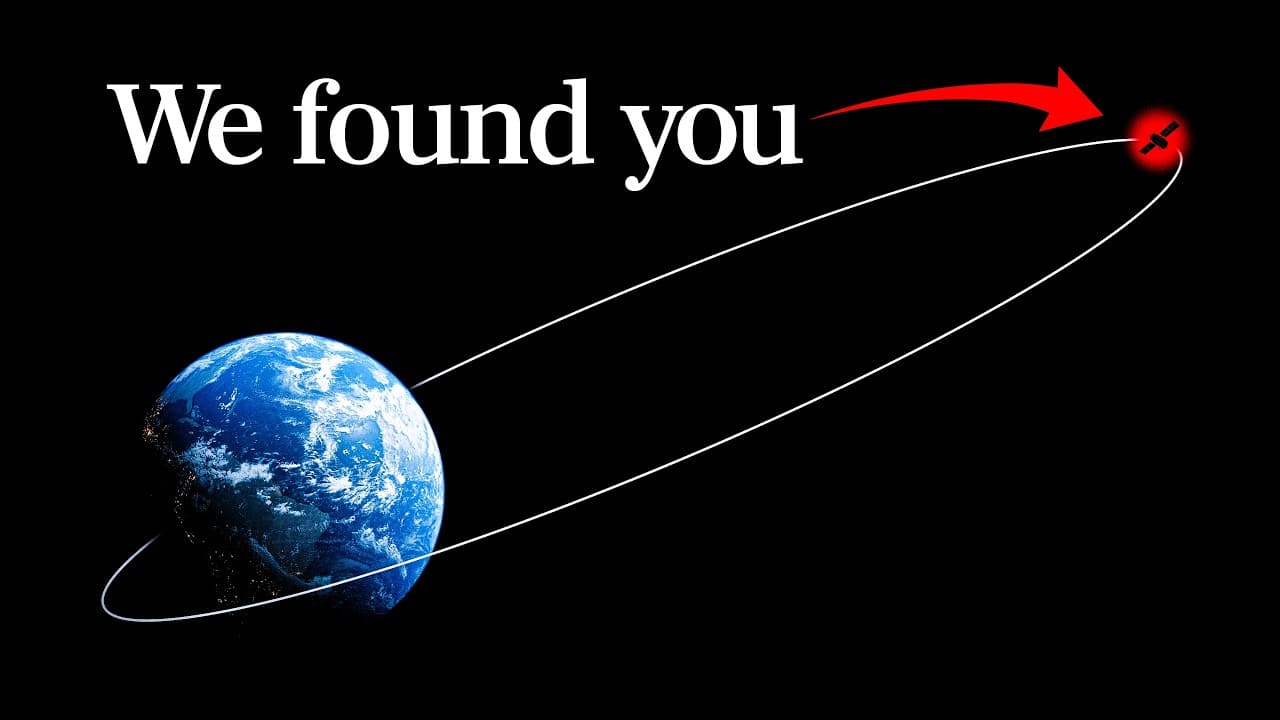
The tz23G_UXCGA transcript explains that GPS signals over Europe were disrupted by brief, satellite-based interference, with Cosmos 2546 identified as a likely source. Researchers found 75 affected days since 2019, roughly tenfold drops in signal-to-noise ratio, and bursts lasting three to five seconds. Read on to see how Professor Todd Humphreys and Zach Clements traced the interference and ruled out ground transmitters and the sun.
Transcript
- In November 2024, Professor Todd Humphreys, a GPS expert at the University of Texas at Austin, got a mysterious tip-off. Look at two specific days, at exact times in a data set collected years earlier by a network of GPS monitoring stations. These stations continuously record signals from satellite navigation systems, measuring how strong they ar... Read More
Key Insights
- GPS signals across Europe are experiencing significant disruptions.
- The disruptions were detected by analyzing data from GPS monitoring stations.
- The interference events were mostly occurring on weekdays during business hours.
- A Russian satellite, Cosmos 2546, was identified as a likely source of the interference.
- The interference was not random and could be deliberate tests or communications.
- The disruptions were not caused by solar activity or ground-based jammers.
- Alternative navigation systems like eLoran and fiber optics are being considered for resilience.
- The events highlight the fragility of relying solely on satellite navigation systems.
Install to Summarize YouTube Videos and Get Transcripts
Explore YouTube Video Summarizer or Get YouTube Transcript Extractor
Questions & Answers
Q: What does the tz23G_UXCGA transcript reveal about GPS disruption over Europe?
The transcript describes repeated bursts of interference that overwhelmed satellite navigation signals across Europe and neighboring regions. Researchers concluded that the source had to be high above Earth, and Cosmos 2546 was identified as a likely source.
Q: How did Professor Todd Humphreys discover the GPS interference?
In November 2024, Professor Todd Humphreys received a tip directing him to two exact times in GPS monitoring data from 2021. He and his student Zach Clements found simultaneous, sudden drops in signal-to-noise ratio across multiple receivers.
Q: How often did the researchers find these disruptions?
After examining earlier monitoring data, the researchers found 75 days since 2019 when strong disruptions occurred. The affected receivers repeatedly recorded the same drop at the same time.
Q: How large an area experienced the interference?
The effect extended north to Svalbard, south to Spain, west to Canada, and east to eastern Poland. Its pattern appeared centered around Poland or Kaliningrad, showing that it operated on a continental scale.
Q: Why was a ground-based transmitter ruled out?
A ground transmitter could not affect every monitoring station simultaneously because Earth’s curvature would block its signal over such long distances. Even under conservative assumptions, the source had to be at least 1,200 kilometers above Earth.
Q: Why did the researchers rule out solar interference?
Solar interference usually builds and fades over tens to hundreds of seconds, while these bursts lasted only three to five seconds. The interference was also limited to a five-megahertz-wide band centered at 1,577.5 megahertz and was concentrated over Europe rather than the entire sunlit side of Earth.
Q: What evidence suggested that a satellite caused the disruption?
The affected area was too broad for a source on the ground, and geometry placed the source at least 1,200 kilometers above Earth. After excluding the sun, Humphreys and Clements concluded that only a satellite could explain the pattern.
Q: Was Cosmos 2546 deliberately jamming GPS?
Cosmos 2546 was identified as a likely source of the interference, but the researchers still faced the question of whether it was intentional or accidental. The repeated, narrowband bursts appeared nonrandom and could have represented tests or communications, but the available material does not establish intent.
Summary & Key Takeaways
-
GPS signals across Europe have been mysteriously disrupted, affecting navigation systems. The investigation led by Professor Todd Humphreys identified a Russian satellite, Cosmos 2546, as a potential source. The disruptions were not random, occurring mostly during business hours, and may represent tests or communications, raising concerns about the vulnerability of global navigation systems.
-
The analysis of GPS data revealed that the disruptions were not caused by solar activity or ground-based interference. Instead, they were traced to a satellite, with Cosmos 2546 being a likely suspect. This raises the possibility of deliberate interference, highlighting the need for alternative navigation systems to ensure resilience.
-
The disruptions of GPS signals emphasize the fragility of current navigation systems. As global reliance on satellite navigation increases, the need for backup systems like eLoran and fiber optics becomes crucial. The events serve as a wake-up call to address vulnerabilities and ensure the security of navigation infrastructure.
Read in Other Languages (beta)
Share This Summary 📚
Summarize YouTube Videos and Get Video Transcripts with 1-Click
Try YouTube Summary with ChatGPT & Claude or YouTube Transcript Generator
Explore More Summaries from Veritasium 📚





Summarize YouTube Videos and Get Video Transcripts with 1-Click
Try YouTube Summary with ChatGPT & Claude or YouTube Transcript Generator