Palantir Stock: Why This Investor Sees Big Upside Ahead
TL;DR
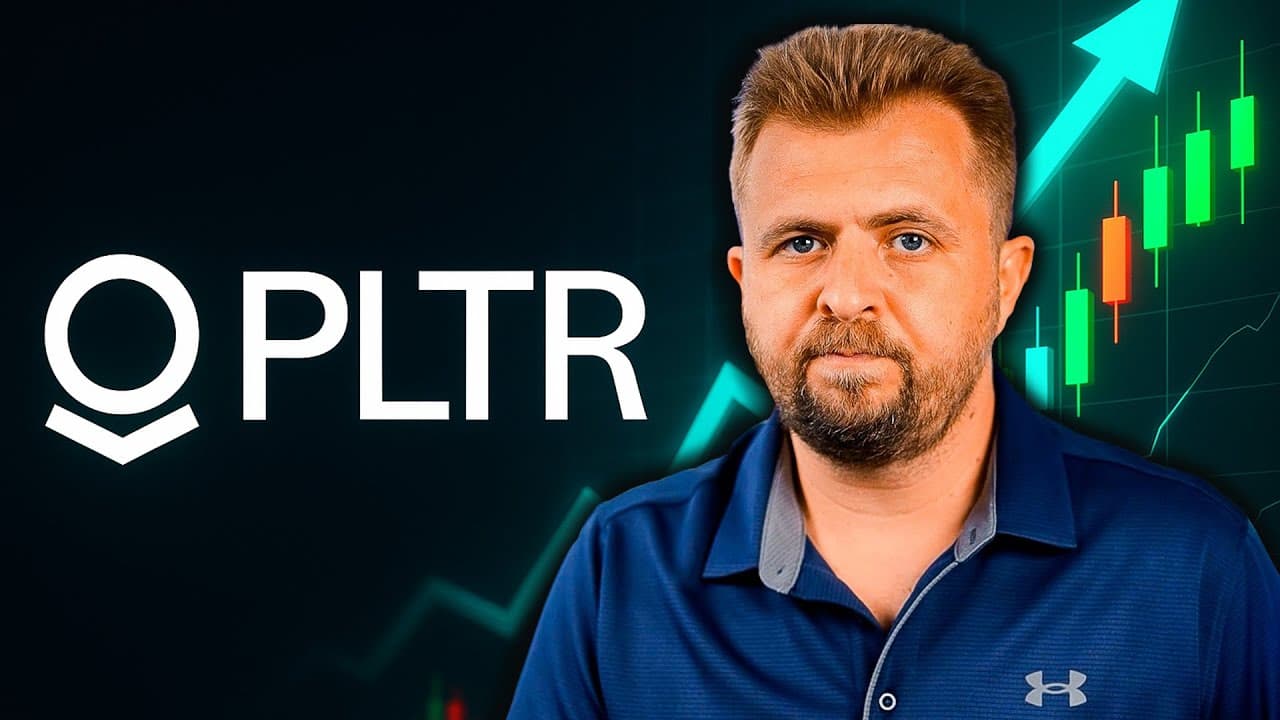
Palantir beat earnings expectations again, posting its first billion-dollar quarter with accelerating US commercial growth and expanding margins. The investor stays strongly bullish, citing CEO Alex Karp's pledge to grow US commercial revenue many times over, an elite Rule of 40 score, and a scalable software product, while urging viewers to trim modestly for risk and dollar-cost average rather than buy at a lump sum.
Transcript
So, Pilenteer just blasted through earnings again. We have sales of 1 billion plus versus an estimate of 940. EPS is a huge beat and the expectation was massive as it is. US commercial is up 93%. Customer count is up over 40%. The next quarter outlook is absolutely insane with um 936 million sales and operating profit of 495 which is a hell of a lo... Read More
Key Insights
- Palantir delivered its first billion-dollar revenue quarter, beating both sales and EPS estimates, with the investor calling the results and forward guidance evidence that the growth is fundamental, not just hype or FOMO.
- US commercial is the standout segment, with growth accelerating sharply over roughly a year, which the investor treats as the clearest sign the company is still early in its expansion.
- CEO Alex Karp said he believes Palantir will grow US commercial revenue many times over across the next five years, a statement the investor considers the single most important takeaway from the earnings call.
- Palantir's Rule of 40 score is exceptionally high, second only to Nvidia in the entire market, which the investor frames as near 'monopoly money' since Rule of 40 combines free cash flow and growth.
- Margins are expanding alongside revenue, with net income and operating margins moving from negative a few years ago to record highs, showing profitability is scaling with the business rather than lagging it.
- The high PE ratio is the only weak point on the investor's scorecard, and he argues that valuation compresses over time as a growing company keeps delivering, just as it did with Amazon and Nvidia.
- Institutional ownership has risen sharply while critics warn retail investors away over valuation, a divergence the investor reads as smart money buying regardless of the elevated PE.
- AIP is described as an irreplaceable monopoly for bridging large language models and enterprise workflows, controlling the full pipeline from data ingestion to modeling, deployment, and decision-making, giving Palantir a scalable, sticky product.
Install to Summarize YouTube Videos and Get Transcripts
Explore YouTube Video Summarizer or Get YouTube Transcript Extractor
Questions & Answers
Q: How did Palantir perform in its latest earnings report?
Palantir beat expectations on both sales and EPS, with sales coming in above the estimate and EPS a large beat. It produced its first billion-dollar revenue quarter, with US revenue growing strongly, US commercial accelerating sharply, and government revenue growing solidly. Forward guidance for the next quarter and the full fiscal year also came in well above estimates on both sales and operating profit, which the investor described as wild and insane.
Q: What did Alex Karp say that the investor found most important?
The investor highlighted three statements. First, Karp said he believes the company will grow US commercial revenue many times over across the next five years, which the investor called head-exploding. Second, Karp took jabs at doubters, saying skeptics are fewer, having been defanged and bent into submission, with no reason to pause. Third, Karp was unapologetic about company culture, saying they will push through and stay committed to their values regardless of whether people love or hate it.
Q: What is the Rule of 40 and how does Palantir score on it?
The Rule of 40 is a metric that combines free cash flow plus growth, used to judge the health of a company. The investor says Palantir's Rule of 40 score is exceptionally high, the second best in the entire stock market behind only Nvidia, which scores even higher. He frames Palantir's score as being in a class of its own, far ahead of everyone else, and calls a score this strong effectively monopoly money given what the metric represents.
Q: Why isn't the high PE ratio a dealbreaker for this investor?
The investor acknowledges the PE ratio is elevated and that Palantir is overstretched and hyped in the short term, and it is the only weak spot on his scorecard. However, he argues PE lag is normal for growth companies: as long as the company keeps performing and delivering results, the PE compresses over time. He compares it to Amazon and Nvidia, where investors who avoided the stock over valuation missed the run, and says waiting for it to look cheap means paying a much higher share price later.
Q: Should investors buy Palantir stock right now?
The investor cautions against yoloing in or spending life savings to buy at a lump sum, warning viewers not to act out of FOMO. Instead, he recommends dollar-cost averaging, described as slow and steady. He also suggests trimming a modest portion of existing positions for risk management given how much the stock has already gained, provided that money is used to DCA back into the stock over time rather than exiting entirely.
Q: Why does the investor call Palantir's AIP a monopoly?
The investor argues AIP is the only game in town for bridging large language models and enterprise workflows, serving as core infrastructure on the software side much like Nvidia is on the hardware side. He says Palantir controls the entire pipeline, from ingesting and normalizing data to building models, running simulations, deploying, making decisions, and reanalyzing the same data. This end-to-end control makes the business not just sticky but, in his words, an irreplaceable monopoly.
Q: What are the investor's price targets for Palantir?
The investor shares five-year price targets shown on screen. In his bear case, he believes Palantir is at minimum a several-hundred-dollar stock. In a conservative bullish scenario, he estimates roughly a four-figure share price within five years, and he suggests a more aggressive bullish case could be even higher. He frames these as long-term targets rather than short-term predictions and pairs them with his advice to accumulate gradually.
Q: How has Palantir's customer count and margins changed over time?
The investor notes Palantir grew from a small base of clients a few years ago to a much larger customer count over roughly five years, countering earlier critics who dismissed it as an unscalable consultancy. He projects continued exponential customer growth over the next decade. Alongside customer and revenue growth, margins have expanded significantly, moving from negative a few years ago to record highs in both net income and operating margin, showing profitability scaling with the business.
Summary & Key Takeaways
-
Palantir blew past earnings expectations again, beating on sales and EPS while issuing forward guidance the investor calls insane. The company hit its first billion-dollar quarter, with US revenue and especially US commercial growing rapidly and government revenue growing solidly, reinforcing the investor's long-standing bullish thesis on the stock.
-
The investor highlights three points from Alex Karp: a pledge to grow US commercial revenue many times over in five years, pointed jabs at skeptics he says have been silenced, and an unapologetic defense of company culture. He credits Karp, the team, and the product together as the reason to stay bullish.
-
On fundamentals, Palantir posts a top-tier Rule of 40 second only to Nvidia, expanding margins now at record highs, and a scalable digital product with flat costs and endless demand. The investor advises trimming modestly for risk management and dollar-cost averaging back in rather than buying a lump sum out of FOMO.
Read in Other Languages (beta)
Share This Summary 📚
Summarize YouTube Videos and Get Video Transcripts with 1-Click
Try YouTube Summary with ChatGPT & Claude or YouTube Transcript Generator
Explore More Summaries from Tom Nash 📚



Summarize YouTube Videos and Get Video Transcripts with 1-Click
Try YouTube Summary with ChatGPT & Claude or YouTube Transcript Generator