How to Invest Safely During a Market Hype Cycle
TL;DR
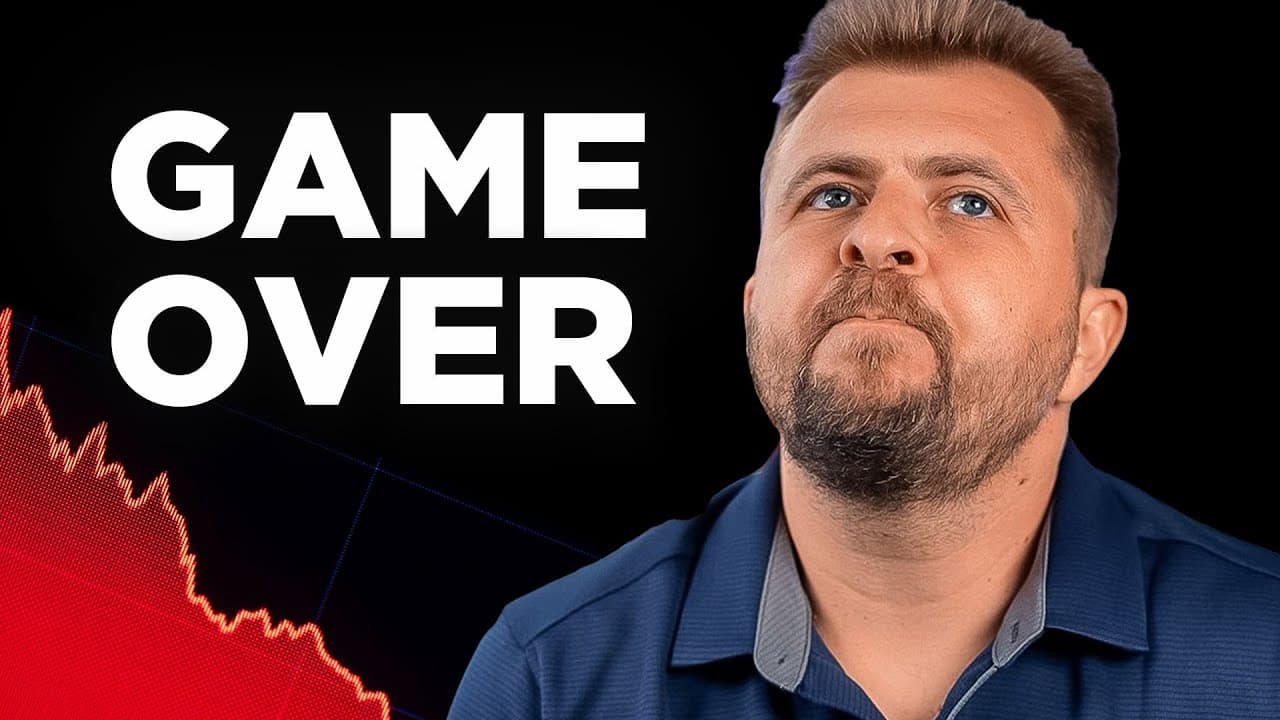
Focus on business fundamentals, maintain a long-term horizon, and prepare for corrections instead of trying to predict when market enthusiasm will end. A resilient approach combines scenario planning, available capital, durable holdings, emotional preparation, a supportive investing community, and consistent dollar-cost averaging, while avoiding fear of missing out and attempts to recover gains you never earned.
Transcript
Hey, this is Tom. And over the years, Warren Buffett has contributed countless quotes that are being used by investors every single day. Most of it, he actually said, some of it is completely fabricated and has nothing to do with him. But one of the most quintessential Warren Buffett quotes that kind of summarized the whole investing theory, thesis... Read More
Key Insights
- Contrarian investing is based on supply and demand: crowded buying can push prices toward irrational enthusiasm, while weak demand and abundant supply can create more attractive conditions for buyers who have the patience and preparation to act.
- Retail investors often reverse sound behavior by concentrating on opportunity during bullish markets and risk during bearish markets. This emotional pattern can lead them to enter after prices rise and withdraw when falling prices may offer opportunities.
- A shorter investment horizon places retail investors against professionals, institutions, and algorithmic traders with better resources, connections, information, and capital. A horizon of 10 years or more reduces those short-term competitive advantages and increases the importance of fundamentals.
- Market timing is unreliable because even a warning about irrational exuberance in the late 1990s preceded the eventual crash by roughly two to two and a half years. Investors therefore cannot assume that identifying overvaluation reveals when a correction will occur.
- Recent success does not prove investing skill when it occurs during an unusually easy bullish cycle. Investors who entered after 2023 may have limited experience with severe market pressure and could overestimate their knowledge through the Dunning-Kruger effect.
- Correction readiness requires a predetermined plan for multiple possible declines, capital available to execute that plan, holdings capable of sustaining pressure, and enough mental and emotional preparation to make disciplined decisions under stressful conditions.
- Dollar-cost averaging works by maintaining consistent investment activity rather than stopping when sentiment deteriorates. The approach can be paired with larger purchases during downturns, provided the investor has identified quality assets and retained the capital required to act.
- Financial security is a more useful objective than chasing missed gains, social-media approval, or short-term excitement. The central priorities are avoiding permanent losses and following a strategy designed to support the investor's financial future over the next 20 years.
Install to Summarize YouTube Videos and Get Transcripts
Explore YouTube Video Summarizer or Get YouTube Transcript Extractor
Questions & Answers
Q: How should investors respond to a market hype cycle?
Investors should stop trying to predict the exact end of the hype cycle and concentrate on fundamentals, risk, and long-term objectives. They should create plans for several correction scenarios, maintain capital for those scenarios, hold stocks that can better withstand pressure, and continue investing systematically. The goal is preparation, not choosing between bullish and bearish forecasts that may both prove mistimed.
Q: Why is market timing unreliable during periods of exuberance?
Recognizing that a market looks overhyped does not reveal when prices will reverse. The transcript cites a late-1990s warning about irrational exuberance that arrived roughly two to two and a half years before the crash. During such a gap, prices can continue rising and investors waiting entirely in cash can miss gains. A long-term, fundamentals-based plan avoids depending on an unknowable turning point.
Q: Why can a long-term horizon help retail investors compete?
Professional investors, institutions, and algorithmic traders possess resources that retail investors generally cannot match, including more capital, stronger networks, better connections, and greater access to information. Those advantages matter most in a fast, short-term contest. Over 10, 15, or 20 years, the transcript argues that fundamentals eventually outweigh media narratives, temporary hype, market noise, and short-lived informational advantages.
Q: What should an investor's correction plan include?
A correction plan should define actions for different levels of market decline without assuming which scenario will occur. It should also reserve enough capital to execute those actions, select holdings that are more capable of enduring market pressure, and prepare the investor mentally and emotionally. A community of experienced, like-minded long-term investors can provide perspective when fear makes disciplined decisions difficult.
Q: How does dollar-cost averaging fit a long-term strategy?
Dollar-cost averaging supports discipline by keeping investments consistent instead of stopping whenever the market becomes frightening. The transcript recommends combining regular purchases with preparedness to invest more during downturns, when quality assets may face abundant supply and weak demand. This method requires available capital, prior research, and a willingness to tolerate delayed results rather than expecting immediate rewards.
Q: Why should new investors be cautious about recent gains?
Investors who joined after 2023 have mainly experienced what the transcript describes as a very easy bullish environment. Gains achieved during that period may encourage the belief that investing has been mastered, even though the investor has not yet faced a severe correction. This Dunning-Kruger effect can leave people unprepared for losses, volatility, emotional pressure, and difficult portfolio decisions.
Q: Why is chasing stocks after missing their gains risky?
Trying to catch up after missing gains in stocks such as Palantir, Tesla, or Nvidia creates a poor mindset because it treats unearned profits as money that must be recovered. That pressure can encourage emotional purchases during a hype cycle. The transcript advises forgetting missed gains and concentrating instead on avoiding losses, evaluating fundamentals, and securing financial stability over the next 20 years.
Q: What role do emotions and community play in investing?
Emotional condition influences whether an investor follows a plan when markets become stressful. Fear, fatigue, isolation, and exposure to amplified media narratives can weaken judgment, just as an unhealthy setting can undermine an otherwise sensible personal goal. The transcript recommends preparing mentally and surrounding yourself with like-minded long-term investors, including more experienced participants who can offer perspective during difficult periods.
Summary & Key Takeaways
-
Market enthusiasm attracts inexperienced investors precisely when professional investors may see greater danger. Retail investors often emphasize opportunities during bullish periods and risks during bearish periods, causing them to buy amid optimism and retreat amid fear. The proposed remedy is to evaluate fundamentals and resist decisions driven by prevailing market emotion.
-
Short-term competition favors professional investors, algorithmic trading, and institutions with superior information, networks, resources, and capital. Extending the investment horizon to 10, 15, or 20 years reduces those advantages because business fundamentals eventually matter more than media attention, short-term hype, market noise, or attempts to predict the next correction.
-
Preparation for a correction requires predetermined responses for different scenarios, sufficient capital, a portfolio capable of handling pressure, and emotional readiness. Consistent dollar-cost averaging can support this plan. Investors should avoid chasing past winners or missed gains and instead prioritize preserving capital and securing their long-term financial future.
Read in Other Languages (beta)
Share This Summary 📚
Summarize YouTube Videos and Get Video Transcripts with 1-Click
Try YouTube Summary with ChatGPT & Claude or YouTube Transcript Generator
Explore More Summaries from Tom Nash 📚

Summarize YouTube Videos and Get Video Transcripts with 1-Click
Try YouTube Summary with ChatGPT & Claude or YouTube Transcript Generator