How Did Snapchat Survive Facebook's Copycat?
TL;DR
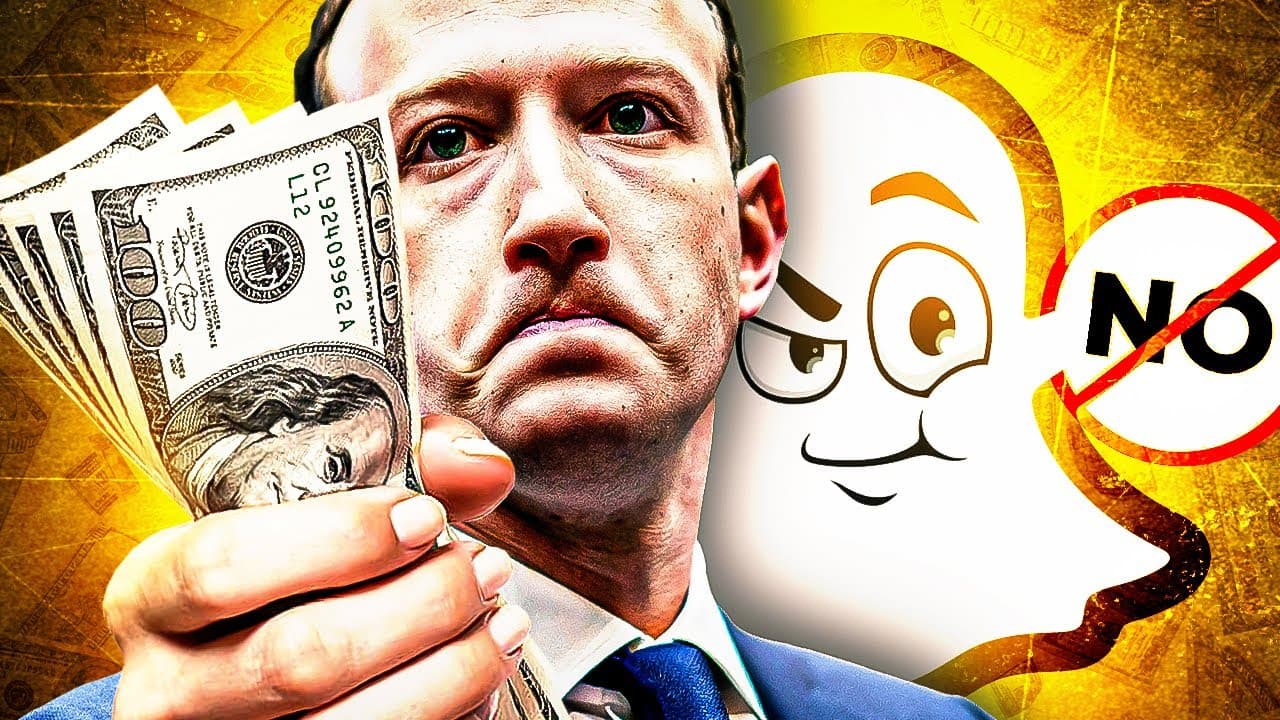
Snapchat survived Facebook’s copycat because the rival offered no compelling reason to switch and lacked Snapchat’s separation from established social networks. Snapchat’s disappearing photos, absence of public metrics, and popularity among teenagers helped daily active users jump from two thousand in December to twenty thousand in January. Read on to see how its distinct appeal turned Facebook’s challenge into publicity and stronger investor confidence.
Transcript
It had been a bad week for Evan Spiegel. His business idea called Future Freshman had failed, and his girlfriend of two years had just broke up with him. But then suddenly his friend Reggie burst into his room with an idea: A way of sending photos that disappear. Evan was immediately excited, and said he thought it was a million dollar idea. He... Read More
Key Insights
- Snapchat originated as a way to send photos that disappeared, but Evan Spiegel recognized a broader purpose: reducing the permanence of online communication so people could share silly, casual, or imperfect moments more freely.
- Bobby Murphy turned the disappearing-photo concept into a working prototype after several potential collaborators declined. Early usage by the founders’ friends demonstrated engagement, even though investors at a Stanford pitch event considered photos that did not save a backward step.
- Snapchat’s yellow branding was a deliberate differentiation strategy. Evan Spiegel examined popular apps, noticed that none used yellow logos, and selected a bright yellow background so the new service would stand apart visually in the app store.
- The founding conflict centered on contribution and ownership. Reggie Brown proposed the original concept but contributed less as Evan Spiegel and Bobby Murphy developed the business, leading them to lock him out and triggering a prolonged lawsuit that ended in a settlement.
- Teenagers drove Snapchat’s first major growth surge. Daily active users increased from two thousand in December to twenty thousand in January as young users introduced the private, disappearing-photo service to friends through repeated word-of-mouth sharing.
- Snapchat encouraged frequent and authentic communication because photos disappeared and the platform lacked likes, retweets, and similar public metrics. Users could share ordinary moments with captions instead of producing glamorous, filtered representations of their lives.
- Facebook’s Poke failed because it copied Snapchat without offering additional value. Users also valued Snapchat precisely because it was separate from Facebook, so connecting a disappearing-message product to an established Facebook identity weakened its appeal.
- Facebook’s unsuccessful challenge benefited Snapchat by producing publicity and signaling commercial potential to investors. Within one year, Snapchat exceeded one million daily active users and handled more than one hundred million photos each day.
Install to Summarize YouTube Videos and Get Transcripts
Explore YouTube Video Summarizer or Get YouTube Transcript Extractor
Questions & Answers
Q: How did Snapchat survive Facebook’s copycat?
Facebook’s Poke copied Snapchat’s features, format, and layout but offered existing users no additional value or reason to switch. Snapchat also felt separate from established Facebook identities, which supported the private, casual experience its users valued.
Q: Why did Facebook Poke fail to defeat Snapchat?
Poke briefly reached the top of the app store after Facebook promoted it to its enormous audience, but interest quickly faded. It duplicated Snapchat while remaining connected to Facebook, whereas users valued Snapchat as a private-feeling alternative to broader social networks.
Q: Why did Facebook create Poke after approaching Snapchat?
Mark Zuckerberg invited Evan Spiegel to Facebook’s campus and proposed buying Snapchat while letting Spiegel and Bobby Murphy remain in charge. After Spiegel declined, Zuckerberg revealed Poke, a nearly identical app designed to compete using Facebook’s resources and audience.
Q: How did Facebook’s challenge ultimately help Snapchat?
Facebook’s attempt generated publicity for Snapchat and signaled to investors that the disappearing-message service had commercial potential. The failed challenge therefore strengthened investor confidence instead of eliminating Snapchat.
Q: Why did Snapchat become popular with teenagers?
Snapchat felt like a private club for friends at a time when parents and grandparents were joining Facebook. Disappearing photos and the absence of likes or retweets reduced pressure to present a glamorous, filtered life, making frequent and casual sharing more appealing.
Q: How quickly did Snapchat grow after teenagers adopted it?
Daily active users rose from two thousand in December to twenty thousand in January as teenagers repeatedly introduced the app to friends. Within one year, Snapchat surpassed one million daily active users and handled more than one hundred million photos each day.
Q: How did the idea for Snapchat begin?
Reggie Brown proposed an app for sending photos that disappeared, and Evan Spiegel immediately saw its potential. Spiegel later recognized that temporary photos could let people share silly messages, ordinary moments, and imperfect images without leaving a permanent online record.
Q: Why was Snapchat originally called Picaboo?
The founders named their working prototype Picaboo before learning that a phone book company already used the name. After receiving a cease and desist letter, they renamed it Snapchat to combine snapping a photograph with chatting among friends.
Summary & Key Takeaways
-
Evan Spiegel and Reggie Brown pursued an app for disappearing photos, then recruited Bobby Murphy to build the prototype originally called Picaboo. Friends used it frequently, but investors rejected the concept. A cease and desist letter forced the team to rename the product Snapchat, reflecting both photography and conversation.
-
Snapchat found its audience among teenagers who wanted a private alternative to Facebook and Instagram. Disappearing posts reduced pressure to present polished lives, while the absence of likes and retweets made sharing feel casual. Usage surged, investors supplied funding, and Snapchat developed from a dismissed novelty into a personal communication tool.
-
Mark Zuckerberg attempted to buy Snapchat, then revealed Facebook’s nearly identical Poke app after Evan Spiegel declined. Despite Facebook promoting Poke to its enormous user base, the clone quickly faded because it added nothing distinctive and remained connected to Facebook. The challenge ultimately generated publicity and strengthened investor confidence in Snapchat.
Read in Other Languages (beta)
Share This Summary 📚
Summarize YouTube Videos and Get Video Transcripts with 1-Click
Try YouTube Summary with ChatGPT & Claude or YouTube Transcript Generator
Explore More Summaries from MagnatesMedia 📚






Summarize YouTube Videos and Get Video Transcripts with 1-Click
Try YouTube Summary with ChatGPT & Claude or YouTube Transcript Generator