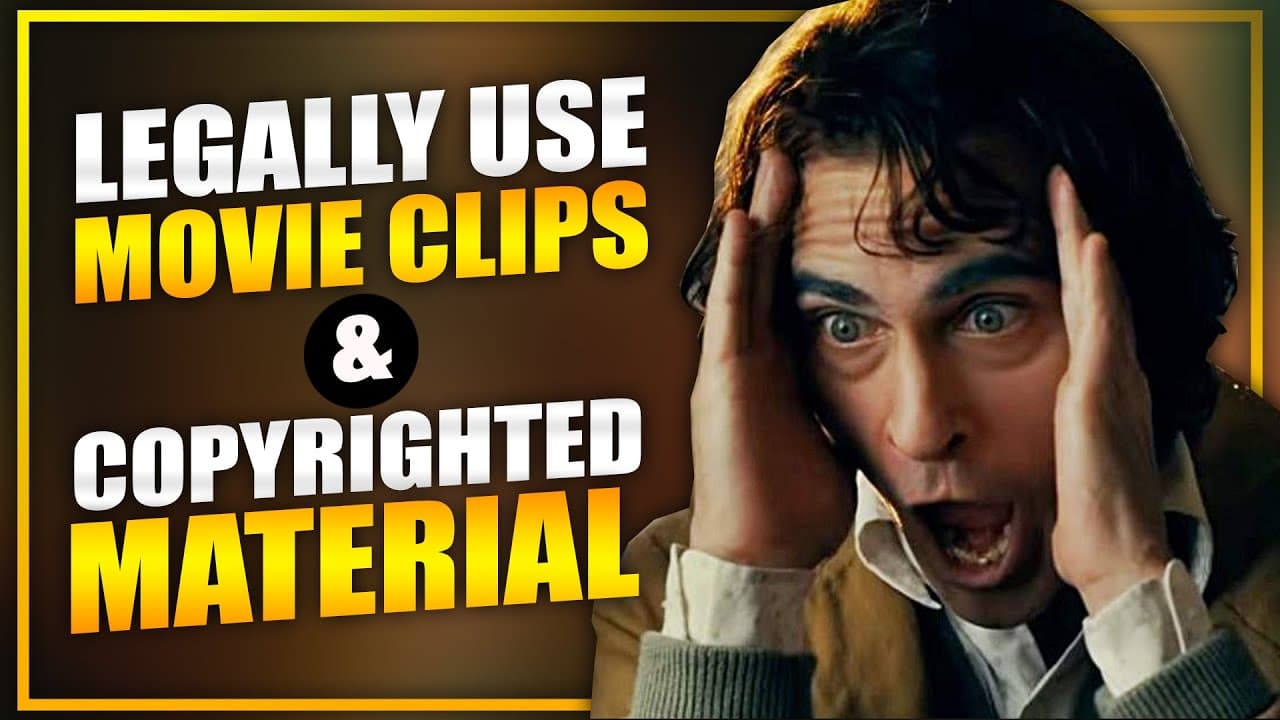
How to Use Movie Clips Legally on YouTube
TL;DR
Use copyrighted clips only when your new work transforms their meaning or value, uses a limited portion, does not replace the original commercially, and has a defensible purpose such as education. A copyright claim can still occur even when these factors support fair use, so creators should understand the full dispute process, conduct their own research, and proceed only when confident.
Transcript
how do I use movie and TV clips in my videos without getting a copyright strike and how does Evan Carmichael build a whole channel using other people's clips but doesn't get demonetised and how can you use copyrighted material in your videos legally we're about to explain all of that and more so sit tight what's up legends I hope you are having an ... Read More
Key Insights
- Fair use is a legal doctrine that can allow copyrighted material to appear in a new work under particular circumstances. It is not merely a YouTube policy, and determining whether it applies requires examining several factors together rather than assuming every short clip is automatically permitted.
- Transformative use changes the original material's meaning, value, narrative, or purpose. Reposting a complete television episode adds no transformation, while arranging selected clips to develop a separate educational argument can create a different work that serves a new purpose.
- The amount used matters in relation to the complete copyrighted work. Using an entire episode weighs against fair use, while using small excerpts may be more defensible, especially when the excerpts do not represent a large portion or the central substance of the original.
- Commercial impact concerns whether the new use could reduce demand, sales, or viewing for the original material. A video that substitutes for the copyrighted work is less likely to qualify, while commentary that does not replace the original and may even introduce viewers to it presents a stronger case.
- The nature of the copyrighted work affects the fair use assessment. According to the presentation, previously published and factual material can strengthen the argument, while an educational purpose focused on presenting facts is more supportive than merely reusing material to generate profit.
- A copyright claim does not by itself prove that a use falls outside fair use. Production companies may claim videos as soon as they detect their footage, without first reviewing whether the creator transformed it, limited the amount used, avoided commercial harm, or served an educational purpose.
- The dispute process can continue after an initial appeal is rejected. The creator says a claimant facing the final stage must either restore the video and release the claim or pursue court action, which many YouTubers avoid because the warning about possible legal consequences feels intimidating.
- Creators should research fair use independently before submitting a dispute or final appeal. The video's confidence about challenging claims depends on the creator genuinely following the stated principles and understanding the use, since uploading pirated or insufficiently transformed material would not receive the same justification.
Install to Summarize YouTube Videos and Get Transcripts
Explore YouTube Video Summarizer or Get YouTube Transcript Extractor
Questions & Answers
Q: What is fair use for YouTube videos?
Fair use is described as a legal doctrine that permits copyrighted work to be used in new content under certain circumstances. The analysis considers whether the use transforms the original, how much copyrighted material is included, whether the new content harms the original work's commercial success, and the nature and purpose of the material and its use.
Q: How can movie or television clips be transformative?
Movie or television clips can be transformative when they are used to create a different meaning, value, narrative, or purpose from the original production. The example presented uses small clips from a television show to construct a separate educational argument. Simply uploading a complete episode does not transform it and is characterized as piracy rather than fair use.
Q: How much copyrighted footage can a creator use?
The amount is evaluated relative to the length and substance of the complete copyrighted work. The presentation does not give a fixed permitted duration. Instead, it contrasts uploading an entire episode with selecting small clips. A limited portion is more supportive of fair use, particularly when it does not reproduce a large section or the heart of the work.
Q: Why does commercial impact matter in fair use?
Commercial impact matters because a new video is less likely to qualify as fair use if it reduces sales or gives viewers a substitute for the original work. A use is more defensible when it does not affect the original's commercial success. The example argues that educational commentary using short clips would not stop viewers from paying for or watching the show.
Q: Does educational use automatically qualify as fair use?
Educational intent is presented as a factor that can support fair use, especially when the creator uses published or factual material to present information rather than merely seeking profit. However, it is discussed alongside transformation, the amount used, and commercial impact. The presentation therefore treats educational purpose as helpful evidence, not as the only consideration needed.
Q: Why can a fair use video still receive a copyright claim?
A video can still receive a claim because a company that owns the footage may claim detected use immediately rather than spending time reviewing its context. The claim may therefore occur before anyone considers whether the video is transformative, uses only a small portion, avoids commercial harm, or has an educational purpose. The creator must then choose whether to dispute it.
Q: What happens after an initial copyright dispute is rejected?
According to the presentation, the creator can challenge the claimant again through a final stage after the initial dispute is rejected. At that point, the claimant must either concede, restore control and monetization, or pursue the matter in court. The video says many creators stop before this stage because the warning about possible legal action appears intimidating.
Q: When should a creator challenge a copyright claim?
A creator should consider challenging a claim only after researching fair use, understanding the stated factors, and becoming confident that the new work genuinely qualifies. The presentation argues that a clearly transformative, limited, educational use with no meaningful commercial harm has a stronger position. It also warns that pirated uploads or uses violating those principles could create genuine legal risk.
Summary & Key Takeaways
-
Fair use is presented as a legal doctrine that can permit copyrighted material in a new work under certain circumstances. The assessment considers whether the use is transformative, how much material is included, whether the new work harms the original commercially, and the nature and purpose of the copyrighted material and its use.
-
Transformative use changes the meaning, value, narrative, or purpose of copyrighted material instead of merely reproducing it. Uploading an entire television episode is described as piracy, while selecting short clips to construct a separate educational argument may support fair use when the finished video becomes a genuinely different work with a distinct point.
-
Even a use that appears fair can receive a copyright claim because rights holders may claim detected footage without assessing its context. The creator describes an initial dispute, a possible rejection, and a final appeal in which the claimant must either release the video or pursue court action, while urging creators to research carefully.
Read in Other Languages (beta)
Share This Summary 📚
Summarize YouTube Videos and Get Video Transcripts with 1-Click
Try YouTube Summary with ChatGPT & Claude or YouTube Transcript Generator
Explore More Summaries from MagnatesMedia 📚



Summarize YouTube Videos and Get Video Transcripts with 1-Click
Try YouTube Summary with ChatGPT & Claude or YouTube Transcript Generator