How to Build a Python Slot Machine From Scratch
TL;DR
Build a Python slot machine from scratch by separating deposits, bets, line selection, reel generation, win detection, and balance updates into focused functions. The text-based game lets players bet on one, two, or three lines and continue until cashing out or exhausting their balance. Read on for the validation logic, program structure, and incremental testing approach.
Transcript
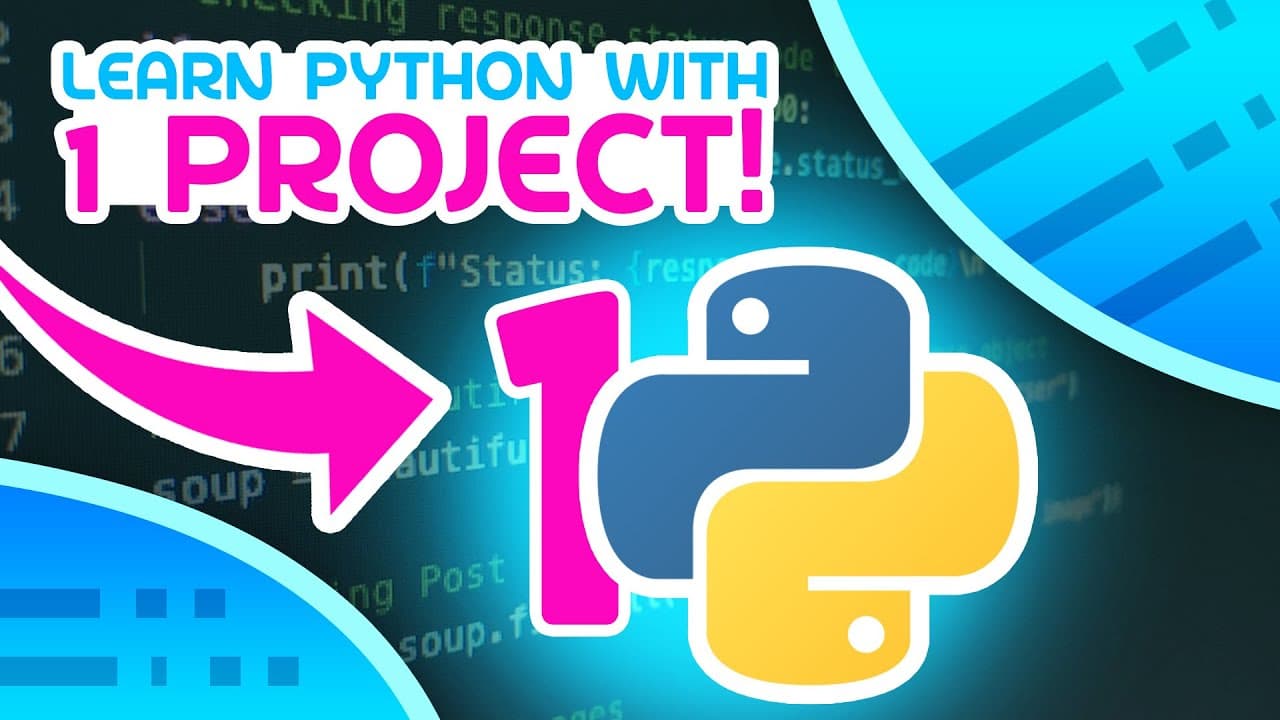
In this video. I'm going to teach you Python by working through a project. Now, this project, I'm going to write completely from scratch, which means I don't have it up on my other screen. I've not written this before. It's a completely new project to me. Now, the point of this is not only am I going to teach you basic Python syntax and some differ... Read More
Key Insights
- The project is a text-based slot machine that combines user input, betting rules, random reel generation, win detection, and balance management in one Python program. Its purpose is educational, uses no real money, and is explicitly presented without supporting gambling.
- The intended learner has some Python experience but may not yet feel comfortable starting and structuring an independent project. Following the implementation from scratch shows how to identify components, choose a starting point, and complete related tasks in a practical sequence.
- The slot machine allows bets on one, two, or three lines. The player's total wager depends on the amount placed on each line and the number of selected lines, so the program asks for the line count before requesting the per-line bet.
- Input validation is handled with a while loop that continues prompting until the user supplies an acceptable value. For deposits, acceptable input must represent a whole number and must convert to an integer greater than zero before the loop can end.
- The isdigit string method is used to determine whether deposit input represents a whole number before integer conversion. This ordering prevents an attempted conversion of invalid text such as "Hello World," while negative input also fails the digit check described in the lesson.
- A function is a callable block of code that performs a task and can return a value. The deposit function collects and validates input, then returns the accepted amount so the main program can store it as the player's starting balance.
- The main function organizes the overall program and begins by assigning the result of deposit to the balance variable. Keeping the program inside a callable function also supports restarting the game by calling main again after asking whether the player wants to continue.
- Incremental testing confirms that each component behaves correctly before development proceeds. The deposit function is tested with a valid amount, text, zero, and a positive amount, demonstrating the different validation messages and the loop's eventual successful exit.
Install to Summarize YouTube Videos and Get Transcripts
Explore YouTube Video Summarizer or Get YouTube Transcript Extractor
Questions & Answers
Q: How do you build a Python slot machine from scratch?
Start by identifying the required components: collecting a deposit, selecting one, two, or three betting lines, accepting a bet for each line, generating reel items, detecting winning lines, and updating the balance. Put related responsibilities into functions, organize the overall flow in a main function, and test each component as it is completed.
Q: How should the Python slot machine validate a deposit?
Repeatedly prompt the player until the input represents a whole number greater than zero. Check the entered string with isdigit before converting it to an integer, reject invalid or nonpositive amounts, and return the accepted value.
Q: Why check isdigit before converting input with int?
The input function provides the deposit as a string, but the program needs an integer for the player's balance. Checking isdigit first prevents an attempted conversion of invalid text such as "Hello World"; the lesson also notes that negative input fails this digit check.
Q: Why use a while loop for input validation?
A while loop keeps requesting a deposit until the player supplies an acceptable amount. Invalid text or an amount that is not greater than zero produces a message and another prompt, while a valid positive integer ends the loop.
Q: Why select the number of betting lines before entering the bet?
The entered amount is the wager for each line rather than necessarily the total wager. Because the player can choose one, two, or three lines, selecting the line count first clarifies that the total wager depends on both values.
Q: What does the deposit function return?
The deposit function returns the accepted deposit as an integer. The main function assigns that returned value to the player's balance so it can be used by the rest of the game.
Q: What role does the main function play in the slot machine?
The main function organizes the program's central flow. It begins by calling the deposit function and storing its returned value as the balance, and keeping this flow callable also supports restarting the game by calling main again.
Q: How does this project help learners become more confident with Python?
It demonstrates both Python syntax and the reasoning used to structure a program from scratch. Learners practice functions, while loops, conditionals, string methods, integer conversion, return values, and incremental testing while building a complete text-based project.
Summary & Key Takeaways
-
The project teaches Python by constructing a text-based slot machine from scratch. A player deposits money, chooses whether to bet on one, two, or three lines, and selects an amount for each line. The program generates reel items, identifies winning lines, updates the balance, and continues until cash-out or an empty balance.
-
Development begins by listing the program's responsibilities and selecting user input as the starting point. The deposit function repeatedly prompts for an amount, checks whether the entered string contains a whole number, converts valid input to an integer, rejects amounts that are not greater than zero, and returns the accepted value.
-
The project demonstrates how functions, while loops, conditional statements, string methods, integer conversion, return values, and program structure work together. The main function begins by assigning the returned deposit to the player's balance. Each function is tested after writing it, helping learners understand both Python syntax and the process of building a larger program.
Read in Other Languages (beta)
Share This Summary 📚
Summarize YouTube Videos and Get Video Transcripts with 1-Click
Try YouTube Summary with ChatGPT & Claude or YouTube Transcript Generator
Explore More Summaries from Tech With Tim 📚


Summarize YouTube Videos and Get Video Transcripts with 1-Click
Try YouTube Summary with ChatGPT & Claude or YouTube Transcript Generator