Why Seek Validation Instead of True Love?
TL;DR
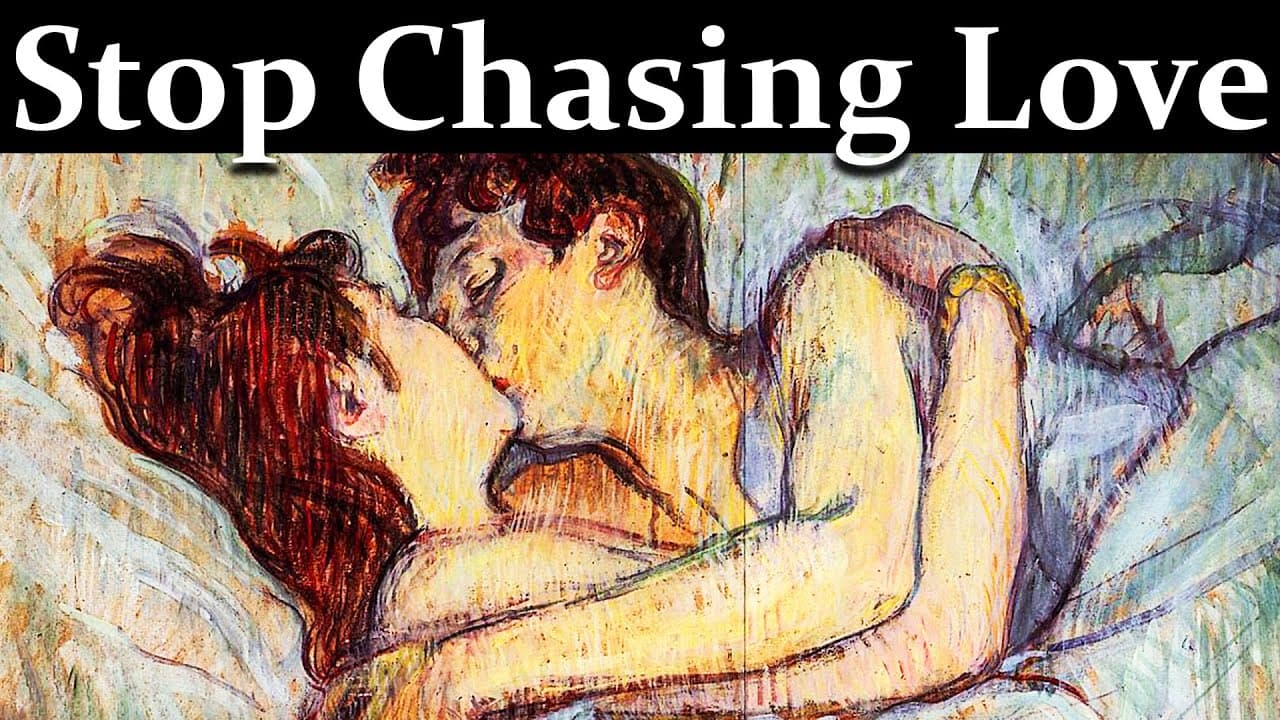
Most people confuse love with a need for validation, driven by a desire to be chosen rather than to genuinely connect. This stems from childhood experiences where love was conditional. True love requires emotional maturity, where individuals are whole within themselves and seek to share rather than fill a void.
Transcript
you say you want love but tell me honestly is it love you really want or is it to feel chosen by someone because there is a huge difference between loving and wanting to be loved most people who say they seek love are actually thirsty for validation they want someone from the outside to prove what they cannot sustain on their own their own worth th... Read More
Key Insights
- Many people seek validation rather than true love, driven by a need to be chosen.
- Eric Fromm identifies immature love as a dependency on being loved rather than the act of loving.
- True love requires emotional maturity and the ability to love oneself first.
- Cultural narratives often promote the illusion that being chosen equates to being complete.
- The desire for validation often stems from unresolved childhood experiences of conditional love.
- Real love is an act of giving and sharing, not a means to fill an internal void.
- Emotional maturity involves recognizing and healing the inner child seeking validation.
- True love arises from a place of overflow, where individuals are whole and do not rely on others for self-worth.
Install to Summarize YouTube Videos and Get Transcripts
Explore YouTube Video Summarizer or Get YouTube Transcript Extractor
Questions & Answers
Q: Why do people confuse love with validation?
People often confuse love with validation due to a deep-seated need to be chosen, which stems from childhood experiences where love was conditional. This leads to an emotional dependency where individuals seek external approval to feel worthy, mistaking this need for genuine love.
Q: What is immature love according to Eric Fromm?
According to Eric Fromm, immature love is characterized by a dependency on being loved rather than the ability to love. It involves a need for fusion with another person to escape internal separation, leading to emotional dependency rather than a genuine connection.
Q: How does cultural narrative affect our understanding of love?
Cultural narratives often promote the idea that being chosen by someone else equates to being complete, reinforcing the illusion that love is about receiving rather than giving. This creates a dependency on external validation and confuses the true nature of love, which requires emotional maturity and self-completeness.
Q: What role does childhood experience play in seeking validation?
Childhood experiences play a crucial role in seeking validation, as individuals who received conditional love often grow up feeling unworthy. This leads to a pattern of seeking external approval to fill internal voids, mistaking this need for validation as a desire for love.
Q: How can one achieve true love according to the video?
Achieving true love requires emotional maturity, where individuals are whole within themselves and do not rely on others for self-worth. True love is about giving and sharing from a place of overflow, focusing on building mutual growth rather than filling personal gaps.
Q: What does Eric Fromm mean by 'neurotic need for fusion'?
The 'neurotic need for fusion' refers to a deep-seated desire to merge with another person to escape internal separation. This need is driven by an emotional dependency where individuals seek to fill their internal voids through external relationships, mistaking this need for true love.
Q: Why is emotional maturity important in love?
Emotional maturity is crucial in love because it involves recognizing and healing the inner child seeking validation. Mature individuals are whole within themselves and can love without dependency, creating relationships based on mutual growth and genuine connection rather than neediness.
Q: What is the difference between true love and emotional dependency?
True love is an act of giving and sharing from a place of wholeness, whereas emotional dependency involves seeking external validation to fill internal voids. True love arises from overflow, where individuals are complete within themselves, while dependency relies on others for self-worth.
Summary & Key Takeaways
-
People often mistake the need for validation as a desire for love, seeking to be chosen to fill internal voids. This stems from childhood experiences where love was seen as conditional, leading to emotional dependency. True love requires maturity and self-completeness, focusing on sharing rather than filling gaps.
-
Cultural narratives exacerbate the confusion between love and validation, promoting the idea that being chosen makes one complete. Eric Fromm highlights that true love involves emotional maturity, where individuals are whole within themselves before connecting with others.
-
Healing involves addressing the inner child that seeks validation, recognizing that true love is about giving and sharing from a place of wholeness. Emotional maturity allows individuals to love without dependency, creating relationships based on mutual growth rather than neediness.
Read in Other Languages (beta)
Share This Summary 📚
Summarize YouTube Videos and Get Video Transcripts with 1-Click
Try YouTube Summary with ChatGPT & Claude or YouTube Transcript Generator
Explore More Summaries from Psyphoria 📚

Summarize YouTube Videos and Get Video Transcripts with 1-Click
Try YouTube Summary with ChatGPT & Claude or YouTube Transcript Generator