What Is Synchronicity and How Does It Affect Us?
TL;DR
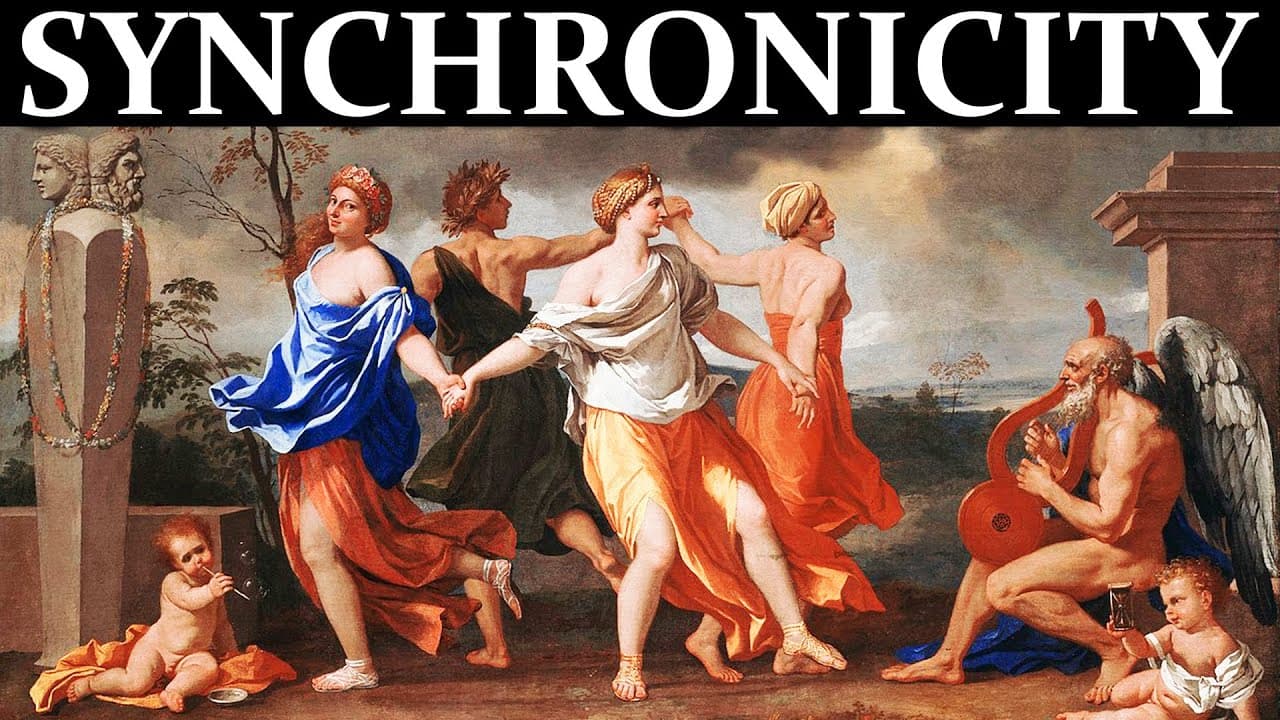
Synchronicity refers to meaningful coincidences that occur when the conscious mind aligns with external events, often during personal crises or transformations. Rather than being mere chance, these experiences serve as messages from the unconscious, guiding individuals toward self-discovery and growth through symbolic interpretations.
Transcript
have you ever had the feeling that the Universe was trying to tell you something a thought that comes out of nowhere and soon after something happens that seems to confirm exactly what you were thinking an unlikely encounter a word you needed to hear a coincidence so precise that it made you stop and think this can't just be a coin incidence perhap... Read More
Key Insights
- Carl Jung's concept of synchronicity suggests that meaningful coincidences occur when the mind and external world align, offering insights beyond logic.
- Synchronicity often appears during times of personal crisis or transformation, acting as a guide when rational consciousness is weakened.
- These experiences are not mere coincidences but are seen as messages from the unconscious, reflecting inner conflicts and transitions.
- Jung believed that synchronicity is significant only to the individual experiencing it, as it holds symbolic meaning unique to their psyche.
- The unconscious communicates through symbols, images, and patterns, often manifesting in external reality to guide consciousness toward growth.
- Synchronicity challenges the notion of a mechanical universe, suggesting a deeper, symbolic order connecting individuals to a collective unconscious.
- Interpreting synchronicity requires self-awareness and a willingness to confront uncomfortable truths that the unconscious seeks to reveal.
- Synchronicity is a call to individuation, urging individuals to embrace personal transformation and self-discovery through symbolic experiences.
- More videos with Carl Jung:
Install to Summarize YouTube Videos and Get Transcripts
Explore YouTube Video Summarizer or Get YouTube Transcript Extractor
Questions & Answers
Q: What is Carl Jung's concept of synchronicity?
Carl Jung's concept of synchronicity refers to the occurrence of meaningful coincidences that do not have a causal relationship but share symbolic meaning. These events align with an individual's inner psychological state and are seen as messages from the unconscious mind, offering insights beyond logical reasoning.
Q: When does synchronicity typically occur in a person's life?
Synchronicity often occurs during times of personal crisis, transition, or transformation. It appears when the structure of rational consciousness weakens, allowing the unconscious to emerge and communicate through symbols, images, and patterns. These experiences serve as guides when individuals face important decisions or changes.
Q: How does Carl Jung differentiate synchronicity from chance?
Carl Jung differentiates synchronicity from chance by emphasizing its symbolic meaning and psychological impact on the individual experiencing it. While chance is seen as random, synchronicity is viewed as a meaningful coincidence that reflects the unconscious's attempt to communicate and guide the individual through personal growth and transformation.
Q: What role does the unconscious play in synchronicity?
The unconscious plays a central role in synchronicity by communicating through symbols, images, and patterns that manifest in external reality. It seeks to guide consciousness toward transformation and self-discovery, often revealing truths that the rational mind may resist. Synchronicity acts as a bridge between the unconscious and the external world.
Q: How can individuals interpret synchronicity in their lives?
Interpreting synchronicity requires self-awareness, reflection, and a willingness to confront uncomfortable truths. Individuals should observe significant events without judgment, contextualize them within their current life phase, and relate them to archetypal symbols. Self-knowledge is crucial, as the unconscious often reveals truths that challenge the ego and prompt personal growth.
Q: What is the significance of symbols in synchronicity?
Symbols play a vital role in synchronicity as they are the language of the unconscious. They carry multiple meanings and are spontaneous manifestations of the deep structure of the human mind. Symbols guide individuals through personal transformation by revealing insights that consciousness has not yet recognized, prompting reflection and growth.
Q: What is the relationship between synchronicity and the collective unconscious?
Synchronicity is connected to the collective unconscious, a psychic dimension shared by all humanity that contains universal symbols and archetypes. When these symbols manifest in an individual's life, they resonate with the collective unconscious, offering profound insights and a sense of connection to a larger symbolic order beyond personal experiences.
Q: How does synchronicity contribute to personal transformation?
Synchronicity contributes to personal transformation by acting as a catalyst for individuation, the process of becoming one's true self. It challenges individuals to embrace uncertainty, confront their shadow, and explore new paths. By interpreting symbolic experiences, individuals gain deeper self-understanding and align with their unconscious desires and potentials.
Summary & Key Takeaways
-
Carl Jung's theory of synchronicity explores the occurrence of meaningful coincidences that align with one's inner psychological state, providing insights beyond logical reasoning. These events often arise during times of personal crisis or transformation, acting as messages from the unconscious mind.
-
Synchronicity is not about random chance but serves as a guide, reflecting the unconscious's attempt to communicate through symbols and patterns. It challenges the idea of a mechanical universe, suggesting a deeper symbolic order connecting individuals to a collective unconscious.
-
Interpreting synchronicity requires self-awareness and courage to confront uncomfortable truths. It is a call to individuation, urging individuals to embrace personal transformation and self-discovery through symbolic experiences, moving beyond rational explanations.
Read in Other Languages (beta)
Share This Summary 📚
Summarize YouTube Videos and Get Video Transcripts with 1-Click
Try YouTube Summary with ChatGPT & Claude or YouTube Transcript Generator
Explore More Summaries from Psyphoria 📚




Summarize YouTube Videos and Get Video Transcripts with 1-Click
Try YouTube Summary with ChatGPT & Claude or YouTube Transcript Generator