How Does a Quartz Crystal Thickness Monitor Work?
TL;DR
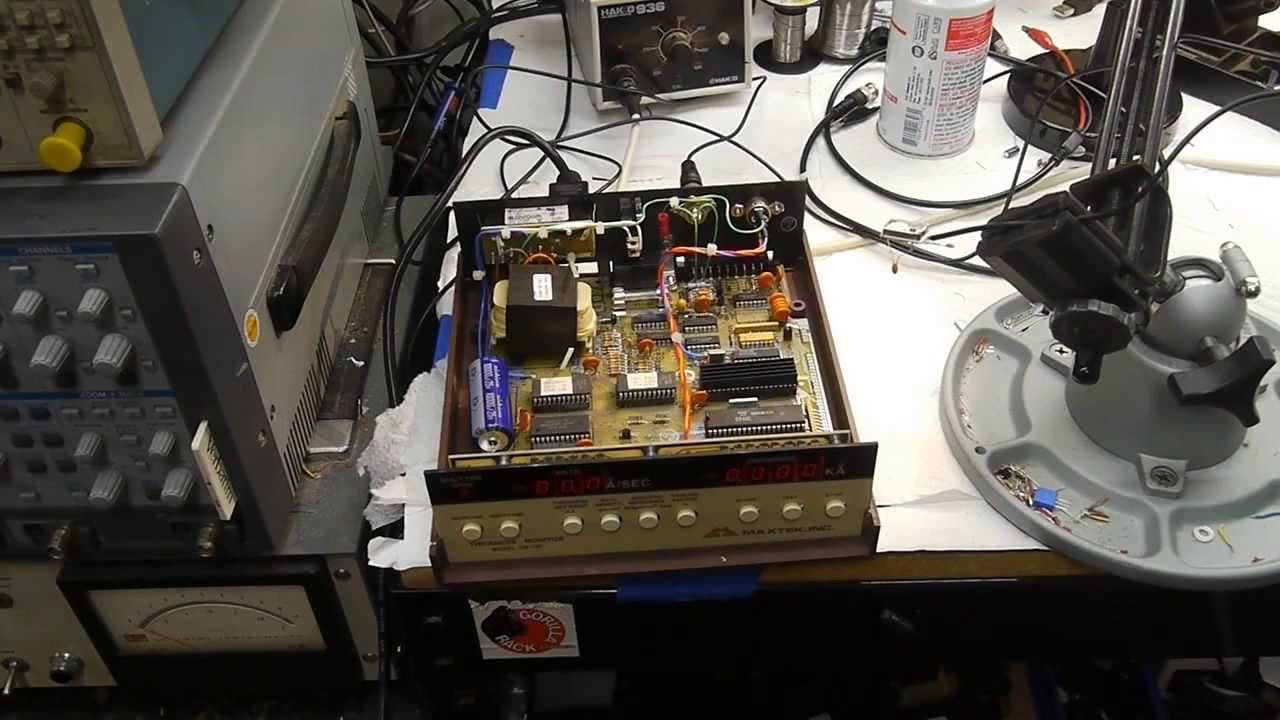
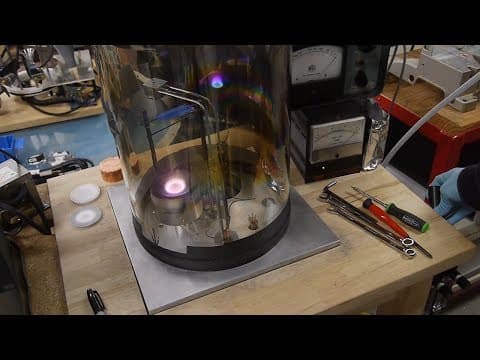
A quartz crystal thickness monitor measures film thickness in a vacuum by detecting frequency changes in the crystal caused by deposited materials. As the film grows, the crystal’s frequency drops, allowing real-time tracking of the coating thickness. This tool helps ensure precise deposition processes, crucial for achieving desired conductivity and transparency in coated materials.
Transcript
hey everyone I wanted to say thanks for all the recent donations in the past few weeks that received a whole bunch of really cool interesting pieces of equipment that will be making appearances in future videos so let me know if you want a personal shout out when I make those and I'll put your name in the video over the past few weekends I've made ... Read More
Key Insights
- 😆 Vacuum environment challenges conductivity of indium tin oxide-coated glass.
- ⌛ Use of quartz crystal thickness monitor for real-time film thickness monitoring.
- 🔨 Importance of precise monitoring tools in deposition processes.
- 🔮 Alternative applications of quartz crystal sensors beyond film thickness monitoring.
- 😎 Challenges and solutions in creating transparent and conductive glass.
- 🎥 Significance of stable environments for successful film deposition.
- 🫢 Manipulating gas flow for precise film thickness control.
Install to Summarize YouTube Videos and Get Transcripts
Explore YouTube Video Summarizer or Get YouTube Transcript Extractor
Questions & Answers
Q: What challenges did the creator face in making indium tin oxide-coated glass conductive?
The vacuum environment caused oxygen to escape from tin, leading to metallic deposits instead of tin oxide, hindering conductivity.
Q: How does the quartz crystal thickness monitor work in monitoring film thickness?
The monitor measures the frequency drop of a quartz crystal as indium tin oxide evaporates and coats it, indicating film thickness change.
Q: Why did the creator build a temperature-controlled kiln with an argon atmosphere?
The kiln was constructed to anneal the glass-coated pieces in argon after failed attempts to create conductive glass with indium tin oxide.
Q: What other applications can quartz crystal sensors have besides film thickness monitoring?
Quartz crystal sensors can be utilized in various environments, such as liquid environments for biological surface bonding and gas sensors for detecting specific gases based on mass changes.
Summary & Key Takeaways
-
The creator expresses gratitude for donations, shares struggles with making indium tin oxide-coated glass conductive.
-
Describes unsuccessful attempts to create conductive glass due to oxygen escaping from tin in a vacuum environment.
-
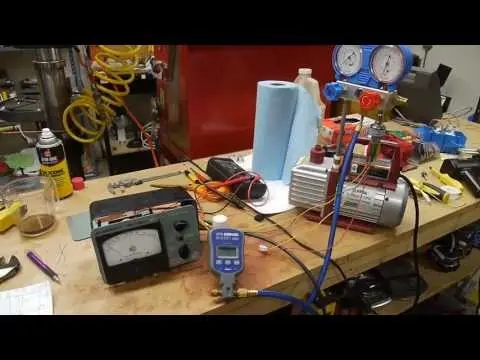
Introduces a quartz crystal thickness monitor obtained from eBay to monitor film thickness during deposition processes.
Read in Other Languages (beta)
Share This Summary 📚
Summarize YouTube Videos and Get Video Transcripts with 1-Click
Try YouTube Summary with ChatGPT & Claude or YouTube Transcript Generator
Explore More Summaries from Applied Science 📚
Summarize YouTube Videos and Get Video Transcripts with 1-Click
Try YouTube Summary with ChatGPT & Claude or YouTube Transcript Generator