How Firefly is Revolutionizing the Logistics of Spaceflight | Full Documentary
TL;DR
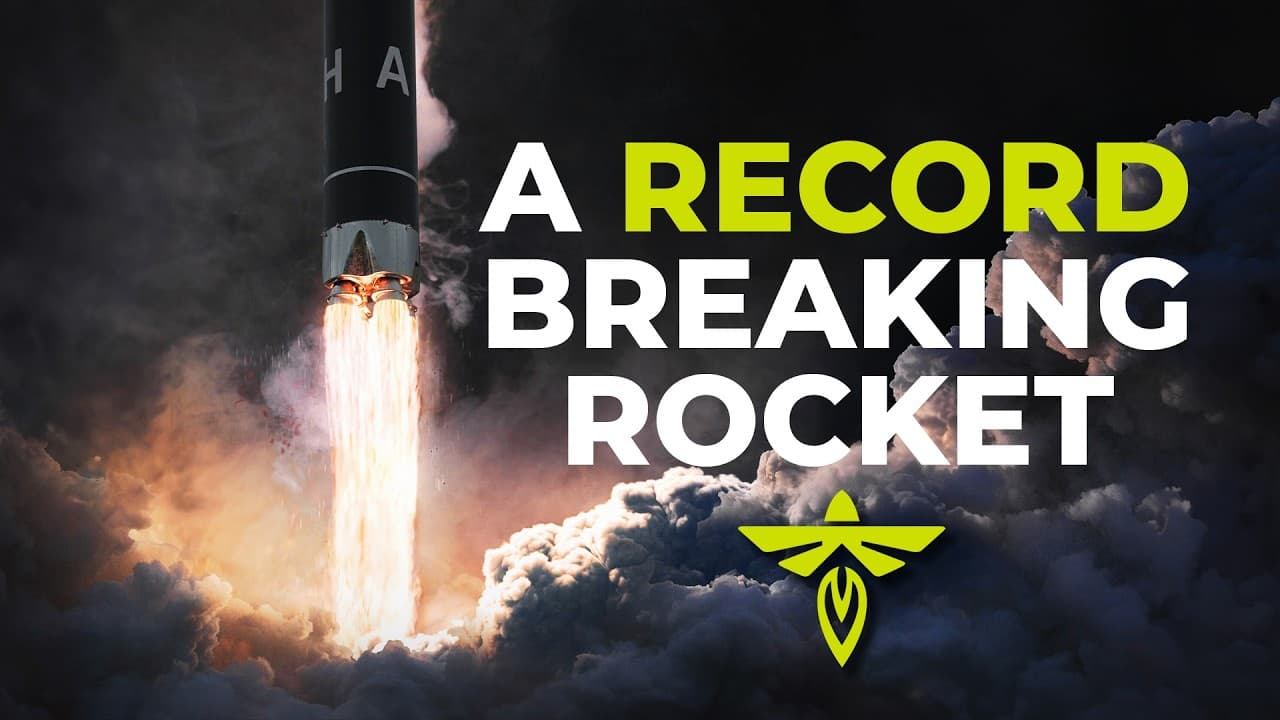
Firefly Aerospace breaks records with rapid, cost-effective rocket launches.
Transcript
Planning and executing a rocket launch is normally a slow process. An astronomically expensive and challenging logistical operation. However, last year the industry took a major leap forward. With only 24 hours notice from the United States Space Force, Firefly managed to integrate a payload to its Alpha rocket, plan its launch profile, get the... Read More
Key Insights
- Firefly Aerospace achieved a groundbreaking 24-hour launch readiness, setting a new industry standard for rapid deployment.
- The company's Alpha rocket focuses on quick fuel loading and detanking capabilities, optimizing for speed without sacrificing performance.
- Firefly's unique tap-off engine cycle reduces complexity and weight, enhancing reliability and efficiency in rocket design.
- The company's vertically integrated approach allows for rapid prototyping and problem-solving, crucial for maintaining launch schedules.
- Firefly's composite tank technology, free from metallic liners, offers significant weight savings, improving overall rocket performance.
- The company balances between in-house manufacturing and outsourcing, focusing on critical components to ensure reliability and quick turnaround.
- Firefly's collaboration with the U.S. Space Force highlights the strategic importance of rapid launch capabilities for military applications.
- Future developments include a medium-lift rocket in partnership with Northrop Grumman, expanding Firefly's market reach.
Install to Summarize YouTube Videos and Get Transcripts
Explore YouTube Video Summarizer or Get YouTube Transcript Extractor
Questions & Answers
Q: What is Firefly Aerospace's key achievement in rocket launches?
Firefly Aerospace has achieved a significant milestone by launching their Alpha rocket with just 24 hours' notice, setting a new industry record. This rapid launch capability is a game-changer in the space industry, allowing for quick deployment of satellites and other payloads, which is crucial for both commercial and military applications.
Q: How does Firefly's tap-off engine cycle work?
Firefly's tap-off engine cycle is a unique design that siphons off hot gas directly from the combustion chamber to drive the turbopump. This eliminates the need for a separate gas generator, reducing the engine's complexity, weight, and potential points of failure. The design enhances reliability and efficiency, making it ideal for responsive space missions.
Q: What are the advantages of Firefly's composite tank technology?
Firefly's composite tank technology eliminates the need for a metallic liner, resulting in a tank that is 20% lighter than traditional metal tanks. This weight reduction improves the rocket's overall performance. The technology also involves a meticulous manufacturing process to prevent moisture ingress, which can cause structural failures at cryogenic temperatures.
Q: How does Firefly manage rapid prototyping and problem-solving?
Firefly's vertically integrated approach, with engineering, manufacturing, and testing facilities located together, enables rapid prototyping and problem-solving. This setup allows engineers to quickly iterate designs and address issues, ensuring that the company can maintain tight launch schedules and adapt to unexpected challenges efficiently.
Q: What role does vertical integration play in Firefly's operations?
Vertical integration is crucial to Firefly's operations, allowing them to control the quality and timelines of critical components. By manufacturing key parts in-house, Firefly can ensure reliability and quick turnaround, which is essential for their rapid launch capabilities. This strategy also reduces dependency on external vendors, enhancing operational resilience.
Q: What are the strategic implications of Firefly's collaboration with the U.S. Space Force?
Firefly's collaboration with the U.S. Space Force underscores the strategic importance of rapid launch capabilities for national security. The ability to quickly deploy satellites or other payloads is vital for military operations, particularly in scenarios where existing assets are compromised or new threats emerge. This partnership highlights Firefly's growing role in the defense sector.
Q: What future developments are planned for Firefly Aerospace?
Firefly Aerospace is developing a medium-lift rocket in partnership with Northrop Grumman, capable of carrying 16,300 kilograms to low earth orbit. Slated for a 2025 launch, this development represents a significant step up from their current Alpha rocket and aims to capture a larger share of the competitive space launch market.
Q: How does Firefly ensure the reliability of their rockets?
Firefly ensures the reliability of their rockets through rigorous testing and quality control measures. Each component, particularly the composite tanks, undergoes extensive testing to simulate flight conditions and identify potential issues. The company's in-house manufacturing capabilities allow for quick iterations and improvements, ensuring that each rocket meets the highest standards of performance and safety.
Summary & Key Takeaways
-
Firefly Aerospace has set a new benchmark in the space industry by achieving a 24-hour launch readiness, a feat that underscores their focus on rapid deployment capabilities. This advancement positions Firefly as a formidable competitor in a market dominated by SpaceX.
-
The company's engineering innovations, such as the tap-off engine cycle and composite tank technology, contribute to their ability to launch quickly and efficiently. These technologies reduce complexity and weight, enhancing both reliability and performance.
-
Firefly's strategic focus on vertical integration and in-house manufacturing of critical components allows them to maintain control over quality and timelines, crucial for meeting the demands of both commercial and military clients.
Read in Other Languages (beta)
Share This Summary 📚
Summarize YouTube Videos and Get Video Transcripts with 1-Click
Try YouTube Summary with ChatGPT & Claude or YouTube Transcript Generator
Explore More Summaries from Real Engineering 📚





Summarize YouTube Videos and Get Video Transcripts with 1-Click
Try YouTube Summary with ChatGPT & Claude or YouTube Transcript Generator