Reid Hoffman on Why We Need Optimistic Science Fiction
TL;DR
You do not get the future you want by only avoiding the futures you fear, argues Reid Hoffman. Just as you would never drive from San Francisco to LA if you first had to plan around every possible pothole, progress needs bold, optimistic visions of what society can become, not just dystopian warnings.
Transcript
I'm going down that rabbit hole. What science fiction do we need these days, Reed? So, the thing that was really magical for me, but for us, you know, in the ' 60s, '7s, 80s, even to some degree, the early 90s was a notion that what we're creating with technology, what we're creating as the possible human future, y can be amazing. like this this se... Read More
Key Insights
- You cannot reach a good future by only avoiding bad ones, Hoffman argues, comparing it to refusing to drive from San Francisco to LA until you have planned around every possible traffic accident and pothole, which means you never leave.
- Optimistic science fiction is what society currently lacks, since the vast majority of today's films and stories are dystopic, while the 60s through early 90s carried a sense that technology could make the world much better for all people.
- It is much easier to imagine how things go wrong than how they go right, which is why the natural dramatic template is man versus machine, and why AI now dominates the science fiction discourse of the day.
- Reid Hoffman approaches goals as plans rather than fantasies, breaking each ambition into concrete components, unlike Simon Sinek who simply found ideas like being an astronaut magical without a path to reach them.
- A childhood desire to better humanity led a 12-year-old Hoffman to plan on becoming CIA director, until his father gave him a book on the crimes of US intelligence agencies and he read about assassinations and abandoned the idea.
- Hoffman's core lifelong drive was to participate in the dialogue about who we are and who we should be as individuals and groups, which shaped his interests from science fiction to philosophy to entrepreneurship.
- In 2019 Hoffman told the Creative Artists Agency talent summit to stop harming the imagination of our human futures, arguing storytellers bear responsibility for how society envisions what lies ahead.
- Modern life and the things we love about it came through the creation of machines, Hoffman notes, challenging the reflexive framing of technology as an evil to be defeated by humans.
Install to Summarize YouTube Videos and Get Transcripts
Explore YouTube Video Summarizer or Get YouTube Transcript Extractor
Questions & Answers
Q: Why does Reid Hoffman say we need more optimistic science fiction?
Hoffman argues that you do not get a future you want by avoiding the futures you do not want. He compares it to planning a drive from San Francisco to LA: if you first had to avoid every possible traffic accident and pothole, you would never get in the car. Since the vast majority of current science fiction, especially movies, is dystopic, society lacks the optimistic imagination of goodness needed to actually build a better human future.
Q: What did Reid Hoffman want to be as a kid?
Hoffman's first ambition was to become a science fiction author, because he was reading a lot of science fiction and loved participating in the dialogue about the betterment of humankind. He went through several phases, including a 12-year-old plan to become CIA director to make the world more peaceful, and later a period considering becoming a philosophy professor before turning to software entrepreneurship.
Q: Why did Reid Hoffman abandon his plan to become CIA director?
As a 12-year-old, Hoffman theorized that becoming director of the CIA would let him and a group of friends influence the world to be more peaceful, less warlike, and more compassionate. When he told his father about this, his dad bought him a book called The Crimes of the US Intelligence Agencies. Reading through accounts of assassinations and similar actions, Hoffman decided to scratch that plan entirely.
Q: How does Reid Hoffman approach his goals differently from most people?
Hoffman treats ambitions as plans rather than fantasies. Simon Sinek notes that when asked what he wanted to be as a kid, Hoffman described a plan, not just a wish. Where Sinek found the idea of being an astronaut magical with no path attached, Hoffman naturally breaks a goal into concrete components, asking what he needs to understand and what programs he needs to be in, so that thinking and action begin.
Q: What is Reid Hoffman's first paid job story?
At age 12, Hoffman walked into Chaosium, a fantasy role playing game company near his house that published RuneQuest, wanting to participate in making games. An irritated editor handed him a scenario pack to get rid of him, expecting he would never return. Being an obsessive kid, Hoffman came back after the weekend with the entire thing redlined and improved. He then insisted on paying the company by check to use it, making it his first job for payment.
Q: Why does Reid Hoffman say technology should not be framed as the enemy?
Hoffman points out that the most natural drama is man versus machine, where an evil machine is beaten by a human. But he argues this framing ignores reality: the entire modern life and all the things we love about it came about through the creation of machines. Rather than treating technology as an evil to defeat, he wants stories that imagine how machines and human futures can go right.
Q: What did Reid Hoffman tell the Creative Artists Agency in 2019?
After talking with friends at the Creative Artists Agency, including Richard Lovett, Hoffman was invited to speak at the end of their talent summit in 2019. He essentially told the assembled creators that it was up to them to stop harming the imagination of our human futures. His point was that storytellers shape how society envisions what lies ahead, so producing only dystopic visions damages our collective ability to build good futures.
Q: Why is most science fiction today focused on AI and dystopia?
Hoffman says AI now dominates the science fiction discourse of the day, appearing in nearly every conversation and conference. He explains that most of this framing is negative because it is much easier to imagine how things go wrong than how they go right. The natural dramatic template of man versus machine reinforces this, making optimistic visions of technology and the future harder to create and rarer to find.
Summary & Key Takeaways
-
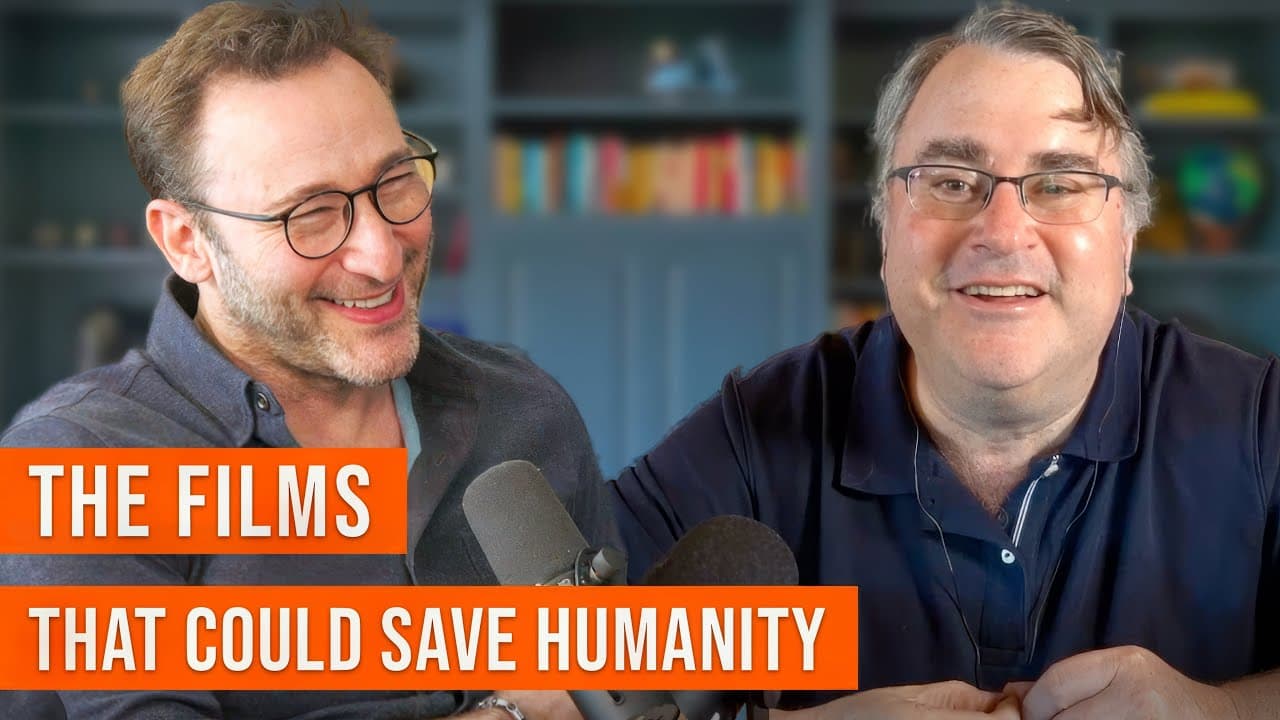
Reid Hoffman, cofounder of LinkedIn and author of Super Agency, joins Simon Sinek to discuss idealism and optimism. As a child Hoffman wanted to be a science fiction author, drawn to participating in the dialogue about the betterment of humankind through stories about the human future.
-
Hoffman recounts a 12-year-old's plan to make the world more peaceful by becoming CIA director, abandoned after his father gave him a book on intelligence agency crimes. He later considered being a philosophy professor before Stanford exposed him to software entrepreneurship and his modern path.
-
His central argument is that you do not get the future you want by avoiding futures you do not want. Because most science fiction is now dystopic, society needs optimistic visions, and in 2019 he urged the Creative Artists Agency to stop harming imagination of human futures.
Read in Other Languages (beta)
Share This Summary 📚
Summarize YouTube Videos and Get Video Transcripts with 1-Click
Try YouTube Summary with ChatGPT & Claude or YouTube Transcript Generator
Explore More Summaries from Simon Sinek 📚
Summarize YouTube Videos and Get Video Transcripts with 1-Click
Try YouTube Summary with ChatGPT & Claude or YouTube Transcript Generator