How to Measure Engine RPM from a Car's Cigarette Lighter
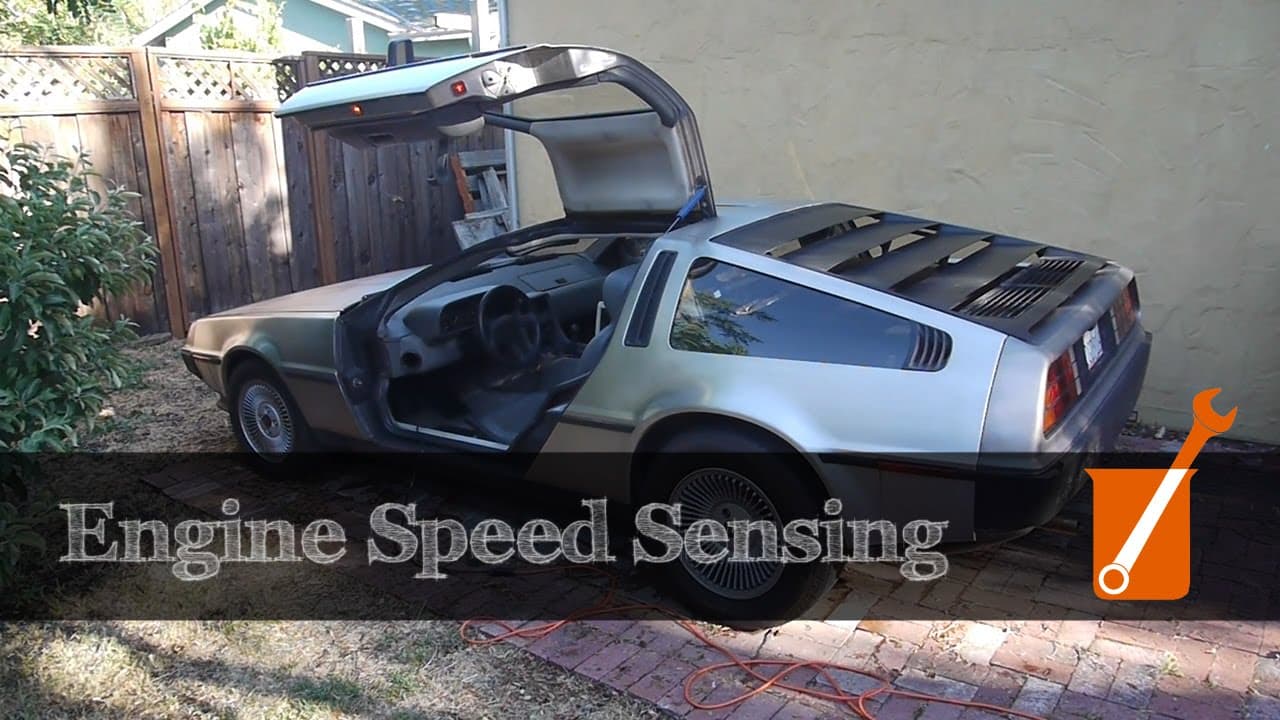
TL;DR
To measure engine RPM via a car's cigarette lighter, connect an oscilloscope to capture the inductive spikes from the ignition coil. These spikes can be analyzed using FFT to determine the firing frequency, yielding an accurate RPM reading, even revealing unique firing patterns in certain engines like the V6.
Transcript
hey everyone check it out here's the newest addition to my lab I'm extremely grateful to Tektronix for sending me this oscilloscope and I plan to make a bunch of videos showing off what you can do with it so to start I thought we'd do something kind of simple for an oscilloscope but it does make use of some of the features there and I learned somet... Read More
Key Insights
- 🦻 Oscilloscope aids in precise measurement of engine rpm from signal spikes.
- 🚒 V6 engine's design flaw results in uneven ignition timings and firing patterns.
- 🚒 FFT analysis enhances signal clarity for accurate engine rpm determination.
- 🚒 Microcontroller integration offers a practical solution for engine rpm measurement.
- 🚒 Understanding engine firing sequence variations impacts RPM measurement accuracy.
- 🚒 Real-time signal tracking through FFT enhances engine rpm measurement reliability.
- 🚒 Signal processing techniques can filter out noise for accurate engine rpm calculation.
Install to Summarize YouTube Videos and Get Transcripts
Explore YouTube Video Summarizer or Get YouTube Transcript Extractor
Questions & Answers
Q: What is the purpose of using an oscilloscope to measure engine rpm?
The oscilloscope allows for precise analysis of the signal spikes from the car's ignition system, enabling accurate determination of engine rpm.
Q: Why did the experiment reveal uneven ignition timings in the V6 engine?
The V6 engine had a design flaw where the cylinders were spaced at 90 degrees, leading to irregular firing patterns due to the 120-degree crankshaft spacing.
Q: How is FFT used to analyze the signal for engine rpm determination?
FFT helps in isolating the signal spikes at the desired frequency, allowing for accurate measurement of engine rpm based on the periodicity of the spikes.
Q: What insights were gained about implementing engine rpm measurement with a microcontroller?
Utilizing a microcontroller to process the signal and trigger interrupts based on the ignition spikes can lead to a straightforward and efficient engine rpm measurement system.
Summary & Key Takeaways
-
Demonstrates using an oscilloscope to measure engine rpm via the cigarette lighter signal spikes.
-
Uncovers unusual engine firing patterns in a V6 engine, leading to varying ignition timings.
-
Shows how to analyze the signal with FFT and track peaks to determine engine rpm accurately.
Read in Other Languages (beta)
Share This Summary 📚
Summarize YouTube Videos and Get Video Transcripts with 1-Click
Try YouTube Summary with ChatGPT & Claude or YouTube Transcript Generator
Explore More Summaries from Applied Science 📚


Summarize YouTube Videos and Get Video Transcripts with 1-Click
Try YouTube Summary with ChatGPT & Claude or YouTube Transcript Generator