How to choose Codex vs Claude Code for coding
TL;DR
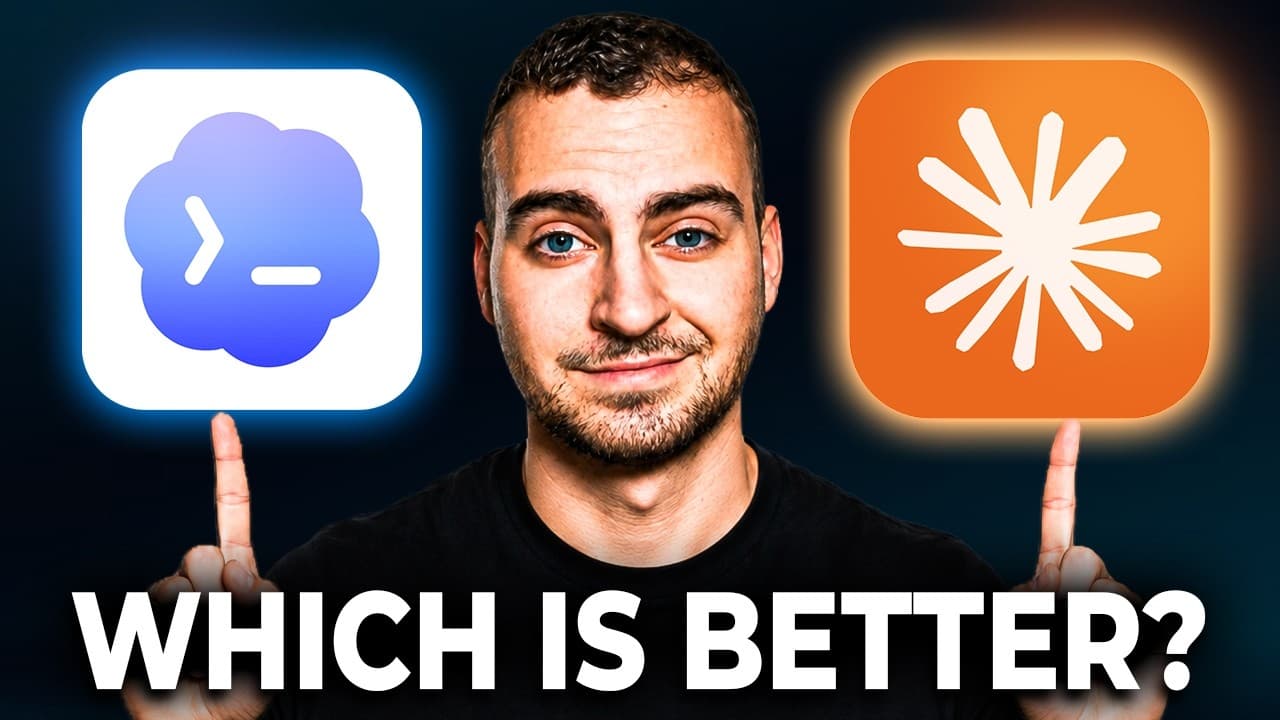
Codex and Claude are essentially tied on independent benchmarks, so the choice should hinge on the harness you use and pricing. The video shows five real tasks comparing both, highlighting that model quality alone does not decide the outcome. Consider what you get with the plan, the specific models, and how you plan to deploy them in your workflow.
Transcript
So Codex or Claude code. Which one should you actually be using now? I gave both of these the exact same five tasks. So explaining a real open source code base that they had ever seen before. Building a complete app from scratch. Refactoring a 5000 line Python file without breaking anything. Hunting down a planted bug and reviewing a booby trapped ... Read More
Key Insights
- Codex and Claude Code are compared as a pair, not just as individual models, with emphasis on the surrounding harness.
- A genetic harness determines context, tools, and permissions, often influencing outcomes more than the core model alone.
- Flagship models vary by provider and plan; Codex uses soul as flagship while Claude uses opus as flagship, with cheaper options available.
- Independent benchmarks show inconsistency across tests, so relying on a single chart is misleading.
- The Senior Sweep benchmark indicates a three-way tie among fable five, opus five, and GPT 5.6 on a quality metric.
- Pricing for flagship models is similar in input and output token costs, but cheaper models differ greatly in cost efficiency.
- OpenAI’s Codex is fully open source under Apache 2.0, while Claude Code is partially open source and not fully public.
- Demos will demonstrate real-world tasks: analyzing a codebase, building an app, refactoring, bug hunting, and PR review, illustrating practical differences.
- More videos from this channel:
- More from this channel: Tech With Tim
Install to Summarize YouTube Videos and Get Transcripts
Explore YouTube Video Summarizer or Get YouTube Transcript Extractor
Questions & Answers
Q: What is a genetic harness and why does it matter when choosing between Codex and Claude Code?
A genetic harness is the software and workflow environment that surrounds the model, including context, tooling, permissions, file edits, and test runs. It matters because a strong model in a weak harness may underperform a slightly weaker model in a better harness. The video emphasizes evaluating the full toolchain rather than just the model when deciding which service to use.
Q: Which models are considered flagship for Codex and Claude Code, and how do plan levels affect access?
For Codex, soul is the flagship model and Terra and Luna are other options with Luna being fast and cheap. For Claude Code, opus five is the flagship model with Fable as another strong option, while Sonnet five and Haiku are cheaper alternatives. Access to flagship models depends on the plan, with cheaper plans providing less powerful defaults. This affects performance and cost in real-world use.
Q: What does the Senior Sweep benchmark tell us about model quality across providers?
The Senior Sweep benchmark includes a metric called tasteful sovereign, which evaluates high quality code. In this benchmark, fable five, opus five, and GPT 5.6 are in a dead tie at the same score. This suggests that on this independent test, the flagship models perform similarly, reinforcing the idea that factors beyond raw model strength drive real-world results.
Q: Why should viewers distrust company-specific benchmark charts when comparing Codex and Claude Code?
Company benchmark charts are often selected to show their model in the best light, and each company may highlight different benchmarks. As a result, the winner on one chart may differ on another, and overall performance can be task dependent. The video urges relying on independent data and real-task demos to form a fair assessment.
Q: How do pricing structures compare between Codex and Claude Code at the flagship level?
At the flagship level, the per-token costs for input and output are similar for the top models, meaning cost parity exists for many tasks. However, differences in plan access can shift overall value, since cheaper plans may not include the flagship models by default, necessitating higher tiers for the best performance versus cost.
Q: What is the importance of plan differences for access to models like sole and opus?
Plan differences determine which models you can access by default. For example, with a cheaper plan you might get sole by default on Codex, while on Claude you get Sonnet five by default. Access to Opus five or Fable or other flagship models often requires a higher plan and possibly extra usage payments, impacting total cost and capabilities.
Q: What do the demos in the video cover and why are they important for deciding usage?
The demos cover analyzing a codebase, building an app from scratch, refactoring a large file, hunting a planted bug, and reviewing a pull request. These scenarios illustrate how each tool handles real coding tasks, showing practical strengths and weaknesses beyond theoretical benchmarks, which is critical for choosing the right tool for daily work.
Q: Is Codex open source and how does that compare to Claude Code?
Codex is described as fully open source under Apache 2.0, allowing inspection and reuse of the codebase. Claude Code is described as partially open source, with some components not fully public. This difference affects transparency, community involvement, and potential for customization or self-hosting. The video highlights these licensing distinctions when comparing the two.
Summary & Key Takeaways
-
A comparison of Codex and Claude Code shows that independent benchmarks place the two in a near tie, so user choice should focus on harness and pricing rather than model claims.
-
The video explains the concept of a harness versus the model, emphasizing that tools, permissions, and workflow integrations matter as much as model strength.
-
Pricing and plan differences, model availability per plan, and how these affect real usage are covered through demos and cost analysis.
Read in Other Languages (beta)
Share This Summary 📚
Summarize YouTube Videos and Get Video Transcripts with 1-Click
Try YouTube Summary with ChatGPT & Claude or YouTube Transcript Generator
Explore More Summaries from Tech With Tim 📚




Summarize YouTube Videos and Get Video Transcripts with 1-Click
Try YouTube Summary with ChatGPT & Claude or YouTube Transcript Generator